
Nasolabial Folds Treatment at Home: The 2026 Clinical Guide to Lower Face Sculpting
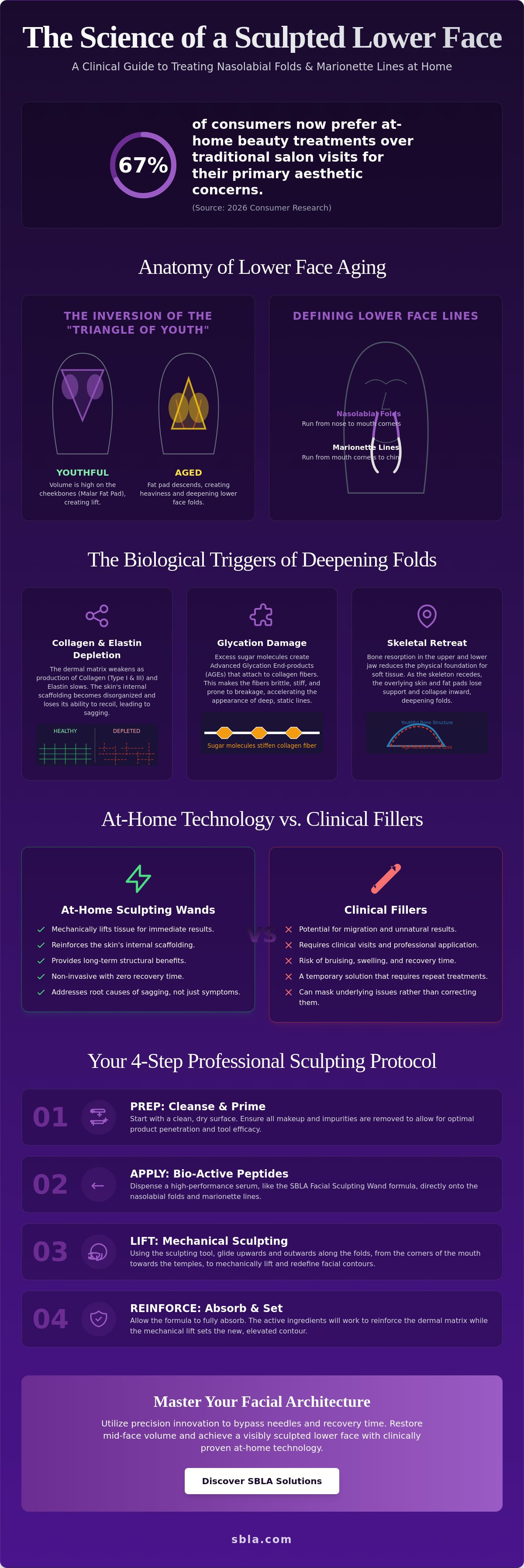
The era of invasive structural correction is yielding to a more precise, technological evolution in skincare. While the instinct for many is to schedule a clinical consultation the moment nose-to-mouth lines appear, the most sophisticated results are now being achieved through nasolabial folds treatment at home. It's a frustrating reality that deepening lines and the emergence of marionette lines can alter your facial architecture, often making you look more fatigued than you feel. You aren't alone in this pursuit; research from 2026 indicates that 67% of consumers now prefer home beauty treatments over traditional salon visits for their primary aesthetic concerns.
This guide provides the definitive clinical protocol for those ready to master the science of non-invasive rejuvenation. You'll learn how to smooth deep folds and marionette lines using a professional-grade approach that bypasses the need for needles or recovery time. We'll explore how to reinforce your dermal scaffolding with bio-active peptides while utilizing mechanical lifting techniques to restore mid-face volume and achieve a visibly sculpted, refined lower face.
Key Takeaways
- Distinguish between dynamic and static lines while understanding how the depletion of Collagen Type I and III compromises facial architecture.
- Uncover the impact of glycation on your dermal matrix and how sugar-damaged proteins contribute to persistent mid-face sagging.
- Master a professional 4-step protocol for nasolabial folds treatment at home to restore volume and smooth deep lines without needles.
- Compare the long-term structural benefits of sculpting wands with the potential risks and migration issues associated with clinical fillers.
- Learn to utilize high-performance tools like the Liquid Facelift Wand to mechanically lift tissue and reinforce the skin's internal scaffolding.
Understanding Nasolabial Folds: The Anatomy of Lower Face Aging
Facial aging isn't merely a surface-level concern; it's a profound structural transformation. Nasolabial folds, technically known as melolabial folds, are the two skin creases that run from each side of the nose to the corners of the mouth. Understanding the Anatomy of Nasolabial Folds is the first step toward effective correction. These lines serve as a primary indicator of dermal health, separating the cheek area from the upper lip and defining the architectural balance of the mid-face.
Initially, these appear as dynamic lines, meaning they're only visible during active facial expressions like smiling or laughing. As the dermal matrix weakens, they transition into static folds that remain present even when the face is at rest. This permanence creates an unintended heavy or fatigued expression, often making the lower face look crowded. When you're seeking a nasolabial folds treatment at home, you must look beyond simple moisturization. Most traditional products fail because they address surface-level hydration rather than the underlying structural collapse. It's the difference between painting over a cracked wall and actually reinforcing the home's foundation.
Nasolabial Folds vs. Marionette Lines
The geometry of the lower face is defined by two distinct sets of lines that work in tandem to age the profile. While nasolabial folds extend from the nose to the mouth, marionette lines run from the corners of the mouth down toward the chin. Together, they signal the inversion of the "triangle of youth," a clinical term for the shift where volume moves from the high cheekbones down toward the jawline. For a deeper anatomical exploration of these lower-face concerns, review our clinical guide on puppet lines. Addressing both areas simultaneously is essential for a comprehensive lower-face lift and a more harmonious silhouette.
The Role of the Malar Fat Pad
The deepening of these folds is largely driven by the descent of the malar fat pad. In a youthful face, this fat pad sits high on the cheekbone, providing volume, lift, and a smooth transition to the lower face. Over time, skin laxity and the depletion of essential proteins allow this fat pad to migrate downward. This descent puts direct pressure on the nasolabial area, creating a "hooding" effect that makes the folds appear deeper and more pronounced. When volume is lost in the temples and mid-face, the skin loses its primary anchor points. This allows gravity to accelerate structural indentations, making a targeted nasolabial folds treatment at home a necessity for anyone looking to restore their natural facial architecture.
The Biological Triggers: Why Lower Face Folds Deepen Over Time
To understand why a nasolabial folds treatment at home requires a clinical approach, we must look at the biochemical shifts occurring beneath the epidermis. The dermal matrix is a complex architecture of Collagen Type I, Type III, and Elastin. Type I provides tensile strength, while Type III serves as the "youthful" scaffolding that keeps skin dense and resilient. As we age, the production of these proteins slows significantly, and existing fibers become disorganized. This loss of integrity is compounded by the fragmentation of elastin, the protein responsible for your skin's elastic recoil.
Beyond protein loss, the process of "Glycation" plays a destructive role in facial aging. This occurs when excess sugar molecules attach to collagen and elastin fibers, creating Advanced Glycation End-products (AGEs). These AGEs cause the fibers to become brittle, stiff, and prone to breakage. When the dermal scaffolding loses its flexibility, the skin can no longer resist the downward pull of gravity, leading to the characteristic sagging associated with deep lower-face folds. This biological stiffening makes it harder for the skin to "bounce back" after movement.
Most discussions on aging focus solely on the skin, but the underlying skeletal structure is equally dynamic. Bone resorption in the maxilla (upper jaw) and mandible (lower jaw) reduces the physical support for the overlying soft tissue. As the foundation of the face recedes, the skin and fat pads have less surface area to cling to. This skeletal retreat causes the mid-face to collapse inward and downward, directly deepening the nasolabial crease. Addressing these multi-layered causes of nasolabial folds requires more than a topical cream; it demands a solution that targets the skin's structural density.
Collagen Degradation and the Dermal Scaffolding
When elastin fibers fragment, the skin loses its ability to snap back into place. Thinning skin makes these underlying structural shifts much more visible to the naked eye, as the dermal-epidermal junction becomes increasingly fragile. This is why utilizing collagen-infused treatments is critical for reinforcing the dermal layer. By focusing on dermal thickening, you can restore a sense of density that masks the structural indentations of the lower face.
External Accelerators: UV and Lifestyle
Photoaging remains the primary catalyst for premature aging in the lower face. UV-induced oxidative stress triggers the release of enzymes that specifically target and dismantle collagen fibers. This environmental damage thins the skin and accelerates the transition from dynamic lines to static folds. Furthermore, lifestyle habits like side-sleeping can put repetitive mechanical pressure on the cheeks, physically pushing the tissue into the nasolabial area. For those seeking to counteract these biological and environmental triggers, exploring advanced facial sculpting tools can provide the necessary mechanical and biochemical intervention to maintain a lifted profile.
Home Technology vs. Clinical Fillers: Choosing Your Anti-Aging Path
The decision between clinical injectables and advanced at-home protocols often comes down to a choice between temporary volume and long-term structural health. While hyaluronic acid fillers provide an instant fix, they don't address the underlying biological causes of aging. A sophisticated nasolabial folds treatment at home focuses on cumulative results, reinforcing the skin's natural ability to support itself without the inherent risks of clinical procedures. This approach prioritizes the health of the dermal matrix over the mere camouflage of a deep crease.
Clinical fillers carry significant risks that are often downplayed during consultations. Filler migration is a common concern, where the product moves from the nasolabial area into the cheeks or upper lip, distorting the natural facial profile. In more severe instances, the risk of vascular occlusion arises if the filler is accidentally injected into a blood vessel, potentially leading to tissue necrosis. By opting for high-tech topical solutions, you eliminate these medical risks while enjoying the cost-efficiency and convenience of a professional-grade regimen performed in your own home.
Bio-active peptides offer a safer, non-invasive alternative for tissue firming. These molecules work with your body's natural chemistry to encourage structural repair from the inside out. Unlike fillers that eventually dissolve and require expensive maintenance, peptide-based treatments build a foundation of density that lasts. The result is a profile that looks naturally rejuvenated rather than artificially inflated.
The Problem with Over-Filling the Lower Face
Over-filling the lower face often leads to a heavy, bottom-weighted appearance that lacks natural definition. This "pillow face" effect occurs when providers attempt to mask folds by adding excessive volume rather than addressing skin laxity. It's essential to maintain natural facial mobility and expression to avoid a frozen or distorted look. Non-invasive sculpting tools provide architectural precision, allowing you to lift and refine the lower face without the bulk associated with traditional injectables. You're restoring the silhouette, not just filling a gap.
The Science of Peptide-Based Delivery
Specific peptide chains act as messengers, signaling the skin to produce new collagen and elastin. However, the delivery method determines the ultimate efficacy of the formula. Applying these actives with a precision wand ensures deeper penetration and mechanical stimulation that fingers alone can't achieve. This targeted application mimics the holistic strategy used for other areas of the face, much like how to get rid of 11 lines without botox. By integrating these high-performance delivery systems, you ensure that every drop of formula is utilized to its full biological potential.
How to Treat Nasolabial Folds at Home: A 4-Step Sculpting Protocol
Mastering the architecture of the lower face requires a methodical, two-pronged strategy. While manual massage techniques like gua sha provide temporary surface relief, they fail to deliver the molecular signals necessary for dermal thickening. A truly effective nasolabial folds treatment at home relies on the synergy between biochemical actives and mechanical stimulation. This protocol focuses on reducing the "heaviness" of the fold through lymphatic drainage while simultaneously reinforcing the skin's internal scaffolding. Consistency is the cornerstone of this transformation. By adhering to a clinical routine, you're not just hydrating the surface; you're re-engineering the skin's structural integrity.
Step 1: Targeted Bio-Active Saturation
The first step involves saturating the nasolabial area with formulas rich in peptides and retinol. Unlike traditional creams that you might tap into the skin, clinical wands utilize a gliding motion to ensure deeper penetration. This gliding action helps the formula reach the dermal-epidermal junction more effectively than manual application. Perform this step during your skin's circadian repair cycle, typically in the evening, to maximize the regenerative impact of the bio-active ingredients. This targeted saturation prepares the tissue for the mechanical work that follows.
Step 2: Mechanical Lifting and Contouring
Once the skin is saturated, use your sculpting device to perform upward strokes from the corner of the mouth toward the cheekbone. This motion serves to "iron out" the static fold while stimulating essential blood flow to the area. At the apex of the cheek, employ a "hold and lift" technique for three to five seconds to encourage the tissue to set in a more elevated position. This mechanical intervention is vital for a comprehensive nasolabial folds treatment at home, as it addresses the descending malar fat pad mentioned earlier in this guide. To achieve these results, you can shop the Liquid Facelift Wand for precision application.
Step 3: Reinforcing the Jawline and Chin
A sagging jawline creates a downward "pull" that exacerbates the depth of the nasolabial folds. To counteract this, utilize a larger sculpting wand, such as the Neck, Chin & Jawline Sculpting Wand XL, to define the lower facial boundary. By tightening the skin along the mandible, you reduce the tension on the mid-face. This structural support is essential for maintaining the "triangle of youth" and preventing the lower face from looking bottom-weighted.
Step 4: Photoprotective Sealing
The final step in this clinical protocol is sealing your results with medical-grade sun protection. As established in previous sections, UV-induced oxidative stress is the primary accelerator of collagen degradation. Without a protective barrier, the structural gains made during your sculpting routine will be neutralized by environmental damage. Apply a broad-spectrum shield daily to protect the newly reinforced dermal matrix and ensure your lower-face lifting results remain permanent and protected.
Precision Innovation: SBLA Solutions for a Lifted Lower Face
SBLA Beauty has redefined the parameters of non-surgical intervention by miniaturizing clinical technology for personal use. For those seeking an effective nasolabial folds treatment at home, the Liquid Facelift Wand serves as the primary instrument for structural refinement. This isn't a typical serum; it's a sophisticated delivery system that combines proprietary peptide blends with a precision applicator. The antimicrobial stainless steel rollerball isn't just a luxury detail. It's a functional tool designed to drive active ingredients deeper into the dermal layers while providing the mechanical stimulation necessary to re-set the skin’s architecture. By bypassing the limitations of manual finger application, this technology ensures that the bio-active molecules reach the targeted dermal-epidermal junction where they can initiate repair.
The innovation lies in the synergy between the formula and the delivery method. Traditional skincare often sits on the surface, providing temporary hydration but failing to influence the underlying tissue. SBLA’s approach utilizes the mechanical pressure of the wand to encourage lymphatic drainage and stimulate blood flow. This process clears the "heaviness" from the nasolabial area, allowing the lifting peptides to work on a more receptive dermal matrix. It's a results-oriented solution for those who demand the efficacy of a clinic with the privacy of a home regimen.
The Liquid Facelift Wand Mechanism
Precision is the hallmark of the Liquid Facelift Wand. Every click delivers a measured dose of the anti-aging formula, ensuring that the skin receives the exact concentration of bio-active peptides required for cellular signaling. This eliminates the guesswork and waste associated with traditional topical applications. The cool-tip applicator provides an immediate physiological benefit by reducing localized inflammation and puffiness, which can often make folds appear more pronounced. Users experience an instant smoothing effect as the formula creates a microscopic film that lifts the surface, while the underlying peptides begin the long-term work of dermal repair and collagen synthesis. It's a dual-action approach that addresses both the visible symptom and the biological cause.
Maximizing Results with the Sculpting Wand XL
While the Liquid Facelift Wand targets specific indentations, the Neck, Chin & Jawline Sculpting Wand XL provides the broader structural support needed to maintain a lifted profile. You can't achieve a truly rejuvenated lower face by ignoring the foundation. This larger device targets the jawline and neck area to ensure the mid-face architecture remains supported. Tightening the skin along the mandible reduces the downward gravitational pull on the nasolabial folds, creating a more harmonious and youthful silhouette. This targeted nasolabial folds treatment at home is essential for those who want to avoid the risks of filler migration while achieving a natural, refined look. To achieve professional results without the clinical price tag, you should invest in clinical-grade technology for visible transformation and reclaim your facial architecture. Using these tools in tandem creates a comprehensive lifting effect that rivals more invasive procedures.
Mastering the Future of Facial Architecture
Restoring the lower face requires a departure from temporary surface fixes in favor of deep structural repair. You've learned that addressing the malar fat pad descent and reinforcing the dermal matrix are the essential pillars of a lifted profile. By utilizing science-backed peptide formulas and dermatologist-tested delivery systems, you can achieve clinically-proven non-invasive results that fillers simply cannot replicate without risk. Implementing a comprehensive nasolabial folds treatment at home allows you to take command of your aging process with precision and confidence. Professional-grade innovation ensures your skin remains resilient against gravity and environmental stress.
The transition from static folds to a smooth, refined silhouette is within reach through consistent application and advanced technology. It's time to elevate your regimen with tools designed for high-performance outcomes. Shop the Liquid Facelift Wand for Precision Sculpting and experience the transformative power of architectural beauty. Your journey toward a more sculpted, youthful expression starts with a single, sophisticated click. You have the tools; now, unlock your skin's full biological potential for a timeless transformation.
Frequently Asked Questions
Can nasolabial folds be removed without surgery or fillers?
Nasolabial folds can be significantly diminished without invasive intervention by targeting the underlying dermal matrix and restoring skin density. While surgery physically removes tissue, a high-performance nasolabial folds treatment at home utilizes bio-active peptides to thicken the skin and mechanical wands to lift the malar fat pad. This cumulative approach restores facial architecture naturally, avoiding the medical risks of filler migration or the artificial appearance often associated with over-filling the mid-face.
What is the best ingredient for nasolabial folds treatment at home?
Bio-active peptides are the gold standard for structural rejuvenation because they signal the skin to synthesize new Collagen Type I and III. These molecular messengers work in tandem with stabilized Retinol to accelerate cellular turnover and reinforce the dermal-epidermal junction. When delivered through a clinical-grade applicator, these ingredients penetrate deeper than traditional creams, providing the necessary biochemical cues to "fill" the fold from within by increasing overall skin thickness and resilience.
How long does it take to see results from non-invasive sculpting wands?
You will likely notice an immediate smoothing effect due to the instant-lift technology found in advanced formulas like the Liquid Facelift Wand. Profound structural transformation requires consistency to align with the skin's natural 28-day regeneration cycle. Most users report a visible reduction in fold depth and a more defined lower face after four to eight weeks of daily application, as new collagen fibers begin to provide authentic architectural support to the dermal layer.
Do facial exercises actually help with deep smile lines?
Facial exercises offer limited efficacy and may paradoxically deepen dynamic lines through repetitive muscle contraction and skin stretching. A more effective strategy involves mechanical stimulation of the skin tissue itself rather than the underlying muscle. Sculpting wands utilize targeted pressure to encourage lymphatic drainage and improve microcirculation without the risks of manual "face yoga." This refined approach addresses the descending fat pads that are the primary cause of lower face heaviness.
At what age should I start treating my nasolabial folds?
Preventative intervention should ideally begin in your late 20s or early 30s when natural collagen production begins its annual decline. Starting a nasolabial folds treatment at home early preserves the integrity of your dermal scaffolding before static lines become permanent features. For those with established folds, corrective protocols focusing on dermal thickening and mechanical lifting remain highly effective at any age to restore a more youthful, harmonized facial silhouette and profile.
Are nasolabial folds the same as marionette lines?
These are distinct anatomical features that together contribute to the visual aging of the lower face. Nasolabial folds extend from the nose to the corners of the mouth, while marionette lines run from the mouth down toward the chin. Both result from the descent of mid-face volume and increasing skin laxity. A comprehensive sculpting routine targets both areas simultaneously to prevent the "triangle of youth" from inverting and ensures the entire lower face appears lifted.
Can retinol help with deep folds around the mouth?
Retinol is a powerful ally in smoothing deep folds because it increases the rate of cellular renewal and stimulates the production of supportive dermal proteins. By thickening the epidermis and reinforcing the dermal matrix, retinol makes the skin more resistant to the creasing caused by repeated facial expressions. For maximum efficacy, it should be paired with peptides that provide the building blocks for new tissue, ensuring the skin remains dense and resilient against gravity.
Does weight loss make nasolabial folds look worse?
Significant weight loss can exacerbate the appearance of nasolabial folds by reducing the volume of the malar fat pads that support the mid-face. When this structural fat is lost, the overlying skin often sags, deepening the nose-to-mouth crease. In these cases, it is vital to focus on increasing skin density and using sculpting tools to "lift" the remaining tissue. This helps compensate for the lost volume by creating a tighter, more refined facial contour through mechanical intervention.

