
How to Depuff Your Face With DIY Face Sculpting or Tools
Facial sculpting tools may temporarily reduce puffiness, but the effect depends on continued use. The choice between DIY face massage and a sculpting tool comes down to preference: fingers and tools can both support gentle massage, but neither replaces cosmetic procedures. Expect a temporarily refreshed look, not a permanent lift.
It’s reasonable to wonder whether a tool can do more than your hands. Both approaches use massage to ease facial tension and encourage circulation, while a tool can make gliding movements feel more controlled. Use gentle pressure and a glide product, such as a lightweight serum or facial oil, to reduce friction. This guide explains what sculpting tools can realistically do, how they compare with hands-on massage, and how to use either for temporary de-puffing. You’ll also learn how to build a simple routine and where specialized skincare devices may fit.
Key Takeaways
- Set realistic goals by distinguishing a refreshed, temporarily toned appearance from lasting structural facial change.
- Learn how gentle massage movements may support de-puffing and how to direct them through your routine.
- Choose a serum or moisturizer that helps your hands or tool glide comfortably over the skin.
- Find a hands-on approach that fits your routine, or explore a specialized wand for targeted facial sculpting.
Do Face Sculpting Tools Work?
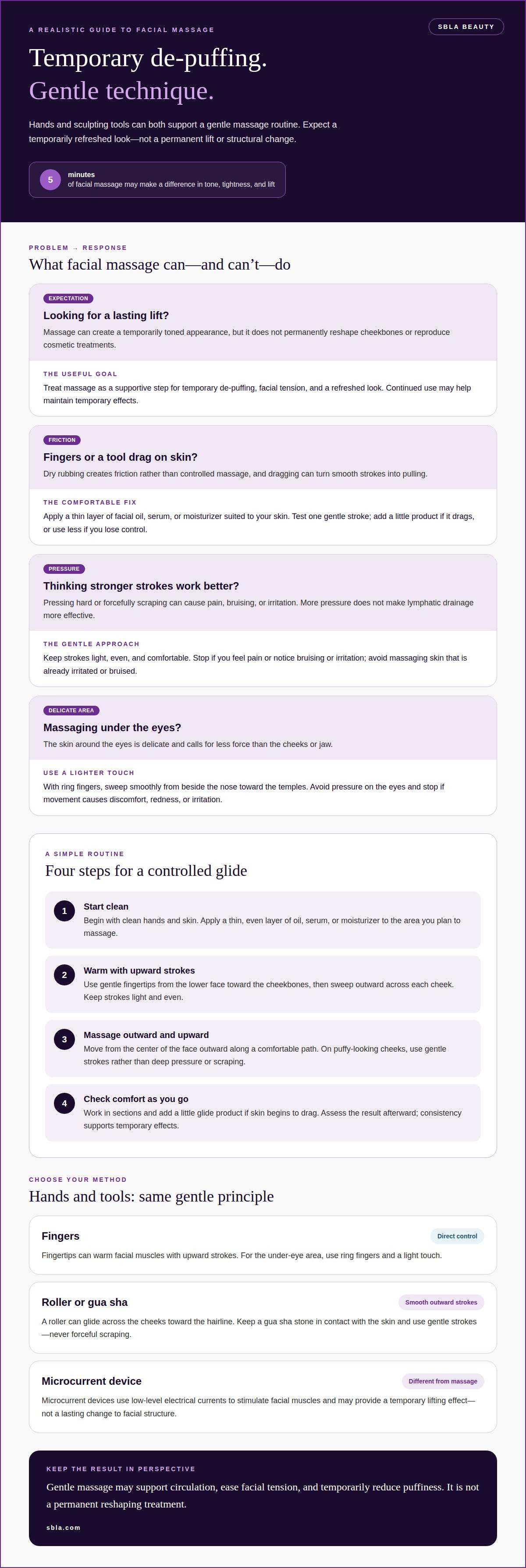
Facial massage with fingers or a tool can create a temporarily toned appearance, not structural change. A regular routine may ease tension, but it won’t reproduce cosmetic treatments or permanently reshape cheekbones.
-
Apply oil or serum for glide
Start with clean hands and skin, then apply enough facial oil or serum for fingers or a tool to glide smoothly. Dry rubbing creates friction rather than controlled massage. Choose a lightweight product that suits your skin, and add a little more if your fingers or tool begin to drag. Keep pressure comfortable: more product does not mean stronger sculpting.
-
Warm facial muscles with upward strokes
Use your fingertips for gentle upward strokes from the lower face toward the cheekbones, then sweep outward across each cheek. Repeat slowly to warm the facial muscles before focusing on areas that feel tense. Keep strokes light and even rather than pressing or pulling the skin. This prepares your face for massage; it doesn’t permanently lift or alter facial structure.
-
Use fingers or a sculpting tool
Choose clean fingers, a facial roller, or a gua sha stone, and move outward and upward without scraping or pressing hard. For a roller, glide across the cheeks toward the hairline; with gua sha, keep the stone in contact with the skin and use gentle strokes. A sculpting wand can also be used in a brief, controlled routine. Five minutes of facial massage may make a difference in tone, tightness, and lift.
Stop if you feel pain or notice bruising or irritation, which can result from excessive pressure or improper technique. Avoid massaging skin that is already irritated or bruised. For a gentle routine, cleanse, apply a glide product, warm the skin with upward strokes, then massage lightly with your fingers or a tool. Use gua sha or a roller with smooth, gentle strokes, never forceful scraping.
Facial sculpting tools are described as requiring consistent, often daily use for a more defined look. DIY face sculpting can improve blood circulation and oxygenation, reduce facial tension, and enhance skincare-product absorption.
Temporary de-puffing and lymphatic drainage
- Begin with a clean face and relaxed hands. Facial sculpting tools can temporarily reduce puffiness, and regular use helps maintain the effect. Massage is not a permanent change to facial structure. Lymphatic drainage describes movement that helps carry excess fluid away from facial tissues. Keep your goal specific: a temporarily less puffy appearance, not lasting reshaping.
- Use gentle outward strokes on areas that look puffy, such as the cheeks. A facial roller or gua sha can glide over the skin, while fingertips offer direct control. Move from the center of the face outward along a comfortable path rather than pressing deeply. The aim is gentle massage, not forceful scraping or trying to push fluid through the skin.
- For the under-eye area, use a light touch with your ring fingers. Sweep from beside the nose toward the temples, keeping strokes smooth and avoiding pressure on the eyes. The delicate skin there calls for less force than the cheeks or jaw. Stop if the movement causes discomfort, redness, or irritation; stronger pressure does not make lymphatic drainage more effective.
- Assess the result after your massage, then keep your skincare routine consistent if you want to maintain temporary effects. Puffiness can change, so massage is best treated as a supportive step rather than a structural treatment. If your routine also includes lip definition, a dedicated lip-plumping and sculpting tool serves that separate goal, not facial de-puffing.
Facial rolling and lymphatic drainage techniques can be done with fingers or a tool such as gua sha or a handheld massager. Microcurrent devices use low-level electrical currents to stimulate facial muscles and may provide a temporary lifting effect. This is different from massage, and any lifting effect should be understood as temporary rather than a lasting change to facial structure.
Applying serum or moisturizer for glide
- Start with clean skin, then choose a facial oil, serum, or moisturizer suited to your skincare needs. Apply a thin, even layer to the areas you plan to massage, such as your cheeks and jawline. The aim is smooth movement, not a thick coating. A lightweight serum or facial oil can help fingers or a sculpting tool glide with less friction.
- Test the glide with one gentle stroke along your jawline. If your fingers or tool drag, add a small amount of product to that area before continuing. If the product gathers or feels so slippery that you lose control, use less. This simple check helps maintain consistent contact with the skin and prevents controlled massage from turning into pulling or rubbing.
- Work in sections instead of applying product to your entire face at once. For example, smooth serum over one cheek before moving from the center outward, then apply more to the other cheek. Add a separate light layer to the forehead or chin if those areas need more glide. This keeps the product where you’re massaging and makes it easier to regulate pressure.
- Keep the routine comfortable and observe how your skin responds. If applying a product causes stinging or visible irritation, stop massaging and remove it gently. Don’t add pressure to compensate for a formula that feels tacky; reapply a suitable moisturizer or serum instead. With consistent, comfortable glide, you can focus on relaxing facial tension and controlled toning strokes, rather than friction.
Benefits of DIY face sculpting
- Use a short massage routine to build a deliberate pause into your beauty regimen. Begin with clean hands and a comfortable amount of facial oil or serum, then move gently across the cheeks and forehead. Repeated motions may encourage circulation at the skin’s surface and help release facial tension. Keep pressure light enough to avoid pulling or irritating the skin.
- Target areas where you hold tension, such as the jawline or forehead. Place your fingertips beside the jaw and sweep outward, or tap gently across the brow. These movements may help relax facial muscles and make the routine feel restorative. They don’t create permanent lifting or change facial structure, so treat a refreshed appearance as a short-term effect.
- Choose fingers when you want precise control over pressure, especially around delicate areas. A facial roller or gua sha offers a smooth surface for repeated strokes across broader areas, such as the cheeks. Either way, keep the movement comfortable and consistent. Incorrect technique or excessive pressure can cause irritation or bruising, so stop if discomfort develops.
- Make consistency practical by attaching massage to an existing skincare step, such as applying serum in the evening. A routine you can repeat comfortably is more useful than forceful, occasional sessions. Face sculpting may complement skincare, but it’s unlikely to replicate cosmetic procedures, and long-term efficacy needs further scientific study. For a more structured facial massage option, explore targeted sculpting tools as part of your routine.
SBLA BEAUTY: Liquid Facelift Wand
The SBLA Liquid Facelift Wand offers a device-based option for a skincare routine focused on the face. Choose it if you prefer a wand format to fingers or a manual roller. It can complement at-home massage, but it is not a promise of permanent lifting or structural change. Keep your technique gentle and follow the product directions. Avoid using this product on the eye area; we recommend using the SBLA® Eye Lift Wand to lift the delicate skin around the eyes. Individual results will vary.
For concerns focused on the neck, chin, or jawline, SBLA’s Neck, Chin & Jawline Sculpting Wand is a targeted option. Choose based on the area you want to address and the format that suits your routine. Explore the Liquid Facelift Wand on SBLA’s website to see whether it fits your skincare ritual. Individual results will vary.
Make your next routine feel intentional
Let personal comfort guide your choice. Hands-on massage keeps pressure and movement directly under your control, while a sculpting tool adds a dedicated device to the routine. The best fit is the approach you can use comfortably and consistently, with a clear focus for each session. Consider which area you want to address and whether you prefer your fingers or a specialized wand.
The SBLA Eye Lift Wand, Neck, Chin & Jawline Sculpting Wand, and Neck, Chin & Jawline Sculpting Wand XL offer options for different facial areas. Choose based on the focus you want for your routine, rather than expecting a tool to replace cosmetic treatment. The aim is a considered skincare ritual that supports how you want to feel in your skin. *Individual Results Will Vary.
If you’re weighing DIY face massage vs. a sculpting tool, take the next step at your own pace. Contact SBLA BEAUTY to learn more about its facial sculpting options and find a direction that suits your routine.
Frequently Asked Questions
When should I use a face massager?
Use a face massager during a skincare step, when your skin is clean and has enough serum or oil for smooth movement. For example, apply your glide product before using gentle strokes rather than moving a dry tool over bare skin. Choose a time when you can move slowly and comfortably. Avoid forceful pressure, since improper technique can cause irritation or bruising.
How does DIY face massage compare with facial sculpting tools?
DIY massage uses your fingers, while sculpting tools provide a surface designed to glide over the face. Fingers make it easy to adjust pressure around areas such as the jaw and forehead; a roller or gua sha offers a consistent contact surface across the cheeks. Either approach can support a massage routine. Choose the method that feels controlled and comfortable to use.
What are the benefits of facial massage and sculpting tools?
Facial massage can support relaxation, ease facial tension, and promote circulation. Some people also use a tool alongside skincare products to help work them over the skin. For example, gentle strokes across the forehead or jaw can make a routine feel more focused. These are supportive skincare benefits, not a substitute for cosmetic procedures or a way to permanently reshape facial features.
Do facial massage or sculpting tools reduce puffiness or define facial contours?
Massage can temporarily reduce facial puffiness, and regular use helps maintain the effect. A less puffy appearance may make contours look more defined for a time, but massage doesn’t change underlying facial structure. Use light, outward strokes rather than pressing hard. If your goal is a lasting change to facial contours, massage tools aren’t equivalent to cosmetic procedures.
Is there scientific evidence that facial massage or sculpting tools work?
Massage tools may support short-term effects such as relaxation, circulation, or reduced puffiness, but scientific studies are needed to confirm their long-term efficacy. Gua sha and facial rollers are used in at-home routines, yet their use doesn’t establish lasting structural change. Treat them as skincare accessories for gentle massage, rather than assuming they can reproduce the outcomes of cosmetic procedures.

