
How to Look Less Tired and Stressed: The 2026 Clinical Rejuvenation Guide
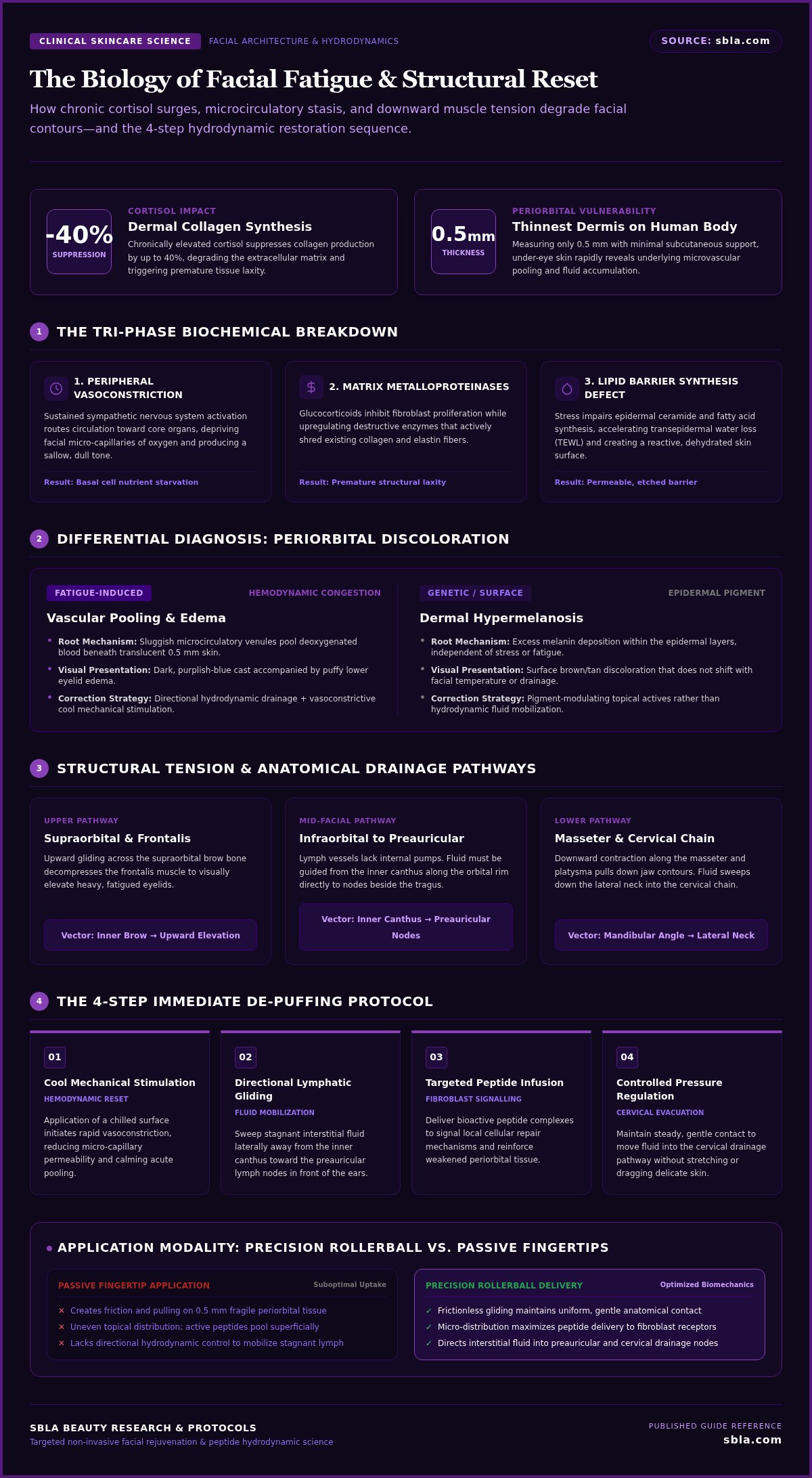
A full eight hours of sleep cannot reverse structural facial fatigue. Chronically elevated cortisol suppresses dermal collagen synthesis by up to 40%, degrading the extracellular matrix and triggering tissue laxity long before fatigue registers anywhere else. If you want to know how to look less tired and stressed, passive moisturizers and superficial cover-ups will not solve this underlying physiological breakdown.
You know the frustration of facing the mirror only to see persistent periorbital shadowing, sluggish lymphatic pooling, and an etched, dehydrated barrier that betray how capable you feel. You shouldn't have to turn to invasive procedures or heavy injectables simply to reclaim a taut jawline and an awake, radiant eye contour.
In this guide, you will discover the biological drivers behind facial exhaustion and master an advanced, non-invasive protocol to restore structural vitality. We break down the precise synergy between mechanical fluid de-congestion, barrier-reinforcing lipids, and targeted peptide technology so you can achieve a visibly lifted, resilient appearance from home.
Key Takeaways
- Understand how systemic cortisol and compromised microcirculation degrade structural collagen, shifting your approach from passive hydration to targeted biochemical repair.
- Deploy directional lymphatic drainage along anatomical pathways to rapidly clear fluid retention and learn how to look less tired and stressed in minutes.
- Neutralize downward tension patterns across the masseter and platysma muscles using targeted sculpting techniques that lift sagging contours.
- Replace passive fingertip application with precision-engineered rollerball delivery to optimize the micro-distribution and uptake of active peptide complexes.
The Biology of Facial Fatigue: How Stress and Cortisol Alter Skin
Stress-induced skin fatigue is an accelerated state of cellular breakdown driven by systemic hormonal surges that outpace dermal repair mechanisms. While traditional beauty advice suggests masking exhaustion with primers or drinking more water, true restoration requires confronting the biochemical cascade taking place beneath the surface. Chronic psychological stress triggers sustained sympathetic nervous system activation, directing blood flow away from the face and toward vital organs. This peripheral vasoconstriction reduces micro-capillary oxygenation, starving basal cells and manifesting as a dull, sallow complexion. At the same time, disrupted sleep patterns impair the facial lymphatic network, leaving interstitial fluid stranded within soft tissue planes. Realizing how to look less tired and stressed begins with treating these cellular and vascular shifts as biological disruptions rather than simple cosmetic flaws.
Cortisol-Induced Collagen Breakdown and Skin Barrier Thinning
Elevated systemic cortisol directly arrests dermal regeneration. Sustained glucocorticoid activity inhibits fibroblast proliferation, suppressing new collagen formation while upregulating matrix metalloproteinases that shred existing structural fibers. Simultaneously, stress hampers epidermal lipid synthesis, reducing essential ceramides and fatty acids. This defect accelerates transepidermal water loss, leaving the skin barrier permeable, dehydrated, and reactive. Because the tissue around the eyes and along the mandibular angle possesses minimal subcutaneous support, this cortisol-driven thinning rapidly deepens fine lines and creates premature tissue slackening.
Microcirculation Stasis and Under-Eye Vascular Pooling
The periorbital zone possesses the thinnest skin on the human body, measuring roughly 0.5 millimeters thick. When chronic stress induces microcirculatory stasis, deoxygenated blood pools within the sluggish venules beneath the eyes, projecting through the translucent dermis as dark, purplish discoloration. It is critical to differentiate between genetic dermal hypermelanosis and this stress-induced vascular pooling; melanin deposits create brown surface discoloration, whereas vascular stagnation reflects hemodynamic congestion. When paired with lymphatic insufficiency, this fluid buildup manifests as stubborn periorbital puffiness and edema, which distorts the lower eyelid contours and accentuates tired tear-trough shadows.
Immediate De-Puffing Protocol: Resetting Congested Periorbital Tissue
Reversing orbital exhaustion requires both mechanical manipulation and biochemical reinforcement. Chilled spoons and standard eye creams fall short because they lack directional hydrodynamic control. If you want to know how to look less tired and stressed within minutes, deploy a targeted four-step sequence designed to clear stagnant fluids and reinforce the capillary bed:
- Step 1: Cool mechanical stimulation. Applying a chilled surface initiates rapid vasoconstriction, reducing micro-capillary permeability and calming acute vascular pooling.
- Step 2: Directional lymphatic gliding. Sweep fluid laterally away from the inner canthus toward the preauricular lymph nodes in front of the ears.
- Step 3: Targeted peptide infusion. Deliver bioactive peptides to signal local fibroblast repair, fortifying weakened orbital tissue.
- Step 4: Controlled pressure regulation. Use low, uniform pressure to mobilize interstitial fluid into the cervical drainage pathway without dragging the skin.
While exploring the clinical causes of under-eye bags reveals structural fat repositioning alongside chronic edema, mechanical fluid mobilization delivers noticeable visible relief to swollen periorbital tissue.
Directional Drainage Techniques for the Upper and Lower Eye
Facial lymph vessels lack internal muscular pumps; they rely entirely on external pressure to move fluid. Begin at the inner canthus, gliding outward along the infraorbital rim toward the preauricular nodes situated beside the tragus. From there, trace down the lateral neck to clear fluid through the cervical chain. Never pull or drag fragile skin with dry fingers. Use a frictionless rolling mechanism to maintain steady, gentle contact. Along the upper lid, use upward strokes across the supraorbital brow bone to decompress the frontalis muscle and visibly elevate heavy, fatigued eyelids.
Targeted Peptide Application for Fragile Periorbital Skin
Passive eye creams often sit on the surface without adequate penetration. In contrast, signal peptides communicate directly with dermal cells to rebuild collagen architecture along the eyelid crease. Applying these actives through an antimicrobial rollerball prevents bacterial contamination while distributing the formula evenly across delicate micro-folds. The SBLA Eye Lift Wand incorporates this mechanical rollerball technology to lift sagging eyelids and smooth crepiness without clinical downtime. To elevate your daily regimen, explore topical sculpting solutions that fuse mechanical pressure with advanced peptide science.
Structural Reset: Lifting Sagging Contours and Releasing Facial Tension
Facial fatigue doesn't just manifest on the surface; it locks into the deeper muscular architecture. Under chronic stress, involuntary clenching forces the masseter muscles into sustained hypertonicity while the superficial platysma contracts downward. This continuous tension drags the lower face down, blunting mandibular definition and producing a drawn, exhausted expression. While holistic wellness clinics like Zhong Centre target these deeper tension pathways through cosmetic acupuncture and traditional Chinese medicine, daily at-home care also requires active intervention. Basic gemstone rollers glide passively over the skin, but they lack the mechanical drag and transdermal precision needed to reset dense tissue. Learning how to look less tired and stressed requires targeted myofascial release paired with advanced delivery systems that structurally reposition drooping contours while saturating the matrix with firming compounds.
Mandibular Contouring and Platysma Muscle Relaxation
The platysma acts as an anatomical anchor across the lower face, actively pulling down the corners of the mouth during periods of prolonged strain. To counteract this vector, trace deliberate, upward sculpting strokes starting beneath the mental protuberance and gliding along the jawline toward the mastoid process behind the ear. This directional pressure smooths hypertonic muscle fibers and drains trapped pre-auricular lymph. Addressing this musculature early is vital for long-term definition, particularly when assessing the early signs of neck aging to prevent structural laxity from setting in along the submental zone.
Targeting Marionette Lines and Mid-Face Descent
Stress-induced collagen loss allows the malar fat pads to slide downward, creating sunken hollows and deepening the labiomental grooves that frame the mouth. To restore structural buoyancy, deploy cross-directional lifting motions rather than dragging along the crease. Work upward from the oral commissure diagonally toward the zygomatic bone, anchoring the skin to reinforce natural facial vectors. Documented assessments of non-invasive marionette lines before and after protocols prove that consistent mechanical repatterning paired with concentrated peptide technology rebuilds tissue density, lifting tired lower facial contours without requiring dermal fillers.
Daily Anti-Fatigue Skincare Protocol: Rebuilding Cellular Vitality
Layering multiple serums rarely repairs a compromised barrier; it often overwhelms it. When chronic strain degrades skin quality, success relies on a structured sequence that matches your circadian rhythms. If you want to master how to look less tired and stressed, structure your daily regimen around four progressive phases:
- Phase 1: Gentle non-stripping cleansing. Cleanse with a low-pH formula that preserves essential intercellular lipids and protects the acid mantle.
- Phase 2: Targeted antioxidant infusion. Apply concentrated peptides and free-radical scavengers to neutralize stress-induced reactive oxygen species.
- Phase 3: Targeted non-invasive wand application. Use directional micro-pressure to sculpt lax contours, mobilize stagnant interstitial fluid, and smooth surface crepiness.
- Phase 4: Lipid-barrier replenishment. Seal the skin with physiological ceramides and essential fatty acids to arrest transepidermal water loss.
Morning Defense: De-Puffing, Microcirculation, and Environmental Shielding
Morning care focuses on fluid mobilization and environmental protection. Start by sweeping cold rollerball mechanisms across the periorbital bone and jawline. This dispels stagnant overnight lymph and constricts dilated venules. Follow immediately with potent topical antioxidants like stabilized vitamin C or niacinamide to shield cellular structures from oxidative stress. Complete the routine with a lightweight, lipid-replenishing hydrator that leaves a smooth, luminous barrier without clogging stressed pores.
Evening Restoration: Cellular Repair, Peptides, and Muscular Release
Cutaneous blood flow and mitotic cellular repair surge during sleep, making your nocturnal protocol critical for tissue recovery. Use this window to unwind repetitive daytime micro-tensions stored in the lower face and forehead. Glide mechanical sculpting devices over the facial architecture to deliver collagen-stimulating signal peptides deep into the epidermis. Incorporating the at home liquid facelift protocol repositions drooping skin planes overnight, providing visible tension relief and structural recovery without clinic intervention.
To upgrade your anti-fatigue routine with clinically validated, non-invasive technology, shop the complete SBLA sculpting collection today.
Advanced Non-Invasive Technologies: Beyond Traditional Creams
Standard skin creams applied with fingertips suffer from fundamental limitations. Fingers absorb active compounds, drag fragile surface tissue, and provide zero hydrodynamic force to mobilize pooled interstitial fluid. Passive application leaves delicate actives sitting on the epidermal surface rather than penetrating the micro-crevices etched by emotional strain. Realizing how to look less tired and stressed requires an intentional shift toward mechanical transdermal delivery. When surgical-grade mechanical stimulation pairs with concentrated biomimetic peptides, the physiological response changes entirely. Controlled rolling pressure physically guides stagnant lymphatic buildup away from congested planes while simultaneously embedding firming molecules into depleted dermal structures. This integrated approach delivers visible architectural lifting and structural resilience without surgical downtime.
The Mechanics of Targeted Beauty Wands vs. Traditional Jars
Traditional open jars expose delicate peptide solutions to repeated oxidation and bacterial contamination, rapidly degrading active molecules before they touch your skin. Precision wands eliminate this degradation through sealed, airless delivery chambers. Engineered stainless steel roller surfaces eliminate friction, gliding across thinning periorbital and mandibular skin without pulling or stretching underlying collagen fibers. This mechanical mechanism dispenses calibrated micro-dosages directly into expression lines, ensuring optimal active absorption while releasing underlying myofascial tension.
Building Your Comprehensive Non-Invasive Sculpting Arsenal
Restoring facial youthfulness requires matching specialized delivery mechanisms to distinct anatomical challenges. The periorbital zone demands fine-point fluid clearance, while the lower face and platysma require broader mechanical pressure to lift sagging tissue. Integrating the Liquid Facelift Wand across mid-face contours and deploying the Neck, Chin & Jawline Sculpting Wand along the mandibular jawline creates an advanced daily lifting protocol. This synergy resets facial vectors, enhances cellular elasticity, and combats gravity. Explore the precision engineering behind every clinical tool at SBLA Beauty to restore firmness and vitality to stressed, fatigued skin.
Reclaim Your Structural Architecture and Radiance
Facial fatigue is a biological event, not a permanent aesthetic fate. By neutralizing cortisol-driven matrix breakdown, mobilizing stagnant periorbital lymph, and releasing hypertonic tension along the jawline, you address exhaustion at its structural origin. Mastering how to look less tired and stressed isn't about concealing dullness under cosmetic layers; it's about providing depleted tissue with the targeted mechanical stimulus and biochemical nourishment required to regenerate.
Moving beyond passive jar creams transforms daily skincare into an active, clinical-grade ritual. Featuring engineered precision rollerball delivery mechanisms paired with advanced targeted collagen and peptide complexes, high-performance non-invasive facial sculpting tools restore microcirculation, tensile strength, and defined contours from home. You don't have to accept a drawn, fatigued reflection. Take command of your skin's physiological vitality today. Restore structural firmness and radiant vitality with SBLA Beauty clinical wands and face every day with lasting, sculpted confidence.
Frequently Asked Questions
Why does stress make my face look saggy and tired even after a full night of sleep?
Sleep alone cannot repair stress-induced structural matrix degradation caused by prolonged cortisol elevation. Cortisol suppresses fibroblast proliferation and breaks down dermal collagen bundles while triggering microvascular constriction. This biochemical depletion reduces tissue volume and skin bounce regardless of rest. If you want to solve how to look less tired and stressed, you must combine active peptide replenishment with physical lymphatic drainage to clear fluid stasis and restore lost structural firmness.
What is the fastest way to get rid of puffy eyes from stress and exhaustion in the morning?
The fastest method combines cold-temperature vasoconstriction with directional manual lymphatic clearance along the orbital bone. Using a chilled rollerball mechanism, glide from the inner tear duct outward toward the preauricular lymph nodes in front of the ears. This mechanical movement channels trapped interstitial fluid into the cervical drainage pathway. Pair this directional pressure with peptides to constrict permeable venules and visibly de-puff periorbital tissue in under five minutes.
How do targeted beauty wands differ from standard under-eye and anti-aging creams?
Targeted wands combine surgical-grade mechanical rollerballs with airless active delivery, whereas traditional creams rely on passive fingertip application. Fingertips drag fragile tissue, absorb active molecules, and fail to provide hydrodynamic fluid movement. In contrast, precision wands deliver calibrated micro-doses directly to expression lines while rolling pressure releases myofascial tightness and improves formula absorption. This structural synergy delivers immediate lifting and de-puffing benefits that standard jar formulations cannot replicate.
Can chronic facial tension and stress cause permanent wrinkles and marionette lines?
Yes, chronic muscular contraction creates persistent mechanical stress that eventually etches dynamic expression lines into permanent structural folds. Persistent jaw clenching tightens the masseter and platysma muscle complexes, actively pulling lower facial contours and mouth corners downward. Over time, this sustained downward vector accelerates the descent of mid-face fat pads and deepens marionette creases. Counteracting this process requires daily myofascial release along the jawline to relieve muscular tension patterns.
How long does it take to see visible lifting results with an at-home non-invasive routine?
Immediate fluid clearance and reduced periorbital puffiness occur within ten to fifteen minutes of targeted mechanical lymphatic gliding. However, true structural remodeling and epidermal firming typically require two to four weeks of consistent daily wand application. In this timeframe, topical peptide complexes stimulate cellular synthesis while regular myofascial release reprograms chronic facial tension. Adhering to a disciplined morning and evening protocol maintains these cumulative lifting and tightening effects.
Is it possible to lift hooded or tired-looking eyelids without undergoing blepharoplasty?
Non-surgical lifting is achievable for mild to moderate eyelid heaviness caused by fluid retention and loss of tissue elasticity. While severe anatomical fat herniation requires surgical intervention, targeted solutions like the Eye Lift Wand firm the supraorbital crease and mobilize trapped lymph. Applying signal peptides through controlled rollerball gliding tightens loose upper lid skin and releases frontalis tension, offering an effective, needle-free alternative for individuals seeking how to look less tired and stressed.

