
How to Tighten Face Skin Without Surgery: The 2026 Clinical Guide
The scalpel is no longer the definitive gold standard for structural facial rejuvenation. Advanced biochemical engineering now allows you to achieve significant architectural lifting through precise topical delivery systems that once existed only in the realm of clinical theory. You've likely noticed a softening jawline or the subtle descent of your eyelids and assumed a surgical consultation was your inevitable next step. It's frustrating when your reflection doesn't match your internal energy. Understanding how to tighten face skin without surgery is now about deploying high-performance technology that restores the skin's foundational integrity from within.
This clinical guide outlines the 2026 protocols for non-invasive sculpting, focusing on the sophisticated mechanisms that firm crepey neck textures and redefine lost contours. You'll learn how targeted peptide delivery and concentrated collagen systems function as a liquid facelift, providing the precision of a professional treatment within a high-end daily routine. We'll examine the specific technological advancements that address drooping eyelids and sagging tissue, ensuring your results are both visible and lasting. By prioritizing molecular precision over invasive measures, you can restore a defined, youthful silhouette with scientific certainty.
Key Takeaways
- Identify the biological mechanisms behind the degradation of the extracellular matrix to address deep structural laxity rather than surface-level wrinkles.
- Discover how advanced peptide delivery systems provide a sophisticated, non-invasive alternative to traditional energy-based tightening modalities like Radiofrequency and Ultrasound.
- Master the clinical 2026 protocol for how to tighten face skin without surgery by utilizing high-potency collagen delivery systems that require zero downtime.
- Evaluate the economic and physical advantages of professional-grade at-home wands compared to invasive surgical procedures that often involve significant recovery periods.
- Implement a precise sculpting routine using the Liquid Facelift Wand to restore facial contours and achieve a refined, architectural aesthetic.
The Biological Architecture of Skin Laxity
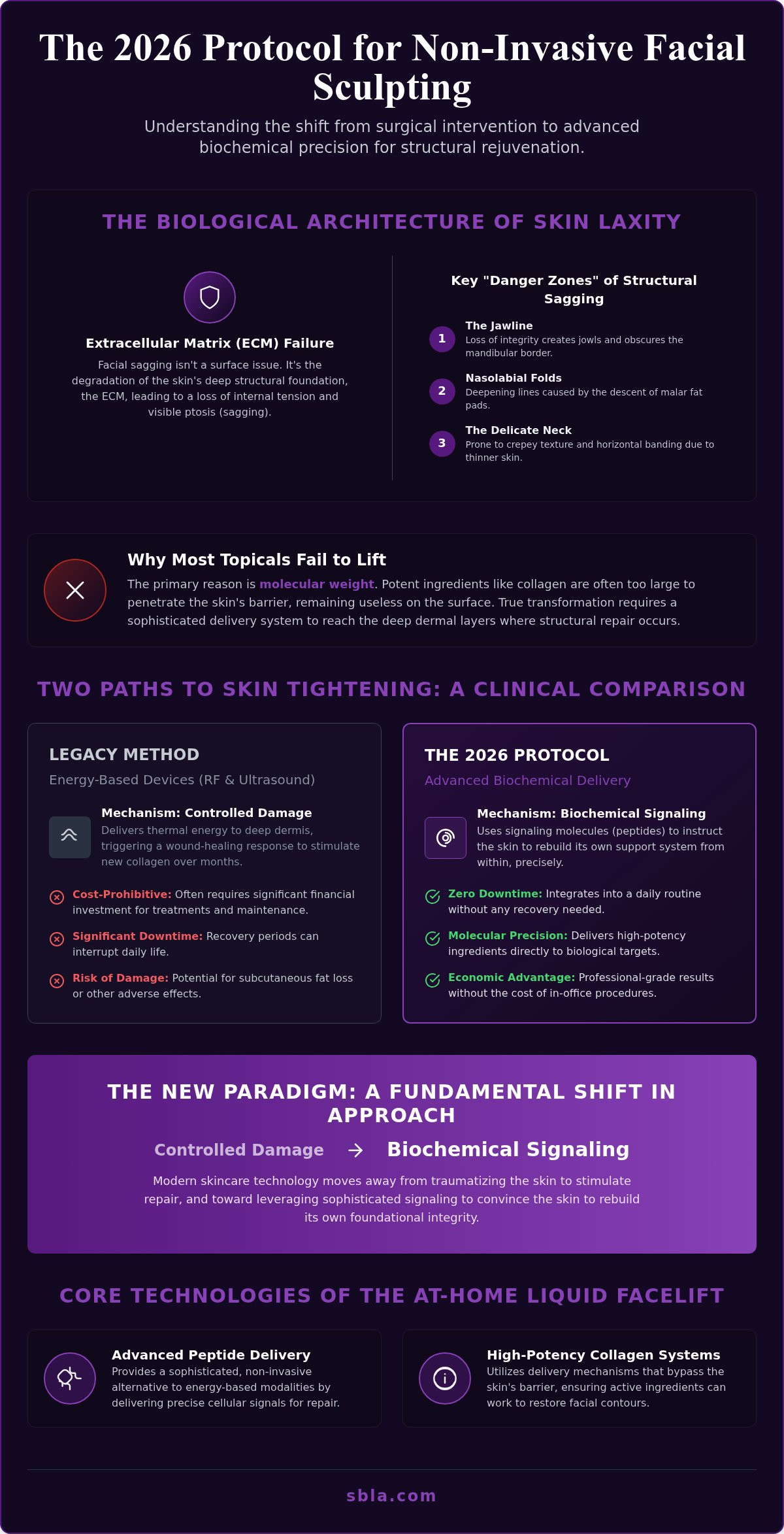
Facial sagging is not merely a surface-level concern; it's a fundamental failure of the skin's architectural foundation. This foundation, known as the extracellular matrix (ECM), is a complex network of proteins and molecules that provide the structural framework for your features. When the ECM degrades, the skin loses its internal tension. This leads to visible ptosis, or the downward migration of tissue that manifests as sagging. While surgical facelift techniques physically excise redundant skin and tighten underlying muscles, the modern search for how to tighten face skin without surgery focuses on restoring this matrix through biochemical precision and cellular signaling.
It's vital to distinguish between epidermal wrinkles and true dermal laxity. Surface lines are often the result of dehydration or repetitive movement, but structural sagging occurs deep within the dermis. This degradation typically concentrates in specific "danger zones" that define the perceived age of the face:
- The Jawline: Where the loss of structural integrity creates jowls and obscures the mandibular border.
- Nasolabial Folds: The deepening lines from the nose to the mouth caused by the descent of malar fat pads.
- The Delicate Neck: An area with thinner skin and fewer sebaceous glands, making it prone to crepey texture and horizontal banding.
Non-surgical tightening protocols work by initiating a controlled biochemical response. Instead of physical trauma, these methods use signaling molecules to convince the skin it needs to rebuild its own support system.
Collagen vs. Elastin: The Scaffolding of the Face
Collagen acts as the "rebar" of the skin, providing the volume and tensile strength that keeps the face looking full and firm. Elastin provides the essential "snap-back" quality, allowing your skin to return to its original position after a smile or a squint. While collagen can be stimulated through various clinical interventions, elastin is notoriously difficult to replenish once production slows in early adulthood. The dermal-epidermal junction acts as the critical interface that anchors the skin's layers, ensuring structural cohesion and preventing the gravitational slide of facial tissue.
Why Traditional Creams Fail to Lift
The primary reason most luxury topicals fail to produce a lifting effect is molecular weight. High-quality collagen molecules are often too large to penetrate the skin's natural barrier, meaning they sit uselessly on the surface. To achieve real transformation, you need a delivery system capable of transporting active ingredients into the deeper dermal layers. This necessity is why the at home liquid facelift has emerged as a superior model. It bypasses the limitations of traditional formulations by utilizing advanced delivery mechanisms that ensure potent peptides reach the biological targets responsible for structural repair.
Non-Surgical Tightening Modalities: Energy vs. Biochemical Delivery
The landscape of structural rejuvenation has historically been divided between invasive surgical intervention and energy-based clinical trauma. For individuals researching how to tighten face skin without surgery, the choice often felt limited to expensive, in-office procedures that rely on heat to stimulate change. However, the 2026 clinical landscape has shifted toward a more sophisticated model. We're moving away from the "controlled damage" approach of traditional lasers and toward a "biochemical signaling" framework. This evolution leverages the skin's innate capacity for self-repair without the inflammatory response or significant downtime associated with legacy modalities.
Energy-Based Devices: Ultrasound and Radiofrequency
Radiofrequency (RF) and High-Intensity Focused Ultrasound (HIFU) remain the industry standards for in-office tightening. These devices deliver thermal energy into the deep dermis to induce immediate collagen contraction. This heat triggers a wound-healing response that eventually leads to new collagen synthesis over several months. While effective, these treatments carry inherent limitations. They're often cost-prohibitive and require frequent maintenance sessions to sustain surgical-adjacent results. There's also a documented risk of subcutaneous fat loss caused by excessive heat, which can inadvertently lead to facial hollowing. For the discerning client, the risk of losing the volume necessary for a youthful appearance often outweighs the benefit of a temporary lift.
The Peptide Revolution: Signaling Structural Change
The most significant advancement in non-invasive aesthetics is the development of high-potency peptide delivery systems. Unlike energy devices that rely on thermal trauma, peptides use biochemical signals to communicate directly with skin cells. Signal peptides act as molecular messengers, instructing the skin to synthesize new collagen and elastin. Carrier peptides transport vital trace elements to the dermis, while neurotransmitter-inhibiting peptides provide a smoothing effect that targets expression lines. This signal-based approach offers a level of precision that broad thermal treatments simply cannot match.
Modern clinical wands have revolutionized this process by ensuring these potent molecules bypass the skin's protective barrier. When evaluating a microcurrent vs peptide wand, the latter focuses on the long-term restoration of the extracellular matrix rather than temporary muscle stimulation. Consistent, daily delivery of these advanced formulations allows for cumulative results that redefine the jawline and neck. By integrating a high-performance sculpting tool into your daily routine, you can achieve a refined, architectural lift that fits seamlessly into a luxury lifestyle. This shift toward needle-free, non-invasive technology represents the definitive future of facial contouring.
Comparing At-Home Clinical Wands vs. Professional Procedures
Deciding between a clinical procedure and an at-home protocol requires a clear evaluation of both immediate impact and long-term sustainability. Professional energy-based treatments often demand a significant financial commitment, sometimes exceeding $3,000 for a single session. In contrast, a high-performance clinical wand offers professional-grade results for a fraction of that investment. While surgery provides a one-time structural shift, it involves significant risks and extensive recovery periods. For those exploring how to tighten face skin without surgery, the modern clinical wand provides a sophisticated, zero-downtime alternative that aligns with a high-end lifestyle.
The primary advantage of at-home technology is the ability to target delicate areas with surgical precision. Traditional professional devices can be too aggressive for the thin skin around the eyes or the sensitive neck region. Specialized tools like the Eye Lift Wand or the Neck, Chin & Jawline Sculpting Wand allow for precise, daily application. This consistency is something a sporadic office visit cannot replicate. It's important to manage expectations; a wand won't mimic the dramatic results of a full surgical rhytidectomy for severe skin laxity. However, it is the most effective method for restoring facial structural integrity and preventing further descent without the need for a scalpel.
Investment and Long-Term Value
Professional maintenance is an ongoing expense that often requires multiple annual visits to sustain a lifted appearance. At-home clinical tool kits provide a cumulative benefit through daily peptide infusion. This constant signaling keeps the skin in a state of repair and renewal. Addressing the early signs of neck aging is significantly more effective through daily intervention than through quarterly professional treatments. By maintaining a consistent biochemical environment, you preserve the skin's architectural foundation more efficiently over time.
Safety and Risk Profiles
Professional lasers and energy devices carry risks that are often overlooked in promotional materials. Hyperpigmentation, scarring, and unintended fat loss are documented side effects of high-intensity thermal treatments. Clinical-grade topical wands offer a non-invasive, low-risk profile that is particularly beneficial for sensitive skin types. These formulas are designed to be non-comedogenic and biocompatible, ensuring that the structural transformation occurs without compromising the skin barrier. Choosing a signal-based approach over a trauma-based one ensures your journey toward a refined silhouette remains both safe and effective.
The 2026 Protocol for At-Home Facial Sculpting
Mastering how to tighten face skin without surgery requires a shift from passive application to a structured clinical protocol. The 2026 standard for at-home rejuvenation isn't about simply applying a cream; it's about the methodical delivery of signaling molecules to the skin's structural layers. This four-step process ensures that high-potency ingredients bypass the epidermal barrier to initiate a cumulative lifting effect. By following a disciplined routine, you can restore architectural definition to the jawline, neck, and periorbital area without the trauma of clinical energy devices.
- Step 1: Barrier Preparation. Maximum absorption begins with a pristine skin barrier. Ensure the skin is thoroughly cleansed and free of occlusive oils that might impede the delivery system of your clinical wand.
- Step 2: Targeted Sculpting. Apply your sculpting wand using firm, upward motions. This mechanical action works in tandem with the biochemical formula to encourage lymphatic drainage and redefine lost contours.
- Step 3: Formula Layering. Use specialized wands to address distinct anatomical needs. Layering the Liquid Facelift Wand with area-specific tools allows you to treat surface texture and deep structural volume simultaneously.
- Step 4: The 12-Week Commitment. Structural change is a marathon. While immediate smoothing occurs, the "Cumulative Lift" effect peaks after 12 weeks of consistent, daily biochemical signaling.
Sculpting the Jawline and Neck
The lower face is often the first area to show significant structural descent. Defining the chin and jawline requires a technique that focuses on the mandibular border. Using the Neck, Chin & Jawline Sculpting Wand, move the applicator from the center of the chin outward toward the earlobes. The skin on the neck is significantly thinner than facial skin and possesses fewer oil glands, making it more susceptible to horizontal banding and crepey texture. This area demands a higher concentration of active peptides to maintain its elastic tension. For a deeper dive into these specific movements, consult our guide on how to get stronger jawline definition through non-invasive means.
The Eyelid Lift: Addressing the Most Delicate Area
Eyelid drooping, or ptosis, occurs as the periorbital skin loses its collagen density and the underlying support structures weaken. This gives the eyes a tired, heavy appearance that traditionally required blepharoplasty to correct. However, targeted collagen infusion can effectively thicken this delicate tissue, providing a subtle but visible lift to the brow and lid area. The Eye Lift Wand utilizes a specialized delivery system to firm this sensitive skin without irritation. The integrated cooling applicator provides an immediate benefit by facilitating lymphatic drainage and reducing morning puffiness upon contact. You can experience the precision of clinical wands by integrating these tools into your nightly ritual for a refreshed, wide-awake aesthetic.
SBLA Beauty: The Science of Non-Invasive Transformation
SBLA Beauty represents the apex of non-invasive facial architecture. While legacy brands focus on surface hydration, SBLA engineers solutions that target the skin's structural integrity. This is the definitive answer for those seeking how to tighten face skin without surgery through biochemical precision rather than physical trauma. By bridging the gap between clinical laboratories and luxury vanity, SBLA provides the high-performance tools necessary to redefine your silhouette from the comfort of home.
The Liquid Facelift Wand serves as the cornerstone of this protocol. It delivers a high-potency blend of collagen and peptides designed to restore volume and firm the entire facial canvas. For the lower face, the Neck, Chin & Jawline Sculpting Wand XL provides a concentrated approach to sagging tissue and jowl formation. It's engineered specifically for the denser tissue of the jawline and the delicate, oil-poor skin of the neck. Finally, the Eye Lift Wand addresses the periorbital region. It targets ptosis by thickening the skin and providing a cooling, draining effect that mimics professional periorbital treatments.
Precision Delivery Meets Clinical Potency
The advantage of the wand applicator lies in its ability to bypass the limitations of hand-applied serums. Traditional formulations often lose their efficacy as they're absorbed into the palms or evaporate on the skin's surface. SBLA's delivery system ensures a precise, measured dose of bioactive peptides is pressed directly into the target area. This results-oriented approach replaces the "fluffy" language of traditional cosmetics with clinical reality. It's a sophisticated experience designed for the discerning user who values scientific innovation and architectural beauty.
Your Non-Invasive Transformation Starts Here
Transitioning from a basic skincare routine to a clinical sculpting protocol is an investment in your future reflection. While the immediate visual rewards include a smoother, more radiant complexion, the real value lies in the long-term structural changes. You now understand how to tighten face skin without surgery by utilizing molecular precision and consistent signaling. Don't settle for temporary fixes when you can deploy advanced technological solutions. Explore the full collection of sculpting wands and begin your journey toward a visibly lifted, refined appearance today.
The Future of Architectural Beauty
Structural rejuvenation no longer requires surgical intervention or thermal trauma. The focus has shifted toward biochemical signaling and the restoration of the skin's foundational proteins. By prioritizing these advanced protocols over invasive procedures, you can restore facial integrity through precise, daily application. We've explored how the degradation of the extracellular matrix is countered with high-potency peptides and proprietary delivery systems. These advancements have fundamentally changed the conversation around how to tighten face skin without surgery. They offer a sophisticated alternative for the discerning individual who values scientific innovation over temporary fixes.
SBLA Beauty remains at the forefront of this transformation. Our clinically-backed peptide delivery systems provide non-invasive results for the eyes, neck, and face. These solutions have been featured in leading dermatological and beauty publications for their structural efficacy. It's time to replace traditional cosmetics with advanced technological tools that deliver visible, lasting lifting. Shop the SBLA Clinical Sculpting Collection to begin your own professional-grade transformation. Your journey toward a refined, youthful silhouette starts with the precision of science and the power of biochemical innovation.
Frequently Asked Questions
Can you really tighten facial skin without surgery in 2026?
Yes. Advanced biochemical delivery systems now allow for the infusion of high-potency collagen and peptides directly into the dermis. This restores the structural integrity of the skin's framework. While it won't replicate the dramatic tissue excision of a surgical lift, it provides a visible architectural improvement. Understanding how to tighten face skin without surgery involves moving toward these signal-based technologies that rebuild the extracellular matrix from within.
How long does it take to see results from a non-surgical face wand?
Immediate smoothing often occurs upon application due to the hydrating and surface-tension effects of the clinical formula. However, structural transformation is a cumulative process. Significant lifting and contouring results typically peak after 12 weeks of consistent daily use. This timeframe aligns with the natural cycle of collagen synthesis and cellular turnover. Patience is essential when deploying non-invasive protocols to ensure the biological foundation has time to fully reorganize and strengthen.
Which ingredients are most effective for non-invasive skin tightening?
High-potency signal peptides and bio-available collagen are the gold standard for structural repair. Signal peptides communicate with fibroblasts to trigger the production of new structural proteins. Retinol and caffeine are also valuable for refining texture and facilitating lymphatic drainage. SBLA's proprietary delivery systems ensure these molecules bypass the epidermal barrier. This precision is what distinguishes clinical-grade wands from traditional over-the-counter creams that often fail to penetrate deep enough to affect laxity.
Is a liquid facelift wand as effective as professional radiofrequency?
These modalities use different mechanisms to achieve results. Radiofrequency uses thermal trauma to induce immediate collagen contraction, whereas a Liquid Facelift Wand uses biochemical signaling for a more sustained, non-inflammatory response. While RF provides a rapid tightening effect, it carries risks like fat loss or scarring. A clinical wand offers a safer, zero-downtime alternative that provides cumulative benefits. Many users prefer the consistent, daily intervention of a wand over sporadic, heat-based professional sessions.
Can at-home tightening tools help with a sagging neck and jawline?
Targeted wands are specifically engineered to address the distinct anatomical challenges of the lower face. The Neck, Chin & Jawline Sculpting Wand XL utilizes a concentrated formula to firm the thinner, oil-poor skin of the neck. When applied with upward sculpting motions, it helps redefine the mandibular border and reduce the appearance of jowls. This is a critical component for anyone researching how to tighten face skin without surgery while focusing on the most visible signs of descent.
What is the best age to start using non-surgical skin tightening devices?
Prevention is more effective than reversal, so starting in your late 20s or early 30s is ideal. This is when natural collagen production begins its subtle decline. Early intervention maintains the density of the extracellular matrix and delays the onset of visible sagging. However, clinical-grade wands are also highly effective for mature skin. They provide the necessary biological signals to restore firmness and volume in areas that have already experienced significant structural loss.
Are these clinical wands safe for sensitive skin types?
SBLA's wands are designed with biocompatibility in mind, making them suitable for most sensitive skin types. The formulas are non-comedogenic and focus on signal-based repair rather than aggressive chemical exfoliation or thermal trauma. The delivery mechanism is precise, which minimizes the risk of generalized irritation often seen with traditional hand-applied products. If you have concerns about reactivity, a patch test is always recommended to ensure your skin barrier responds favorably to the high-potency actives.
How do peptide wands compare to microcurrent devices for lifting?
Microcurrent devices focus on muscle stimulation for a temporary lifting effect, whereas peptide wands target the skin's structural proteins. While microcurrent can provide an immediate lifted look, it doesn't address the underlying degradation of collagen and elastin. Peptide wands provide the raw materials and signals needed for actual tissue repair and long-term architectural integrity. For the most comprehensive results, many professionals recommend prioritizing biochemical restoration to ensure the skin itself remains firm and resilient.

