
Skin Changes in Your 60s: What Antiaging Products Can Do
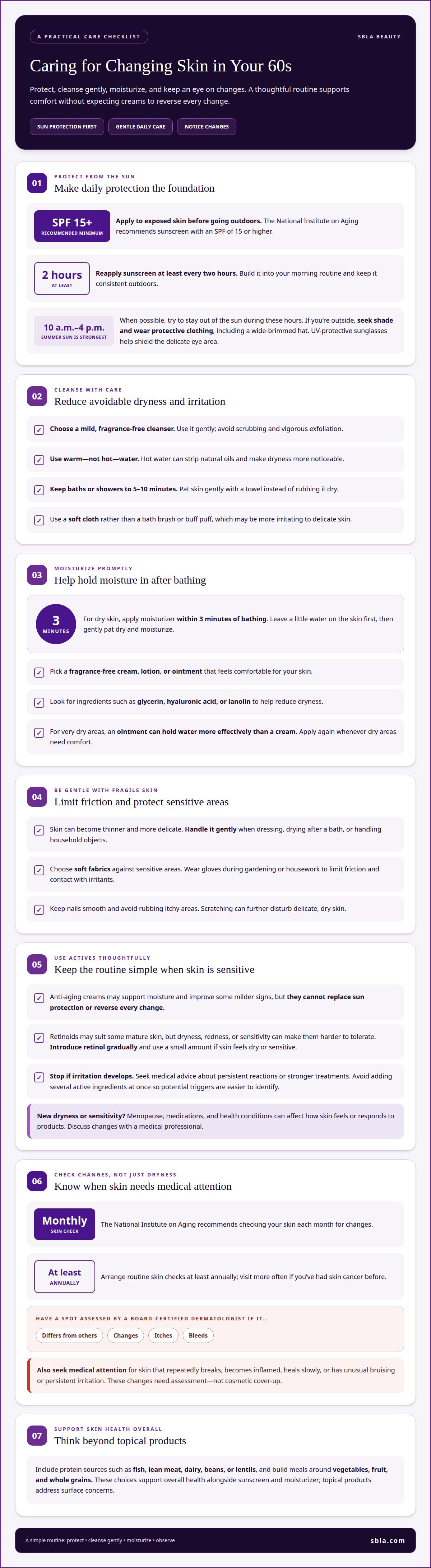
Your skin can change more noticeably in your 60s, but daily care still matters. Skin may become drier, thinner, itchier, and more prone to visible wrinkles, age spots, and bruising. A practical approach to managing skin changes in your 60s starts with daily sun protection: the National Institute on Aging recommends sunscreen with SPF 15 or higher and reapplying it at least every two hours.
It’s understandable to want products that restore firmness or soften lines. Anti-aging creams and serums can support moisture and improve some milder signs of aging, but they cannot reverse every change or replace sun protection. Even if you’re new to skincare, thoughtful steps can still help protect your skin.
This article explains why skin changes with age, what you may notice through your 60s and 70s, and how to adapt everyday care. You’ll also learn where antiaging products may help, where their effects are limited, and which changes deserve medical attention.
Key Takeaways
- Protect skin consistently outdoors; the National Institute on Aging recommends choosing sunscreen with SPF 15 or higher.
- As skin changes with age, gentle cleansing and regular moisturizing can help support comfort and hydration.
- Thinner, more fragile skin can make everyday bruising and slower healing more noticeable, so handle skin with care.
- Learn which changes are common through your 60s and 70s, and explore options such as SBLA BEAUTY’s Eye Lift Wand for a focused eye-area routine.
1. Can antiaging beauty products protect my skin?
Yes, antiaging products can support skin, but sunscreen is essential daily protection. A practical foundation for managing skin changes in your 60s is using sunscreen consistently. The National Institute on Aging recommends choosing sunscreen with an SPF of 15 or higher. Apply it to exposed skin before going outdoors, then reapply at least every two hours. Make sunscreen part of your morning skin care routine, even when other products target wrinkles or uneven tone.
Sun protection also means reducing exposure. During summer, the National Institute on Aging recommends trying to stay out of the sun between 10 a.m. and 4 p.m., when its rays are strongest. If you’re outside, seek shade and wear protective clothing, including a wide-brimmed hat. UV-protective sunglasses help shield the delicate eye area. These steps limit ongoing damage that can make age spots appear and increase skin cancer risk.
Topical anti-aging creams mainly address milder signs affecting the skin’s upper layers; they cannot replace sun protection. Retinoids may suit some mature skin, but dryness, redness, or sensitivity can make them harder to tolerate. Introduce retinol gradually, using a small amount if your skin feels dry or sensitive. Stop if irritation develops, and seek medical advice about persistent reactions or stronger treatments.
Menopause can contribute to structural changes as collagen declines. Medications and health conditions can also affect how skin feels or responds to products. If you notice new dryness or sensitivity, discuss it with a medical professional. When managing skin changes in your 60s, avoid adding several active ingredients at once; a simple routine makes potential triggers easier to identify.
Nutrition supports skin health alongside sunscreen and moisturizer. Include protein sources such as fish, lean meat, dairy, beans, or lentils, and build meals around vegetables, fruit, and whole grains. For example, pair fish with leafy greens and whole grains. These choices support overall health, while topical products address surface concerns. Managing skin changes in your 60s means combining sun protection, gentle products, and nourishing meals rather than relying on one antiaging treatment.
2. How does skin change as you age?
Natural aging and accumulated sun damage can change how skin looks and feels. After age 60, a routine may need more emphasis on gentle cleansing and moisture. Skin can become drier, and harsh washing may make tightness or irritation more noticeable. Choose a mild, fragrance-free cleanser and use it gently rather than scrubbing. A soft cloth is less irritating than a bath brush or buff puff.
Use warm water, not hot, for bathing. Hot water strips natural oils and can increase dryness. Keep baths or showers to 5 to 10 minutes, then pat skin gently with a towel. Leave a little water on the skin before applying moisturizer. For dry skin, apply it within 3 minutes of bathing to help hold moisture in.
For everyday dryness, choose a fragrance-free cream, lotion, or ointment. Ingredients such as glycerin, hyaluronic acid, and lanolin can help reduce dryness. If your skin feels very dry, an ointment can hold water more effectively than a cream. Apply moisturizer after bathing and whenever dry areas need comfort. Avoid vigorous exfoliation, which can irritate fragile, aging skin.
Which moisturizers and ingredients help with dry, thin skin? Fragrance-free moisturizers containing glycerin, hyaluronic acid, or lanolin can help ease dryness. For very dry areas, choose an ointment rather than a cream. Adjust the texture to your skin’s needs, and stop using any product that causes irritation.
When should a new or changing spot be checked for skin cancer? The National Institute on Aging recommends checking your skin each month for changes. A spot that differs from others, changes, itches, or bleeds should be assessed by a board-certified dermatologist. Arrange routine skin checks at least annually, and visit more often if you’ve had skin cancer before. These changes warrant medical attention, not simply a new moisturizer or cosmetic treatment.
3. Age-related changes in skin thickness, elasticity, and fragility
During your 60s, the epidermis and dermis, skin’s first two layers, thin and flatten. This structural shift can make skin feel more delicate and leave less cushioning between the surface and underlying tissue. Everyday friction from clothing or handling household objects may therefore feel more noticeable. Treat exposed areas gently, especially when dressing or drying after a bath.
Collagen helps provide skin’s structural support, while elastin contributes to its ability to stretch and recoil. As these components change with age, skin may lose some firmness and elasticity, and lines can appear more defined. Women lose 30% of their collagen during menopause, which can contribute to changes in structure, definition, and firmness. The extent and timing of visible changes vary from person to person.
Thinner, less resilient skin can also be more fragile. A minor bump may leave a bruise, and a cut may take longer to heal than it once did. During your 60s, sweat glands become less active, which can mean less sweating. Pay attention to skin that repeatedly breaks, becomes inflamed, or heals slowly; these changes deserve medical attention rather than cosmetic cover-up.
Dryness can intensify discomfort because the skin barrier holds moisture less effectively. Itching and irritation may encourage scratching, which can further disturb delicate skin. Keep your nails smooth and avoid rubbing itchy areas. Choose soft fabrics against sensitive areas, and protect your hands with gloves during gardening or housework to limit friction and contact with irritants.
To help prevent avoidable damage, handle your skin with care and maintain sun protection. A dermatologist can assess persistent irritation, unusual bruising, wounds that do not heal, or a sudden change in skin texture. For anyone considering a cosmetic procedure, skin thickness and fragility matter: a dermatologist evaluates skin condition and health history when discussing suitable treatment options. Gentle care supports comfort, but cannot restore every age-related structural change.
4. Common skin changes in your 60s and 70s
During your 60s, skin may become drier, itchier, and more fragile. Its surface can develop a crepe-paper or tissue-like appearance as natural aging and past sun exposure affect texture. Wrinkles, creases, age spots, and bruises may also become more noticeable. More than 90% of older people have some type of skin disorder, so changes deserve attention, not automatic dismissal as “just aging.”
Age spots are common after age 50, particularly on areas exposed to sunlight, such as the face and hands. Uneven pigmentation, dullness, and broken capillaries can also develop over time. Clothing that covers exposed skin helps limit additional sun exposure, while consistent sunscreen supports protection. These habits may help reduce further sun-related changes, though they don’t erase existing spots.
How can age spots and uneven skin tone be treated safely? First, have a dermatologist assess spots that change in shape, color, or size, since those changes can signal skin cancer. Once a spot has been evaluated, discuss suitable treatment options with a dermatologist rather than trying to remove it at home. Avoid picking, scraping, or using harsh products on an unidentified spot.
Watch for differences between a new mark and your other spots. A spot that changes, itches, or bleeds, or one that looks unlike its neighbors, merits medical assessment. This is especially important when a familiar age spot begins changing. For managing skin changes in your 60s, note the spot’s location and appearance so you can describe what you noticed during an appointment.
Skin can also bruise more easily, and wounds may heal more slowly with age. In older adults, healing may take up to four times longer than in younger people. Sweat glands also become less active during your 60s, which may mean less sweating. When managing skin changes in your 60s, protect aging skin from friction and avoid irritating a wound. Changes that persist, worsen, or fail to heal deserve medical attention, rather than cosmetic concealment.
SBLA BEAUTY: Eye Lift Wand
Eye Lift Wand offers a focused option for people looking to add an eye-area device to their skincare routine. It can sit alongside the basics discussed above, such as gentle cleansing, moisturizer, and daily sun protection. Consider it when your interest is specifically the eye area and you want to explore a targeted beauty device. It doesn’t replace sunscreen, moisturizing, or medical assessment of a changing spot, persistent irritation, or other skin concern. Keep expectations grounded: the information here doesn’t establish a particular result or treatment effect. For concerns about symptoms or a skin condition, speak with a medical professional. To learn more about the Eye Lift Wand, visit SBLA BEAUTY.
Choose a Routine That Reflects Your Priorities
Your skincare routine can evolve with your priorities. Rather than chasing every visible change, decide which areas matter most to you and choose products that fit comfortably into your daily care. A focused approach to managing skin changes in your 60s can make your routine feel more intentional and easier to maintain. Beauty devices can complement personal care, while medical concerns remain a matter for a qualified health professional.
For a targeted eye-area option, consider the Eye Lift Wand. SBLA BEAUTY also offers the Neck, Chin & Jawline Sculpting Wand and Neck, Chin & Jawline Sculpting Wand XL. Explore these options in line with the areas you want to focus on, without expecting a beauty device to replace sun protection or medical care. Contact SBLA BEAUTY to explore its offerings and find a direction that suits your routine. Steady, thoughtful choices can help you approach this next chapter with confidence.
Frequently Asked Questions
How does skin change as you age?
Skin’s structure and appearance shift with age, and changes vary between people. For example, wrinkles forming around an old scar can make it more visible. Oil production also follows different patterns: men generally experience only a minimal decline in sebaceous gland activity, most often after age 80. Notice what changes for you, rather than assuming every new mark or symptom is simply part of aging.
Can antiaging beauty products protect my skin?
Some products support surface-level concerns, but sunscreen and protective clothing are central to everyday sun care. Moisturizer can help with dryness, while other topical products may address milder visible signs. Match products to your main concern instead of layering several new treatments at once. A cosmetic routine cannot assess a changing lesion, so keep medical evaluation separate from decisions about appearance-focused care.
Is Retinol or Hyaluronic Acid Better?
Neither ingredient is universally better: retinol and hyaluronic acid serve different skincare goals. Retinol may suit someone targeting visible signs of aging, but it can be difficult for dry or sensitive skin to tolerate. Hyaluronic acid is one ingredient that can help reduce dryness. If you’re choosing between them, prioritize your skin’s current needs and introduce a new active ingredient gradually.
What Happens to Your Skin as You Age?
The skin’s surface and underlying support change over time, influencing texture, firmness, and resilience. Age-related changes can also affect scars: as surrounding wrinkles form, an old scar may stand out more. These shifts don’t look identical for everyone. Consider where and how your skin changes, and distinguish gradual texture changes from a spot that is new or changing.
Why treat aging skin?
Treatment can serve comfort and appearance, not just wrinkle reduction. Moisturizing dry skin may ease tightness, while a consistent routine can help you feel more confident in your skin. Set a clear goal first, such as reducing dryness or improving the look of fine lines. Products address cosmetic concerns; symptoms such as persistent irritation or a changing spot call for medical attention.
What skin changes are common in your 60s?
Common changes include dryness, itchiness, more visible wrinkles and age spots, and bruising. Skin may also look dull or crepe-like, and wounds can take longer to heal. These features can occur with aging, but a spot that changes shape, color, or size deserves assessment. Focus on changes over time, especially when one area looks different from your other spots.

