
Skincare Routine for Renewed Self-Esteem Through Mindful Self-Care
A skincare routine for renewed self-esteem is built around consistent, mindful care, not flawless skin. A simple morning and evening ritual can create structure, encourage a more attentive relationship with your skin, and make self-care feel like a deliberate act of respect rather than another task on your list.
It’s understandable to want visible changes when skin concerns affect how you feel about your appearance. But a routine can offer value beyond what you see in the mirror: taking a few focused moments for yourself may bring a sense of calm and control, especially when the rest of the day feels demanding.
Here, you’ll learn how consistency can support mental well-being, why your routine should respond to your skin’s changing needs, and how to make skincare a more mindful practice. The aim isn’t perfection. It’s a considered approach to care that helps you feel more connected to yourself while giving your skin the attention it needs.
Key Takeaways
- Build a consistent skincare ritual to add structure and make daily care feel intentional, not like a chore.
- Choose products and steps around your skin’s needs, then adapt your routine as those needs change.
- Use cleansing and moisturizing as a mindful pause: slow down, breathe, and focus on the experience.
- Let self-esteem grow from compassionate, realistic care rather than expecting skincare to resolve every concern.
How Does a Skin Care Routine Help Your Mental State?
A consistent care routine can make daily self-care more deliberate and support a sense of structure and personal agency. Its value lies in the ritual, not in achieving flawless skin.
A Consistent Self-Care Ritual
A skincare ritual is a repeated sequence of care, such as cleansing and applying moisturizer each morning and evening. Familiar steps can build consistency and give you a practical way to prioritize your needs. For example, notice how your skin feels after cleansing, then apply moisturizer with gentle, unhurried movements. This small act supports skin care while reinforcing a habit you control.
Self-Care and Mental Well-Being
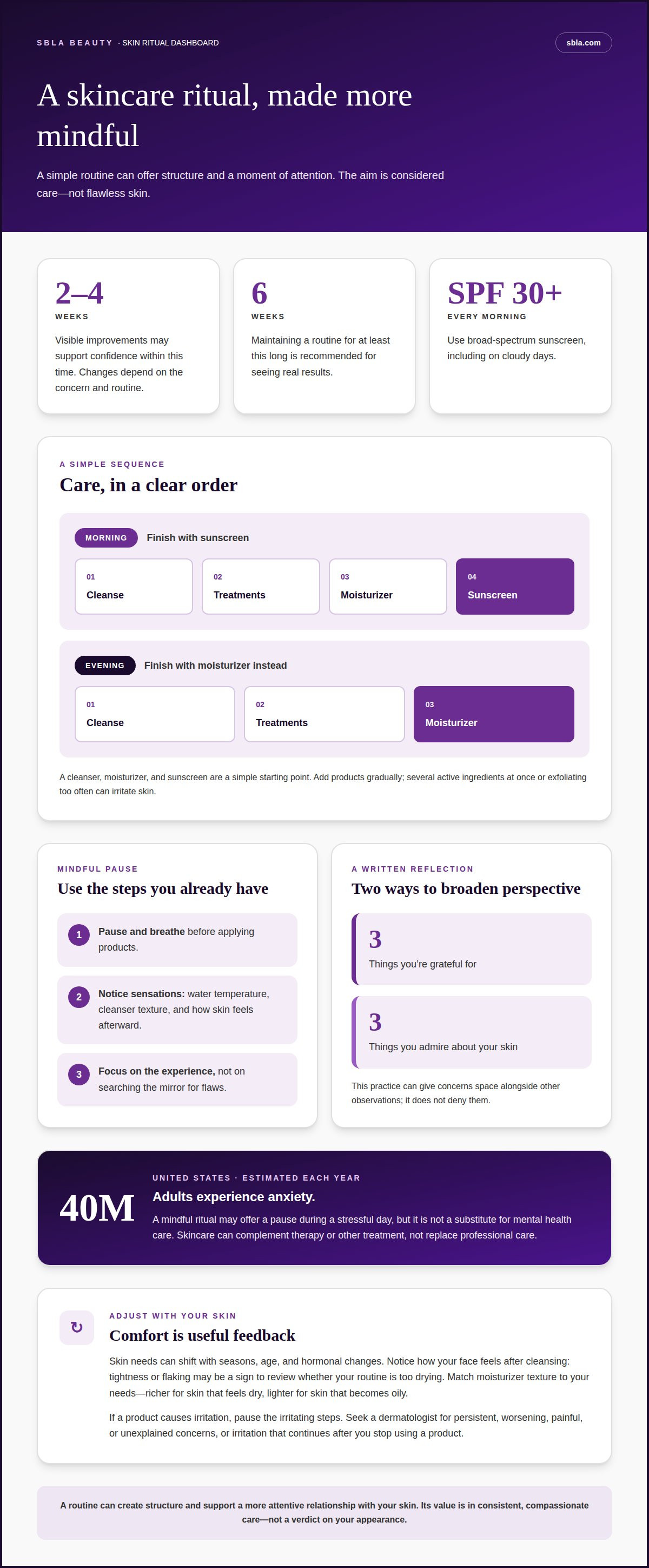
Self-care means making room for activities that support your well-being, and skincare can be one manageable part of that practice. The cost of a basic routine in the United States depends on the products you choose, their formulations, and how often you replace them. A cleanser, moisturizer, and sunscreen form a simple starting point. Keep expectations realistic: visible changes take time, and maintaining a routine for at least six weeks is recommended for seeing real results. Focus on consistency and how the ritual feels, rather than treating each mirror check as a verdict.
Skincare Alongside Mental Health Care
Skincare can complement therapy or other mental health treatment, but it cannot replace professional care. If anxiety, depression, or another mental health concern is severe, guidance from a physician or therapist matters. A 2023 study in the Journal of Behavioral Health reported higher self-esteem and lower daily stress among men with regular grooming habits. That finding supports including self-care in a broader approach, not expecting grooming alone to resolve distress.
Introducing several active ingredients at once or exfoliating too often can irritate skin, causing dryness, redness, or discomfort. Add products gradually, and pause irritating steps if your skin reacts. See a dermatologist for persistent, worsening, painful, or unexplained concerns, or if irritation continues after you stop using a product. A dermatologist can assess the concern and help tailor care to your skin’s needs.
Understanding individual skin needs
Skin needs can shift with seasons, age, and hormonal changes, so a useful routine responds to what your skin shows. A skincare routine for renewed self-esteem starts with practical care, not a one-size-fits-all checklist.
Cleansing for Everyday Skin Health
Daily cleansing removes impurities, excess oil, and buildup from the skin’s surface. Choose a cleanser that suits your skin type: a formula that leaves dry skin feeling tight may be too stripping, while a cleanser that doesn’t manage excess oil may not feel comfortable on oilier skin. After washing, notice whether your face feels comfortable or dry. That simple observation helps you refine the habit without adding unnecessary steps, supporting healthy skin through consistent, considered care.
Moisture and Skin-Barrier Support
Moisturizer helps maintain hydration and supports the skin barrier, helping skin feel comfortable and protected. Match its texture to your needs: a richer moisturizer may suit skin that feels dry, while a lighter one may work better for skin that becomes oily. Apply it after cleansing and treatments. If tightness or flaking appears, review whether your routine is too drying before adding more products. Hydration can support a more comfortable complexion, which may contribute to a more positive feeling about your skin.
For a straightforward order, cleanse first, then apply treatments, moisturizer, and sunscreen in the morning. Use broad-spectrum sunscreen with at least SPF 30 every morning, including cloudy days; at night, finish with moisturizer instead.
Skin changes can become noticeable at different rates. Visible improvements may support confidence within two to four weeks, though the change depends on the concern and routine. Track one practical sign, such as less tightness after cleansing, rather than judging every small fluctuation. Season, age, and hormonal shifts can affect what your skin needs, so adjust your habits when its comfort or appearance changes.
Mindful skincare as a meditative practice
A mindful skincare ritual shifts attention from correcting your appearance to noticing the present moment. During your morning or evening routine, take a deep breath before applying products. Focus on the feel of the water, the cleanser’s texture, and how your skin feels afterward. This deliberate attention can make beauty care less automatic and create a pause between daily tasks.
Mindfulness doesn’t require changing your skin type or adding another product. Use the steps already in your routine as sensory cues: feel the water temperature while cleansing, notice your hands applying moisturizer, and observe whether your skin feels comfortable. Focus on the experience rather than searching for flaws in the mirror. Skincare then becomes a practice of attention, not a test of appearance.
For a written reflection, note three things you’re grateful for and three things you admire about your skin. You might value its ability to feel sensations or appreciate a feature you usually overlook. This practice can redirect attention toward a more balanced view of beauty. It doesn’t deny concerns; it gives them space alongside other observations.
An estimated 40 million adults in the United States experience anxiety each year. A mindful ritual isn’t a substitute for mental health care, but a deep breath and focused sensory attention can offer a pause during a stressful day. The science of skin care concerns the skin’s response to products and their ingredients; mindfulness concerns how you direct attention. Keep those roles distinct. Notice whether a chemical ingredient causes discomfort, and treat that as a skin response, not a personal failure. Consistent mindful practice may help you approach your routine with greater awareness, even when stress or appearance concerns arise.
How skincare routines may affect self-esteem
Skincare can influence self-esteem by changing how you relate to your appearance, not by defining your worth. A caring morning ritual may help you feel more attentive to your needs, especially when it focuses on comfort rather than correcting flaws. For example, notice whether your skin feels calm after moisturizing instead of searching for a perfectly radiant finish. That shift makes the practice mindful: you’re responding to your skin, not grading it.
Visible changes can feel encouraging, but they shouldn’t become your only measure of progress. Skin texture and tone naturally vary, so a difficult moment in the mirror doesn’t erase the value of consistent care. Try recording one neutral observation after your routine, such as “my cheeks feel less tight,” rather than labeling your appearance as good or bad. This creates a more balanced record and helps separate a physical concern from your broader sense of self.
Skincare’s emotional value can also come from making a deliberate choice for yourself. Choose a manageable step, keep it steady, and observe your skin’s comfort and response. If a product irritates your skin, changing that step is a practical adjustment, not a personal setback. Collagen concerns or other appearance goals can be part of your routine, but they don’t determine whether you deserve confidence or care. This distinction matters: self-esteem is broader than any single feature.
Use your routine as one supportive habit, not as a test you must pass each day. Pair moisturizer with a useful reminder, such as “I can care for my skin without criticizing it.” If a polished lip appearance is part of your personal expression, explore a defined lip look as one optional beauty choice. Let the decision reflect what you enjoy, rather than pressure to meet an ideal.
SBLA BEAUTY
SBLA BEAUTY offers targeted skincare devices for readers who want to add a focused step to their personal routine. The Neck, Chin & Jawline Sculpting Wand and Neck, Chin & Jawline Sculpting Wand XL target the neck and lower face, while the Liquid Facelift Wand provides another option for a focused facial-care ritual. Choose a product based on the area you want to focus on and how it fits your existing self-care habits. These devices can complement a mindful routine, but they don’t replace daily skincare basics or professional mental health care. A considered approach keeps the goal personal: care for your appearance while recognizing that self-esteem is broader than any one feature. Explore SBLA BEAUTY’s targeted wands to find a focused step for your routine.
Make Your Next Skincare Step Intentional
Let your skincare routine for renewed self-esteem reflect what matters to you, not pressure to meet an ideal. Choose one personal focus, then make space for care that feels considered and sustainable. A device can be an optional addition to that ritual, while your sense of worth remains larger than any appearance goal.
For targeted care, SBLA BEAUTY offers the Eye Lift Wand, Neck, Chin & Jawline Sculpting Wand, and Neck, Chin & Jawline Sculpting Wand XL. Select the area that aligns with your interests and explore how a focused tool could fit into your existing routine. For product information, contact SBLA BEAUTY. Keep your next step personal, measured, and grounded in care for yourself.
Frequently Asked Questions
Why should I implement a skincare routine?
A routine gives skincare a regular place in your day and helps you respond to recurring needs. For example, cleansing after a day outdoors removes accumulated impurities, while moisturizer can ease tightness. Repeatable steps can also offer structure during unpredictable periods. Treat the routine as maintenance, not a daily judgment of your appearance, and adjust it when your skin’s comfort or condition changes.
How Long Before I Notice Mental Health Benefits?
Mental benefits are best understood as a personal experience, not a result with a fixed timetable. A focused pause during cleansing may feel calming in the moment, while a familiar evening ritual can make the transition toward rest more deliberate. Notice whether the practice helps you feel present or gives your day a useful point of structure. Skincare can complement mental health care, but it doesn’t replace professional support.
What lifestyle and environmental factors impact skin confidence and how can routines adapt?
Seasonal shifts, age, hormonal changes, sleep, exercise, and diet can all influence your skin and how it feels. If colder weather leaves your face tight, reassess whether your cleanser or moisturizer still suits your needs. During a more active period, cleanse away accumulated sweat and daily buildup. Adequate sleep, regular exercise, and an antioxidant-rich diet can also support a balanced lifestyle alongside topical care.
What is a simple evidence-based skincare routine for beginners?
Keep the routine focused: cleanse, apply a treatment if it suits your concern, then moisturize. In the morning, finish with broad-spectrum sunscreen of at least SPF 30. At night, cleanse and moisturize again. If you choose a retinoid, begin with a pea-sized amount once or twice weekly, then increase use as your skin adjusts. Introduce it as a distinct step rather than adding several new actives together.
How long does it take to see results from a skincare routine?
Visible improvements may support confidence within two to four weeks, while maintaining a routine for at least six weeks is advised for real results. The concern you’re addressing and your skin’s response shape what becomes noticeable first. To assess progress, focus on one change, such as less dryness, and compare under similar lighting. This makes it easier to distinguish a lasting shift from an ordinary day-to-day fluctuation.
How can skincare routines support self-esteem without tying self-worth to appearance?
Define success by the care you give yourself, not by whether your skin looks flawless. For example, completing a gentle evening routine can be meaningful even when redness or texture remains. Use neutral language to describe what you notice, such as “my skin feels comfortable,” rather than ranking your face. Keep other sources of confidence in view, including relationships, skills, and activities you value.

