
Confidence Boosting Skincare for Seniors: Routine Steps
A confidence-boosting skincare routine for seniors can be simple: use broad-spectrum sunscreen with SPF 30 or higher every morning, then keep daily care focused on gentle cleansing, an antioxidant serum, and moisturizer. Consistent sun protection helps limit premature skin aging, while a thoughtful routine can support skin that looks and feels cared for. The goal isn’t to erase the signs of age; it’s to build habits that help you feel comfortable in your skin.
Skin can become drier and more delicate with age, so an elaborate regimen may feel like too much. A few well-chosen steps, followed consistently, can make skincare easier to maintain and more rewarding.
This guide explains how to protect skin from the sun, create a straightforward morning and evening routine, and understand ingredients such as hyaluronic acid, peptides, niacinamide, and retinoids. You’ll also learn how targeted skincare tools can complement those habits, helping you choose an approach that feels practical, personal, and confidence-building.
Key Takeaways
- When outdoors, protect uncovered skin with broad-spectrum, water-resistant sunscreen, and seek shade when the sun’s rays are strongest.
- For dry skin, keep bathing brief and use moisturizer soon afterward; fragrance-free products can help avoid irritation.
- Keep the routine manageable and introduce exfoliation gently, adjusting the steps to how your skin responds.
- Explore targeted options such as the Eye Lift Wand when you want to complement your everyday skincare with focused care for the eye area.
1. Daily sun protection
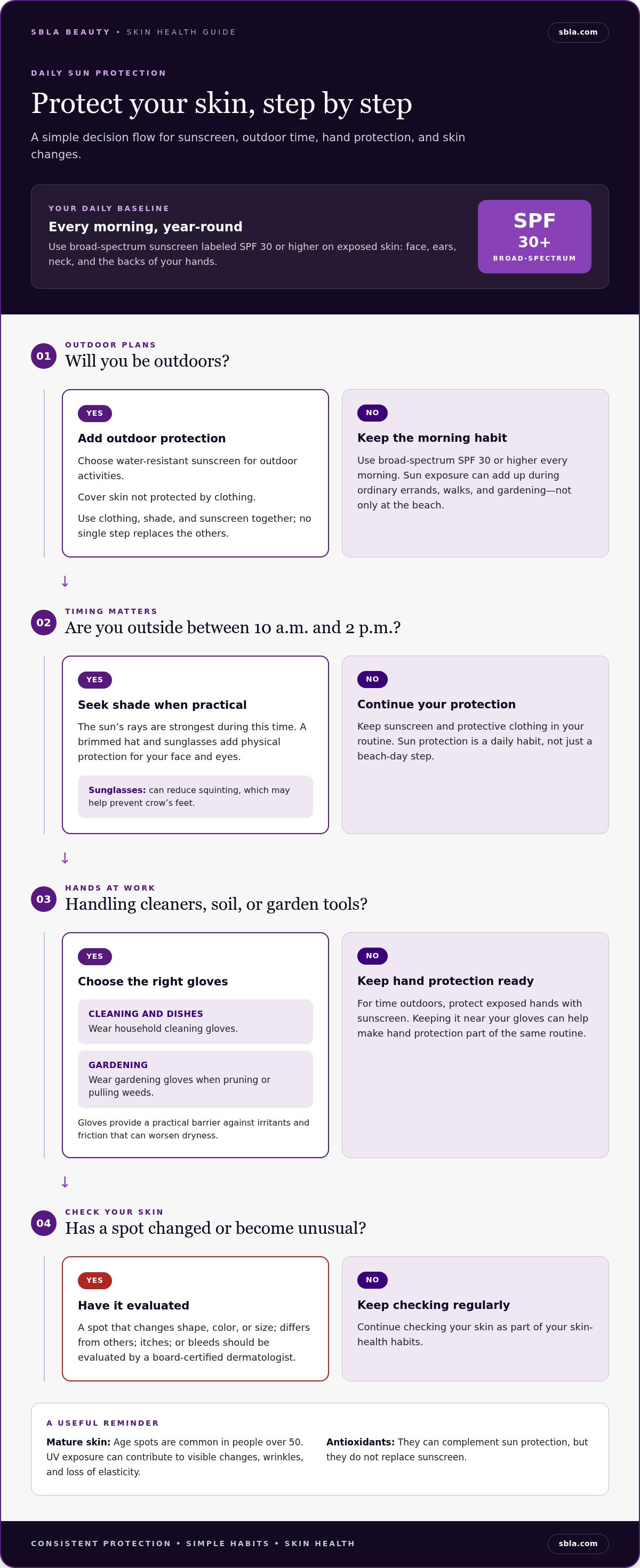
Make broad-spectrum sunscreen with SPF 30 or higher part of your morning routine year-round. Apply it to exposed skin, including your face, ears, neck, and the backs of your hands. For outdoor activities, choose water-resistant sunscreen and cover skin not protected by clothing. A moisturizer with sun protection can simplify your morning steps, but choose one labeled broad-spectrum SPF 30 or higher.
Sun exposure adds up during ordinary errands, gardening, and walks, not only at the beach. The sun’s rays are strongest between 10 a.m. and 2 p.m., so seek shade outdoors when practical. A brimmed hat and sunglasses add physical protection for your face and eyes. Sunglasses can also reduce squinting, which may help prevent crow’s feet. Clothing, shade, and sunscreen work together; no single step replaces the others.
Consistent protection matters for mature skin. Age spots are common in people over 50, and UV exposure can contribute to visible changes, wrinkles, and loss of elasticity. Sunscreen reduces further exposure and supports a daily routine focused on skin health. Antioxidants in skincare can complement sun protection, but they don’t replace sunscreen. Check your skin regularly: a spot that changes shape, color, or size, differs from others, itches, or bleeds should be evaluated by a board-certified dermatologist.
Protect your hands during housework and gardening, too. Wear gloves when handling cleaning products, potting soil, or garden tools. Gloves provide a practical barrier against irritants and friction that can worsen dryness, especially when skin is delicate. Use household cleaning gloves while washing dishes, then gardening gloves when pruning or pulling weeds. Keep sunscreen near your gloves so protecting your hands outdoors becomes part of the same routine.
2. Cleansing, antioxidant serum, and moisturizing
In the United States, a simple routine for mature skin can center on three basics: a gentle cleanser, an antioxidant serum, and a fragrance-free moisturizer. Choose products by purpose and how your skin tolerates them, not prestige. Use cleanser in the morning and evening, then apply serum before moisturizer. This straightforward framework can make confidence-boosting skincare for seniors easier to maintain.
A mild cleanser used once daily can remove dirt and oil without stripping natural moisture. If you cleanse morning and evening, choose a gentle, fragrance-free formula and notice how your skin feels afterward. Tightness or stinging may mean the cleanser is too harsh. Use warm, not hot, water, which can strip natural oils and increase dryness. Pat skin dry instead of rubbing.
After bathing, moisturize promptly to help hydrate aging skin and restore its protective barrier. Adults in their 60s and 70s can limit baths or showers to 5 to 10 minutes, then apply moisturizer within 3 minutes. Apply it while skin still feels slightly damp, using smooth, light strokes on the face and body. These practical steps support confidence-boosting skincare for seniors without adding complexity.
Choose a fragrance-free moisturizer if your skin feels dry or itchy, since fragrance can irritate sensitive skin. For very dry areas, ointment holds water in the skin better than cream. Apply it to rough patches such as elbows or lower legs, and reapply whenever skin feels dry. Avoid using bath oil as a moisturizing shortcut: it can make the tub slippery and increase fall risk.
Once these daily skin-care basics are in place, consider a separate finishing step for the lips. The Limited Edition - DOUBLE THE PLUMP Lip Plump & Sculpt offers a focused lip-care option without replacing cleansing or moisturizing.
3. What is the best skin care routine for anti-aging?
A practical anti-aging routine is simple, consistent, and comfortable enough to maintain. For a reference on product spending, facial serums on the market typically range from $40 to $62, with a median of about $46. Professional treatment costs vary by procedure, treatment area, and the care plan involved.
Use a skincare routine twice a day, but skip the complicated 10-step approach. In the morning, cleanse, apply an antioxidant serum, moisturize, and finish with sun protection. In the evening, cleanse and moisturize; introduce active ingredients gradually rather than layering several new products at once. Gentle exfoliation once or twice a week can remove dead skin cells and refresh the look of aging skin. Reduce or pause exfoliation if irritation develops.
A skincare routine can also create a deliberate moment of self-care. Choose a calm time, such as after breakfast or before bed, and follow the same steps in order. This small, repeatable ritual can support a sense of control without making appearance a measure of personal worth. Set aside an extra session each week for a soothing mask or careful application of moisturizer.
Confidence also grows through habits beyond the bathroom. Physical activity can support mental well-being by reducing depression and anxiety and increasing self-esteem and confidence. Choose an activity you enjoy, such as walking or gentle stretching, and make it part of your week. The benefit goes beyond appearance: movement can support how you feel in your body.
Social media can shape self-image, especially when feeds show only one narrow version of beauty. Follow accounts featuring people across ages, backgrounds, and ethnicities to bring more varied faces into your daily scrolling. Track how your skin feels and looks in a private journal, not against edited images. Confidence improvements from skincare changes typically appear within 6-8 weeks, so note comfort and consistency alongside visible changes.
4. Hyaluronic acid, peptides, niacinamide, and retinoids
Choose ingredients by the skin concern you want to address, then introduce them individually. Hyaluronic acid supports surface hydration, which can soften the appearance of dryness. Topical hyaluronic acid can increase skin hydration by up to 96%. Apply it to facial skin as directed on its label, then follow with moisturizer to help reduce water loss.
Peptides and niacinamide offer different options for a focused routine. Peptides are short chains of amino acids used in skincare formulas, while niacinamide is a form of vitamin B3. Look for these ingredients on product labels and select a formula that suits your skin’s needs. Avoid adding several new active products together, so you can identify which one your skin tolerates.
Retinoids include prescription tretinoin and tazarotene, as well as over-the-counter retinol and retinal. These ingredients can help treat wrinkles, but their strength and formulation differ. There’s no age threshold for beginning retinol; the decision should reflect your skin concerns, current routine, and tolerance. Start with a pea-sized amount two or three times a week, as the routine recommends, rather than using it daily from the outset.
Use retinoids consistently and observe how your skin responds. Mild dryness or irritation can mean the routine needs simplifying; don’t add exfoliating products at the same time. Skin cell turnover requires 28-40 days, so assess appearance over time rather than expecting an overnight change. Keep morning care centered on hydration and sunscreen, especially while using products that may make skin more sensitive.
For a separate option focused on the lips, explore the Limited Edition - DOUBLE THE PLUMP Lip Plump & Sculpt. Choose it as a targeted addition to your routine, not as a substitute for facial skincare ingredients such as hyaluronic acid or retinoids.
SBLA BEAUTY: Eye Lift Wand
The Eye Lift Wand can add a focused step to your daily routine when you want dedicated care for the eye area. Keep it alongside, not in place of, the essentials: gentle cleansing, moisturizer, and daily sun protection. This lets foundational care remain consistent while you explore a more targeted approach.
Consider a targeted eye-area product if adding a specific step feels useful and manageable. Follow the product directions and keep your routine comfortable: skincare should support your self-care habits, not make them difficult to maintain. The right routine is one you can follow consistently and adapt to your skin’s needs.
For more information about the Eye Lift Wand, visit sbla.com.
Make Your Routine Your Own
The best next step is choosing care you can maintain and that reflects what matters to you. Confidence-boosting skincare for seniors isn’t about chasing a flawless appearance; it’s about feeling intentional and comfortable in your own skin. Let your priorities guide any additions, whether you want to keep your routine streamlined or explore targeted skincare tools.
For focused areas, SBLA BEAUTY offers the Eye Lift Wand, Neck, Chin & Jawline Sculpting Wand, and Neck, Chin & Jawline Sculpting Wand XL. Consider these optional additions to your personal routine, not replacements for daily habits that support skin health. Decide what feels useful, and make changes one at a time to keep your routine clear and manageable.
Contact SBLA BEAUTY to explore its skincare tools. A considered routine can be a meaningful act of self-care, and every thoughtful step is yours to define.
Frequently Asked Questions
Why should I implement a skincare routine?
A skincare routine gives you a consistent way to care for your skin and notice changes. Using familiar products regularly can make it easier to spot new irritation or a changing mark. It also helps you match care to a specific need, such as tightness after washing or dry hands. Choose manageable steps that fit naturally into your day.
Do any anti-aging products really work?
Some ingredients can address specific visible concerns, though no product stops skin from aging. Retinoids, including retinol and retinal, can help treat wrinkles, while moisturizer can ease dryness and improve how skin feels. Sunscreen helps protect against sun damage. Consider the concern, ingredient, and your skin’s tolerance when choosing a product, and introduce new active formulas one at a time.
How Long Does It Take to See Confidence Improvements From Skincare Changes?
Confidence improvements from skincare changes typically appear within 6-8 weeks. Give a routine time to become familiar before judging its effect. You could note comfort, dryness, and how you feel getting ready in a private journal, rather than comparing your appearance with edited photographs. If a product causes persistent discomfort, simplify your routine and reassess which step may be contributing.
How does your skin change as you get older?
Skin can become thinner, drier, and more prone to irritation with age. Collagen synthesis declines by approximately 1% annually after age 40, and dermal thickness decreases by 6.4% per decade. These structural changes can affect firmness and the way skin holds moisture. A product that once felt comfortable may later feel drying, so pay attention to changes in texture and sensitivity.
What is the best skin care routine for anti-aging?
The best routine is consistent and built around your skin’s needs. Keep the foundation simple, then add a targeted ingredient when you have a clear reason, such as addressing wrinkles or uneven-looking tone. Avoid starting several potent products at once; changing one product at a time makes it easier to identify irritation. Revisit your routine when your skin’s comfort or needs change.
What skincare concerns are most common for older adults?
Dryness, itching, sensitivity, wrinkles, and age spots are common concerns as skin changes with age. Use how your skin feels as a practical guide: persistent tightness may call for a richer moisturizer, while stinging can signal irritation. Pay attention to spots that change in shape, color, or size, or that itch or bleed. These changes need evaluation by a board-certified dermatologist.

