
Choosing portable skincare devices for travel
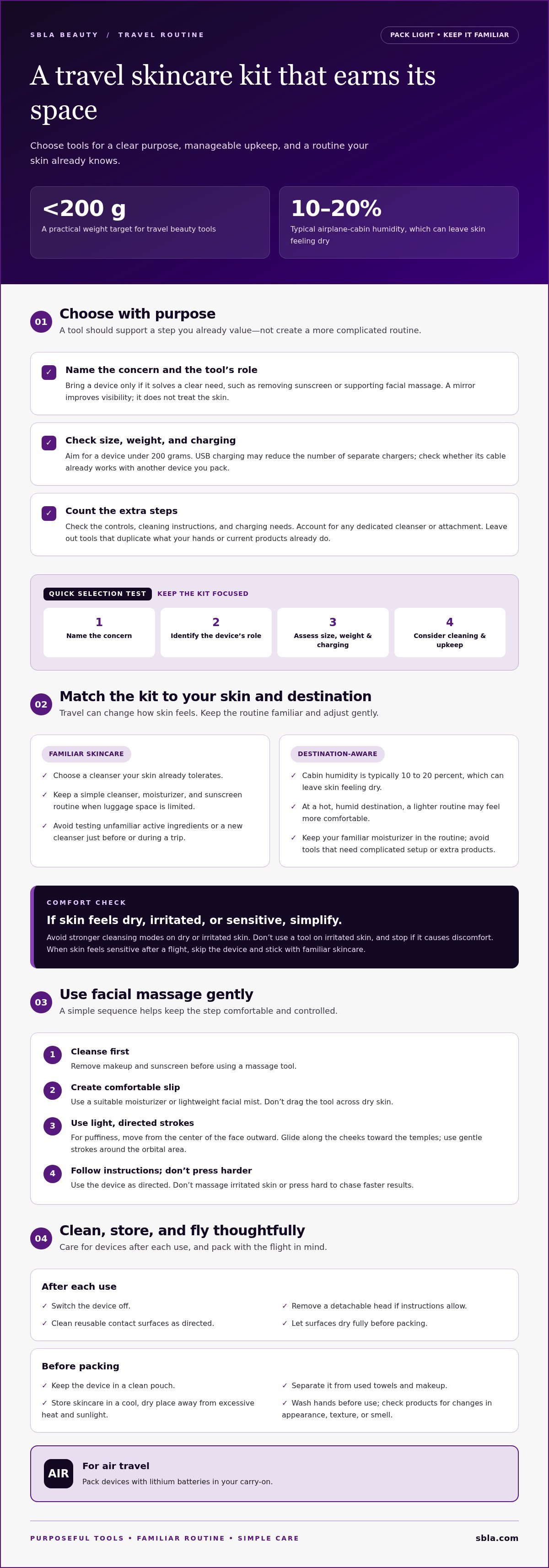
The smartest travel skincare kit isn’t the one with the most tools. Choose travel-friendly skincare devices that weigh under 200 grams and use USB charging, then keep your routine focused on products your skin already tolerates. For air travel, pack devices with lithium batteries in your carry-on.
It makes sense to want a familiar skincare routine on the road, but climate, cabin air, and a changed schedule can affect how your skin feels. A compact kit should support your routine without adding bulk or introducing unfamiliar products just before a trip.
This guide explains what to look for in travel friendly skincare devices, how to use facial tools, and how to pack them for a flight. You’ll also learn how to adapt your routine to your destination and keep your skin comfortable while traveling.
Key Takeaways
- Choose a device that suits your skin and routine, and keep its care simple while you travel.
- Clean and store skincare tools thoughtfully to help keep them ready for your next use.
- Use gentle, controlled movements when incorporating a device into facial massage or depuffing.
- Pack devices and skincare products with your flight in mind, keeping battery-powered tools in your carry-on.
- Focus on the features that make a device practical on the go, rather than packing tools you won’t use.
1. What Should You Look for in a Travel Skincare Device?
Bring a device only if it solves a clear need, such as removing sunscreen or supporting facial massage. A simple cleanser, moisturizer, and sunscreen routine can be more practical when luggage space is limited. Travel-friendly skincare devices earn their place when they’re compact, easy to clean, and comfortable to use. If a tool adds steps without serving your routine, leave it at home.
Choose a cleanser based on how your skin usually responds, not just your destination. If your skin is dry or reactive, pack a gentle cleanser you already tolerate. For oily or combination skin, bring a familiar formula that removes sunscreen without leaving your skin feeling tight. A new cleanser can be an unwelcome variable when climate and routine are changing. Keep things simple, and avoid stronger cleansing modes if your skin feels dry or irritated.
A portable facial cleansing device can add a cleansing step, but it should suit your skin and your packing space. A compact model fits more easily beside a cleanser and moisturizer, while a simple handheld tool avoids a bulky base. Use light pressure and follow the instructions rather than increasing intensity to tackle travel grime. If your skin feels sensitive, cleanse with your hands instead.
Clean and store tools after each use. Switch the device off and remove any detachable head if the instructions allow. Clean reusable contact surfaces as directed, then let them dry fully before packing. Keep the device in a clean pouch, separate from used towels and makeup. Store skincare products in a cool, dry place away from excessive heat and sunlight. Wash your hands before use, and check products for changes in appearance, texture, or smell.
LED, microcurrent, and cleansing devices work differently, so their precautions differ too. Excessive pressure or intense cleansing can leave skin uncomfortable or dry; the device instructions explain its intended use and restrictions. Don’t use a tool on irritated skin, and stop if it causes discomfort. LED devices use visible light without UV rays, so they don’t cause tanning. If your skin is reactive, avoid testing unfamiliar active ingredients during a trip.
In the United States, portable skincare device prices vary with the technology, materials, and features. A basic cleansing tool and an LED or microcurrent device serve different purposes, so compare what each does and whether it suits your routine. Focus on practical value: compact design, straightforward cleaning, and charging that fits your packing habits. The most useful choice is one you’ll use comfortably, not the one with the longest feature list.
2. Choosing portable skincare devices
Start with the routine you can realistically maintain at your destination. A facial massage tool may earn its place if you use it consistently, while a larger device for occasional treatments may be better left at home. Travel friendly skincare devices should fit your actual habits, not an idealized itinerary. List each tool’s purpose, then remove anything that duplicates a step your hands or existing products already handle.
Weight and charging shape packing decisions. Aim for a device under 200 grams, a practical guideline for travel beauty tools. USB charging can reduce the number of separate chargers you bring. Before packing, consider whether your cable already serves another device. A single tool with a clear role and a familiar charging routine is often easier to manage than several specialized gadgets.
Match your kit to the destination, not just your suitcase. Airplane cabins typically have humidity levels of 10 to 20 percent, which can leave skin feeling dry. At a hot, humid destination, a lighter skincare routine may feel more comfortable. Choose a portable tool that doesn’t require extra products or complicated setup. Keep your familiar moisturizer in the routine, and avoid introducing unfamiliar active ingredients during travel.
A portable illuminated mirror can help with precise application in a hotel room, especially when the lighting is uneven. Consider where you’ll use it, how it folds or packs, and whether its light makes details easier to see. A large stand may be useful at home but awkward in a carry-on. For a short trip, a compact mirror may be more practical than a second full-size accessory.
Compare beauty tools by their function and the steps they add. A compact facial device may support a targeted routine, while a mirror improves visibility without treating the skin. Check the controls, cleaning instructions, and charging needs before packing. If a tool requires a dedicated cleanser or attachment, account for the extra space. You don’t need a device for every concern.
Use this selection test: name the concern, identify the device’s role, then assess its size, weight, charging, and upkeep. A tool that supports a step you already value may be worth packing. If it needs several accessories or changes your routine, choose a simpler kit. Balance what the device does against the space and attention you’ll have during the trip.
3. Facial massage and depuffing devices
A facial massage tool can add a brief, tactile step to your travel routine. For puffiness, use a clean tool with light pressure, moving from the center of the face outward. Glide along the cheeks toward the temples, and use gentle strokes around the orbital area. Don’t drag the tool across dry skin. A lightweight facial mist or suitable moisturizer can provide slip and keep the massage comfortable.
Keep the sequence simple: first cleanse away makeup and sunscreen, then apply a product that allows smooth movement and use the device as directed. Don’t massage irritated skin or press hard to chase faster results. If your face feels sensitive after a flight, skip the tool and use familiar skincare to support hydration. Comfort matters more than adding another intensive step.
Rechargeable microcurrent and facial-toning devices are practical when the instructions are clear, the charging method suits your packing, and you’ll use them consistently. Choose a device designed for facial use, follow its specified application pattern, and use only the conductive product it recommends. Microcurrent isn’t suitable for every situation or user. Don’t use it during a long flight; wait until after landing to resume your routine.
Portable facial steamers may appeal when your skin feels dry and you want added hydration. Follow the manufacturer’s directions and avoid prolonged heat exposure, especially if your skin is sensitive. A facial mist is a lightweight alternative when you want a quick hydration step without packing a larger tool. During a flight, keep application discreet and avoid directing mist toward nearby passengers or shared surfaces.
Temperature matters too. If you have sensitive skin, use hot-and-cold therapy devices on low-temperature or cold modes, and avoid prolonged exposure to high heat. Don’t use a heated tool immediately after moving between extreme temperatures. Let your skin adjust, then follow the device instructions. If heat causes discomfort, stop and choose a gentler option, such as a cool compress or familiar moisturizer.
Before packing a massage or hydration device, check its contact surface and clean it as directed. Dry it fully, then store it in a separate pouch away from makeup residue and used towels. At your destination, wash your hands before use and check the tool for residue. These simple steps help keep your routine orderly without adding extra cleansing or storage products.
Treat devices as optional tools, not essential travel steps. A short massage after cleansing may suit your routine, while a packed schedule may call for cleanser, hydration, moisturizer, and sunscreen instead. Adjust to how your skin feels each day. If travel leaves your skin dry or irritated, pause exfoliation and intensive device use until it feels normal again.
4. Carrying skincare devices on airplanes
Pack rechargeable skincare devices in your carry-on, not checked baggage. Personal skincare devices with small rechargeable lithium-ion batteries are permitted in carry-on luggage under current TSA and FAA guidelines. Keeping a battery-powered facial tool with you also makes it easier to protect it from pressure or impact inside checked luggage. Before packing, switch the device off and secure it in a case or pouch.
Keep the device separate from liquids and skincare products. Put travel-size products together in one pouch to keep your moisturizer, cleanser, and sunscreen organized. Place the device in a different compartment, especially if it has a delicate treatment surface. This helps prevent a leaking bottle from coating the tool and makes it easier to find what you need without unpacking everything.
Plan a simple airplane routine, not a full treatment session. Cabin air can leave skin feeling dry, so a familiar moisturizer may be more useful than a device. If you want to refresh, use a product you already tolerate and be considerate of nearby passengers. Don’t use a microcurrent device during a long flight; wait until you land to resume that step.
For easy packing, charge the device before leaving, switch it off, and place it in a protective pouch. Pack its cable beside the tool, rather than loose among makeup or toiletries. Keep liquids in their own pouch. This makes it easier to find your facial products in a carry-on while protecting the device from spills and residue.
Think about where you’ll use the device after arrival. A hotel bathroom may have limited counter space, so keep the tool and its case together. Clean the contact surface after use, let it dry, and return it to the pouch before packing again. Don’t leave a skincare device beside a sink where water or cleanser could reach its charging port.
Not every device needs to travel. Choose one tool for a specific purpose, such as facial massage, and leave duplicates at home. Keep your airplane routine focused on comfort, hydration, and familiar products. A compact kit is easier to manage through security, boarding, and after landing than a collection of devices you may not use.
Before departure, review the device’s instructions for charging and storage. Keep detachable components together, and don’t pack a tool while it’s damp after cleaning. If you’re bringing sunscreen, moisturizer, and a facial device, arrange them so the products stay separate from the tool. This simple packing choice protects the device and makes it easier to use at your destination.
5. Features of travel-friendly skincare devices
Compare size, weight, battery life, and purpose before adding a device to your suitcase. A useful target is under 200 grams; featured travel skincare products are described as under 3.4 ounces. Battery life varies by device and use, so compare its stated runtime with your planned routine. Effectiveness depends on choosing a tool designed for the treatment you want.
Charging affects convenience wherever you travel. USB charging can reduce the number of separate chargers in your bag. USB-C describes a connector, while dual voltage describes compatible power input. These aren’t interchangeable features. Choose a device whose labeling specifies the connection and voltage compatibility you need, then pack the matching cable or adapter.
Weight alone doesn’t determine portability. Consider the device’s shape, protective case, charging cable, and any products it needs. A slim facial tool may fit beside a moisturizer, while a bulky base can take space away from essentials. Before packing, place the device and accessories together, then decide whether their combined size suits your suitcase.
Battery runtime matters most when charging opportunities are limited. Compare the stated runtime with how often you expect to use the device, rather than relying only on a battery indicator. A tool used for brief sessions may suit a short trip, while frequent treatments require more charging flexibility. USB charging can help if you already pack a compatible power source.
Match the device to your destination’s climate and your skin’s needs. Sensitive skin may do better with simple controls and gentle settings than with multiple intensity levels. A compact tool that supports one familiar step can be more useful than a multifunction device with settings you won’t use. A facial mist may refresh your skin, but it won’t replace your full skincare routine.
Look for practical construction details: a cover for the treatment surface, easy-to-operate controls, and surfaces you can clean as directed. These features matter after a flight, when the device may share a pouch with personal items. Let it dry fully before storage, and keep it separate from makeup or products that could leak.
The best selection balances portability with a defined purpose. Compare the packed size, weight, charging method, stated runtime, and intended treatment in that order. Then remove any tool that duplicates a step or adds accessories you won’t use. For a focused approach to facial skincare tools, explore facial skincare tools suited to your routine.
SBLA BEAUTY: Eye Lift Wand
The Eye Lift Wand offers a focused option for the eye area when you want a dedicated tool rather than another general-purpose device. Keep your usual cleanser and moisturizer in your travel kit, and use the wand according to its directions.
For other areas, SBLA BEAUTY also offers the Neck, Chin & Jawline Sculpting Wand, Neck, Chin & Jawline Sculpting Wand XL, and Liquid Facelift Wand. Choose based on the area you want to address, and keep your travel kit focused on the tools that suit your routine.
Explore the Eye Lift Wand and how it may fit your routine at SBLA BEAUTY.
Make Your Travel Routine Work for You
Your next trip is a chance to refine what feels essential, not recreate every step from home. Choose travel friendly skincare devices based on the areas you want to focus on and the routine you’ll genuinely maintain. An intentional kit can make skincare feel considered wherever your plans take you.
If your focus is the eye area, explore the Eye Lift Wand. For the neck, chin, and jawline, SBLA BEAUTY offers the Neck, Chin & Jawline Sculpting Wand and Neck, Chin & Jawline Sculpting Wand XL. Choose the area that matters most to your routine, then make room for a tool that suits your approach to skincare.
For product information and help exploring these options, contact SBLA BEAUTY. Your next trip can still feel like your own, with a routine shaped around what matters to you.
Frequently Asked Questions
How Do You Build a Travel Skincare Kit That Actually Works?
Build your kit around the steps you’ll follow at your destination, then add only tools that support them. A trip with early starts, for example, may call for a quick cleansing option and familiar moisturizer, while a relaxed itinerary may leave time for facial massage. Pack products your skin already tolerates, and keep sunscreen accessible for outdoor plans. A compact routine is easier to maintain than a full shelf of backups.
What Should You Look for in a Travel Skincare Device?
Choose a device that suits your routine, is easy to clean, and doesn’t require accessories you don’t want to pack. Check how it charges and whether its contact surface can be protected in transit. If your skin reacts easily, prioritize comfortable settings and familiar use over extra modes. A tool that’s simple to operate in an unfamiliar bathroom is more practical than one that complicates your routine.
Which skincare devices are TSA-approved for carry-on luggage?
Personal skincare devices with small rechargeable lithium-ion batteries are permitted in carry-on luggage under current TSA and FAA guidelines. This includes personal facial tools with those batteries, though packing needs can vary by device type. Keep the device accessible in your carry-on, switch it off before packing, and protect its surface from toiletries. Follow the device’s instructions for safe packing and storage.
Can skincare devices with lithium batteries go in checked or carry-on bags?
Pack lithium-ion battery skincare devices in your carry-on rather than checked luggage. This is a practical approach for rechargeable facial tools, including devices you might otherwise pack with toiletries. Turn the tool off to prevent accidental activation, and keep it in a protective pouch separate from liquids. That helps keep spills away from the charging port and treatment surface.
How should you clean and pack skincare devices while traveling?
Clean the device as directed, then let it dry fully before packing. Keep removable parts together, and place the tool in a clean pouch rather than loose beside makeup or used towels. Store liquids separately to limit spill exposure. At your destination, wash your hands before use and check the device’s contact area for residue. This routine helps keep the tool ready between uses.
What are the best rechargeable travel-friendly microcurrent or facial toning devices?
Choose a facial-use microcurrent or toning device with clear instructions, a charging method suited to your packing, and a recommended conductive product. Use it consistently, but not during a long flight; wait until after landing.

