
Fear of Looking Old: Practical Solutions for 2026
Useful fear of looking old solutions start with understanding what is driving the worry, not automatically adding a product to your routine. If changes in your appearance are affecting your confidence or making social situations feel harder, that concern deserves care, not judgment. Online beauty messages can make normal signs of aging seem like problems to solve, but aging itself isn’t a flaw.
Wanting to feel more comfortable in your appearance is valid. So is choosing not to pursue cosmetic changes. The right next step depends on what matters to you, how the concern affects your wellbeing, and what you realistically expect from skincare, an at-home beauty device, or advice from a qualified professional.
This guide explores why fear of looking older can feel intense and compares practical responses, from everyday skincare and optional appearance-focused tools to professional guidance and emotional support. Use it to weigh each option’s purpose and limitations, then choose what supports your priorities rather than pressure to look younger.
Key Takeaways
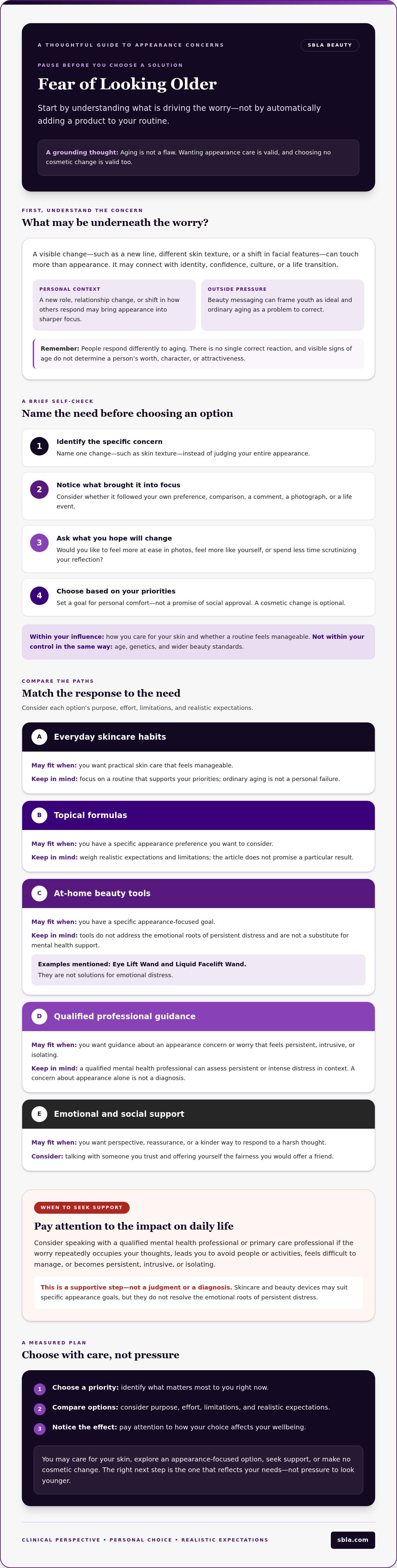
- Identity, confidence, culture, and life changes can shape feelings about aging without making those feelings a diagnosis.
- A brief self-check can help identify what triggered the concern, what change you want, and what you hope it will help you feel.
- Compare skincare habits, topical formulas, at-home tools, and qualified professional advice by their purpose, effort, limitations, and realistic expectations.
- Explore fear of looking old solutions with a measured plan: choose a priority, compare options, and notice how your choice affects your wellbeing.
- Consider beauty wands only for a specific appearance-focused goal. Products such as the Eye Lift Wand and Liquid Facelift Wand are not solutions for emotional distress.
Fear of Looking Old: Why Appearance Changes Can Feel So Personal
Noticing a new line, a change in skin texture, or a shift in facial features can bring up more than thoughts about appearance. These changes may touch identity, confidence, cultural expectations, or a life transition. Others feel little concern or welcome visible signs of age. There’s no single correct response, and wanting to look younger isn’t a requirement for feeling good about yourself.
Concise definition: Fear of looking old is personal worry or distress about visible signs of aging. A passing concern may come and go; persistent distress that’s difficult to manage or disrupts daily life deserves compassionate attention. It isn’t, by itself, a diagnosis or a universal experience.
Gerascophobia is a term associated with a specific phobia of growing old, as described in this Gerascophobia overview. Concern about a wrinkle or changing appearance doesn’t automatically mean someone has a phobia. Only a qualified mental health professional can assess persistent or intense distress in context.
Why getting older can trigger appearance concerns
Changes in skin, hair, or facial features can make time feel more visible, especially during transitions such as a new role, a relationship change, or a shift in how others respond. Beauty messaging may intensify that reaction by presenting youth as the ideal and ordinary aging as a flaw to correct. Feeling affected by that pressure doesn’t mean you’re vain or responsible for the standards around you.
Appearance is only one part of aging. Skin changes differ from person to person, and no line, spot, or shift in firmness determines someone’s worth, character, or attractiveness. You may choose to care for your skin, explore an appearance-focused option, or make no cosmetic change. Each can be a valid choice when it reflects your priorities rather than outside pressure.
When a concern may need more than a beauty solution
Pay attention to how the worry affects your life. If it repeatedly occupies your thoughts, leads you to avoid people or activities, or feels difficult to manage, consider speaking with a qualified mental health professional. This is a supportive step, not a judgment about your appearance or a diagnosis.
Skincare products and beauty devices may suit specific appearance goals, but they don’t address the emotional roots of persistent distress and aren’t substitutes for mental health support. Separating the appearance concern from the emotional burden can help you choose the right kind of help, without expecting a cosmetic change to resolve everything.
What Can Help With Fear of Looking Older? Start With the Underlying Need
Before choosing a product or routine, pause to identify what you hope will change. A specific goal can help you distinguish an appearance preference from a broader need for reassurance, connection, or control. It also makes it easier to compare options without assuming every concern calls for a cosmetic solution.
How to identify what you want to change
Name a specific concern, such as a change in skin texture, rather than judging your entire appearance. Then consider what brought it into focus: your own preference, comparison with someone else, a comment, a photograph, or a life event. Finally, ask what you hope a change would help you feel, such as more at ease in photos or more like yourself.
Use your answer to set a goal based on personal comfort, not a promise of social approval. You might want a simple routine that helps your skin feel cared for, or decide you’d rather spend less time scrutinizing your reflection. Either choice can be intentional.
Separate what you can influence from what you can’t
Some daily habits are within your control, including how you care for your skin and whether a routine feels manageable. Age, genetics, and wider beauty standards aren’t under your control in the same way. Focusing on practical choices can help you avoid treating normal change as a personal failure.
Self-compassion can mean noticing a harsh thought and responding with the same fairness you’d offer a friend. A conversation with someone you trust may also help you see whether outside comparisons are shaping your expectations. You don’t have to embrace every sign of aging, and choosing appearance care doesn’t mean you’ve failed to accept yourself.
When to consider professional support
If worry becomes persistent, intrusive, or isolating, consider discussing it with a qualified mental health professional or a primary care professional. They can help you talk through what you’re experiencing and what support may suit your needs. Seeking help doesn’t presume a diagnosis; it’s a way to take distress seriously.
A product or beauty device may be an option for a specific appearance goal, but it can’t replace emotional support or address persistent distress. If you’ve identified a separate appearance-focused goal, you can explore options at your own pace, including SBLA BEAUTY’s at-home beauty tools. A search for fear of looking old solutions is most useful when it starts with what you need, not pressure to look a certain age.
Skincare, Beauty Wands, and Professional Advice: Compare Your Options
Useful fear of looking old solutions depend on the concern you want to address. A daily routine, topical formula, at-home beauty tool, professional assessment, or emotional support serves a different purpose. Compare options by what they’re intended to do, the time and attention they require, their limitations, and whether they fit your priorities.
| Option | Purpose | Effort | Limitations and expectations |
|---|---|---|---|
| Basic skincare habits | Support consistent routine care for skin. | Regular use and choosing steps you can maintain. | Doesn’t stop aging or resolve distress. Keep expectations tied to the routine’s purpose. |
| Topical formulas | Address a specific cosmetic concern, depending on the formula. | Follow product directions and consider how it fits with your existing routine. | Ingredients and evidence vary. Results aren’t guaranteed, and a formula isn’t a substitute for medical or emotional support. |
| At-home beauty tools | Offer an optional tool for a focused, appearance-related goal. | Learn and follow the specific product instructions. | Capabilities and evidence depend on the device. Don’t expect a tool to treat a medical concern or fear about aging. |
| Qualified professional advice | Assess skin concerns and discuss options suited to your situation. | Arrange an appointment and describe your concern and goals. | A professional can advise on your individual concern, but no option guarantees a particular cosmetic result. |
| Emotional support | Help explore worry, comparison, or effects on wellbeing. | Talk with someone trusted or seek qualified support. | It isn’t a cosmetic treatment; it can address needs a beauty product cannot. |
What skincare and at-home tools may offer
Skincare is routine care, not a way to halt aging or resolve emotional distress. Before adding a topical product, check its stated purpose and consider whether its ingredients suit your needs and existing routine. For an overview of an at-home approach, read this at-home liquid facelift clinical guide. Treat it as educational information, not individualized medical advice.
Beauty wands are optional consumer tools, not a necessary step. First identify the appearance goal, then compare it with the tool’s stated purpose and instructions. Results and evidence depend on the product; no outcome should be assumed or guaranteed.
How professional guidance differs from a beauty product
A dermatology professional can assess a skin concern and discuss suitable options. Consider professional assessment for concerns that may need medical evaluation rather than cosmetic care. Product descriptions from a beauty brand can’t provide an individualized diagnosis or treatment recommendation. For readers focused on neck changes, this clinical guide to early signs of neck aging offers general reading, not a substitute for personal advice from a qualified professional.
A Realistic Plan for Responding to Fear of Looking Old
A useful plan starts with your own priorities, not a promise that a product or routine can erase worry. Use these steps to make a considered choice:
- Name the concern. Identify a specific feature or situation that’s bothering you. Separate what you notice from the judgment you may be attaching to it.
- Set a realistic goal. Choose an outcome within your control, such as feeling comfortable with a simple skincare routine. A cosmetic choice can support a personal preference, but it can’t guarantee confidence or approval from others.
- Compare your options. Consider effort, intended use, limitations, and whether the option matches your concern. If you’re considering a product or device, read its directions and claims before deciding.
- Review your expectations. Ask whether you’d still value the choice if it didn’t change how you feel about aging overall. If distress is persistent or disrupting daily life, consider discussing it with a qualified professional rather than relying on a beauty solution.
Questions to ask before trying an anti-aging product
- What specific concern am I hoping to address, and what would a realistic result mean to me?
- Do I understand the product’s intended use, directions, and limitations?
- Would professional advice be more appropriate for this skin concern or level of distress?
For a persistent, changing, or otherwise concerning skin issue, a qualified professional can help assess whether it needs medical attention. Product information can explain a product’s stated use, but it isn’t individualized medical advice.
Keep expectations and self-image in balance
Change one routine at a time so you can tell what feels useful and what doesn’t. If you track your experience, focus on practical observations, such as whether the routine is comfortable and manageable, rather than repeatedly checking your appearance or judging each detail harshly. Your wellbeing matters as much as any cosmetic outcome.
Notice whether edited images or beauty marketing leave you feeling pressured. You can limit those comparisons, take a break from appearance-focused content, or talk with someone you trust. Personal care is optional. You don’t have to pursue a younger appearance to take your concerns seriously or feel confident.
There’s no single path that suits everyone. Fear of looking old solutions are choices to evaluate, not obligations; a thoughtful next step may be a routine change, professional guidance, emotional support, or no cosmetic change. If an at-home tool fits a specific appearance goal, review SBLA BEAUTY’s product range and read the relevant product information before deciding.
Where SBLA Beauty Wands May Fit in an Appearance-Focused Routine
An at-home beauty wand may be worth considering if you have a specific appearance-focused goal and want to explore a consumer tool as part of your routine. It’s optional, not a necessary response to aging. The Eye Lift Wand and Liquid Facelift Wand are examples from SBLA BEAUTY’s product range, but their names alone aren’t enough to determine whether either suits your concern. Check the current official product information for its intended use, directions, and limitations.
Keep the goal precise. You might be exploring an option for the eye area, for example, rather than expecting a device to change how you feel about aging as a whole. The SBLA Eye Lift Wand clinical deep dive offers further reading for those considering an eye-area concern. Use educational content to inform questions, not as a substitute for personalized medical advice.
Choose a targeted wand without expecting it to solve everything
Before deciding, compare your concern with the product’s stated purpose and review its instructions carefully. Consider whether you’re comfortable following the directions and whether the product fits into a routine you can maintain. Don’t assume that a beauty device will prevent aging, produce a guaranteed clinical result, or resolve fear, anxiety, or persistent distress. It addresses an appearance routine, not the emotional roots of worry.
For any cosmetic product or tool, outcomes depend on the specific product and the evidence supporting its claims. If the intended use or limitations aren’t clear, take time to verify them rather than relying on the product name or broad marketing language.
Take a low-pressure next step
Read the product details and directions before purchasing or using a wand. If you have a persistent skin concern, a qualified professional can help assess it and discuss appropriate options. If distress about aging feels difficult to manage or is affecting daily life, consider seeking support from a qualified mental health professional. A beauty product is not a substitute for either kind of support.
There’s no single required response. You can learn more about a product, seek professional advice, or take no action. Each is valid when it reflects your needs and priorities. If you’re curious about the available options, review SBLA BEAUTY’s product information at your own pace.
Choose a Next Step That Feels Right for You
The most useful fear of looking old solutions begin with understanding what you want, not pressure to look younger. Appearance concerns can be personal, but visible signs of aging don’t define your worth. A specific skincare or appearance goal may call for a different response than persistent distress, which deserves compassionate support from a qualified professional.
Take time to compare options and expectations. Skincare habits and at-home beauty tools can be optional parts of an appearance-focused routine, not ways to stop aging or treat emotional distress. SBLA Beauty offers targeted wands for the face, neck, and eye areas, with products that include peptide-based and collagen-infused formulas. Review each product’s intended use and directions before deciding whether it fits your priorities.
If a targeted wand suits your appearance-focused goal, explore SBLA Beauty’s targeted skincare wands and review the product information before choosing. Professional advice, emotional support, or no cosmetic change are equally valid next steps. Move forward at your own pace, with choices that support your wellbeing and confidence.
Frequently Asked Questions
Is it normal to be afraid of looking old?
It’s understandable to feel uneasy about visible changes, but people respond to aging in different ways. Appearance can connect with identity, confidence, culture, and life experiences, so a concern doesn’t make you vain or unusual. A passing worry is different from persistent distress that’s hard to manage or interferes with daily life. You don’t have to want to look younger, or change your appearance, to take your feelings seriously.
How do I stop worrying about looking older?
You may not be able to switch off worry immediately, but you can start by naming what triggers it. Identify a specific concern, then ask whether it comes from your own preference, comparison with others, or an event such as a photo or comment. Set a realistic goal based on personal comfort, and consider talking with someone you trust. If worry persists or disrupts daily life, a qualified professional can help you explore support.
Can skincare products help with fear of aging?
Skincare products may suit a specific appearance-focused goal, depending on the formula and evidence behind its claims, but they can’t treat fear or emotional distress. Check a product’s intended use, directions, and limitations before adding it to your routine. Useful fear of looking old solutions may also be product-free, such as reducing unhelpful comparisons or seeking support. No product can guarantee a particular result or make aging stop.
What is the difference between fear of aging and a skin concern?
A skin concern focuses on a physical feature or change, such as texture, dryness, or a new spot. Fear of aging describes worry or distress about growing older or visible signs of age. The two can overlap, but they call for different responses. A qualified skin professional can assess a medical or persistent skin concern, while ongoing emotional distress may be worth discussing with a mental health professional. A cosmetic product isn’t a diagnosis.
Do beauty wands prevent aging or remove the fear of looking old?
No. Beauty wands are optional consumer tools for appearance-focused routines, not methods to prevent aging or treat fear, anxiety, or other mental health concerns. Their intended uses and evidence vary, so review the current product information and directions before deciding whether a device matches your goal. Keep expectations realistic: a beauty tool can’t guarantee a particular result or resolve the emotional reasons aging may feel worrying.
When should I seek professional help for fear of looking old?
Consider professional support if the worry feels persistent, intrusive, difficult to manage, or starts affecting relationships, work, or activities you value. A qualified mental health professional or primary care professional can discuss what you’re experiencing and help you consider suitable support, without assuming a diagnosis. For a specific or ongoing skin issue, seek assessment from an appropriately qualified skin professional. Beauty products and devices aren’t substitutes for medical or mental health guidance.

