
How to Accept Aging Without Giving Up: A 2026 Guide
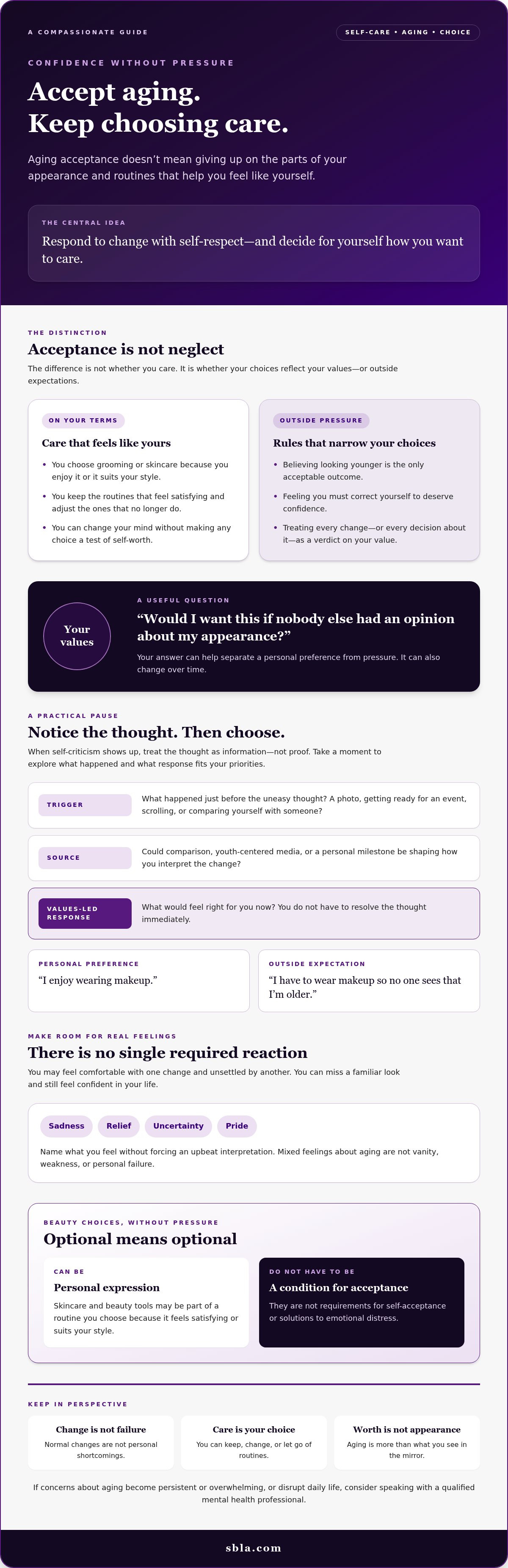
What if accepting aging didn’t mean giving up on the parts of your appearance and routines that help you feel like yourself? Learning how to accept aging without giving up starts with recognizing that normal changes aren’t personal failures, even when pressure to look younger makes them feel that way.
It’s understandable to wonder where self-acceptance ends and neglect begins. Caring for yourself isn’t a rejection of age, and choosing not to pursue a particular treatment or routine isn’t a failure of effort. The distinction is whether your choices reflect your values or outside expectations.
This guide will help you build a more compassionate relationship with yourself as you age, clarify what confidence and self-care mean to you, and set goals that reflect your priorities. You’ll also find practical ways to care for your appearance, including how to think about optional beauty tools, without treating aging as something you must defeat. The aim isn’t to stop caring. It’s to choose care that feels like your own.
Key Takeaways
- Acceptance means meeting change with self-respect, not approving of every change or abandoning the care that helps you feel confident.
- Notice how comparison, media messages, and personal milestones can shape your feelings about aging, without treating those feelings as vanity or weakness.
- Use a simple pause to identify what triggered an uneasy thought, where it may have come from, and what response fits your values.
- Learn how to accept aging without giving up by defining self-care on your terms instead of following pressure to look younger or pursue every intervention.
- Consider beauty tools and skincare as optional forms of self-expression, not requirements for self-acceptance or solutions to emotional distress.
How to Accept Aging Without Giving Up on Yourself
You can accept that your appearance and needs may change while still wanting to feel confident, polished, and cared for. Those aims don’t conflict. The key is to distinguish choices that express your preferences from expectations that tell you looking younger is the only acceptable outcome.
Aging acceptance means responding to change with self-respect while choosing, on your own terms, how you want to care for yourself. It doesn’t require liking every change or adopting one correct way to age. The process of becoming older can involve physical, psychological, and social changes, so your experience may extend well beyond what you see in the mirror.
What does accepting aging actually mean?
Acceptance makes room for what’s happening without making appearance the measure of your value. You can notice a new line, a shift in skin texture, or a style that feels different without turning it into a verdict about your attractiveness, identity, or future.
You can still enjoy grooming, skincare, clothing, or other personal practices. The difference is intention: you choose them because they feel satisfying or suit your style, not because you believe you must correct yourself to deserve confidence. Aging isn’t a flaw to fix, and your choices don’t have to prove you’re at peace with every change.
Why acceptance is not the same as giving up
Giving up suggests that you’ve stopped making choices. Acceptance can be active: you notice what has changed, decide what matters now, and adjust accordingly. You might simplify a grooming routine because your priorities have shifted, or keep the steps you enjoy while letting go of those that feel like a chore. Neither choice signals neglect.
Try asking: Would I want this if nobody else had an opinion about my appearance? Your answer can help distinguish a personal goal from pressure to meet someone else’s standard. And your answer can change. You may pursue a style or self-care goal now and feel differently later. Learning how to accept aging without giving up means keeping the freedom to choose, revise, and care for yourself without turning any one decision into a test of self-worth.
Understand the Feelings Behind Aging Without Judging Them
Aging can bring mixed reactions. You might feel comfortable with one change and unsettled by another, or feel confident in your life while missing how a familiar look used to make you feel. Those responses don’t make you vain or weak. Feeling ambivalent about aging is normal; it isn’t a personal failure.
Your perceptions can be shaped by more than appearance. Comparing yourself with friends, seeing youth-centered images in media, or reaching a milestone birthday may influence what you notice and how you interpret it. These influences can make a preference feel like a rule. Understanding where a thought comes from can help you decide whether it reflects your own priorities.
Notice what triggers self-criticism
Pay attention to moments when your inner commentary becomes harsher. It might happen while looking at a photo, getting ready for an event, scrolling through images, or comparing your appearance with someone else’s. For a short time, jot down what happened, the thought that followed, and how it affected you. Treat the thought as information, not proof.
- Preference: “I enjoy wearing makeup.”
- Outside expectation: “I have to wear makeup so no one sees that I’m older.”
The distinction isn’t always clear, and you don’t have to resolve it immediately. Noticing the source of a thought creates room to choose what feels right for you.
Make room for grief, confidence, and change
Some changes can involve a sense of loss, while others may bring new priorities or a different perspective. You don’t need to force an upbeat interpretation or dismiss what you miss. Naming a feeling, such as sadness, relief, uncertainty, or pride, can be a more honest starting point than demanding that you feel positive.
The guide to aging well from UC Berkeley’s Greater Good Science Center offers another perspective on well-being as people age. If concerns about aging become persistent or overwhelming, or disrupt daily life, consider speaking with a qualified mental health professional. If appearance-related care is part of your routine by choice, you can explore SBLA BEAUTY’s at-home skincare tools as an optional personal choice, separate from the work of understanding your feelings.
Challenge the Myths That Make Aging Feel Like Giving Up
Two assumptions can make aging feel like a test: that accepting change means neglecting your appearance, and that every visible change needs to be corrected. Neither is true. You can care about how you look without treating age as a defect, and you can choose not to act on a change without abandoning yourself.
Skincare, clothing, movement, grooming, or a revised routine may matter because they support comfort, expression, or enjoyment. They’re options, not requirements for acceptance. An appearance-related choice may bring satisfaction without guaranteeing lasting confidence or defining your worth. The point isn’t to judge the choice, but to understand what’s guiding it.
Can you accept aging and still care about your appearance?
Yes. Care is compatible with acceptance when it remains voluntary and reflects your preferences. You might enjoy a skincare routine, choose clothes that feel like you, or adapt how you move as your needs change. You might also decide a practice no longer suits you. None of these decisions measures how well you’re aging.
There’s no single routine or product you need in order to make peace with change. How to accept aging without giving up can include continuing a beauty practice you genuinely enjoy while letting go of the belief that you must pursue every available intervention.
How to recognize pressure disguised as self-improvement
Before adopting a goal, pause and ask what’s behind it: personal preference, comparison, or fear of judgment? Marketing can present ordinary changes as urgent problems. Check what a claim actually promises and whether the suggested response fits your priorities. The National Institute on Aging offers information on maintaining mental and emotional wellness, a reminder that well-being is not reducible to appearance.
A choice may feel supportive when it’s specific and self-directed. It may deserve a closer look when it feels punitive, urgent, or tied to your value as a person. Use this contrast as a prompt, not a strict rule:
- Supportive: “I enjoy this routine, and I can change it if it stops working for me.”
- Pressure-driven: “I have to do this now, or I won’t be acceptable.”
If urgency or shame is driving the decision, give yourself time to reconsider. You can gather information, reflect on your reasons, and decide later. A considered choice is still a choice, whether it involves changing something or leaving it as it is.
Build a Practical Routine for Accepting Aging on Your Terms
You don’t need to feel positive about aging every day to respond to it with care. A brief, repeatable check-in can help you separate a moment of self-criticism from a decision about what matters to you. Keep it simple: notice the trigger, name the thought, check where it came from, then choose a response.
- Notice: What was happening just before the thought appeared?
- Name: What are you telling yourself? Phrase it as a thought, not a fact.
- Check: Does this reflect your preference, or comparison and outside expectations?
- Choose: What response would support your comfort, values, or priorities right now?
This process isn’t about arguing yourself into confidence. It creates a pause so you can respond deliberately rather than automatically.
Use a brief self-compassion check-in
Ask yourself, What would I say to someone I care about if they were feeling this way? Then write a sentence or two about what feels difficult today, without requiring yourself to solve it. You might note, “I’m unsettled after seeing that photo, and I need a little time before deciding what I want to do.” Return to the exercise when comparison or harsh self-talk resurfaces.
Look beyond appearance
Reflection can help keep appearance from becoming the only lens through which you see yourself. Consider these prompts:
- What parts of my identity feel important to me beyond how I look?
- Which relationships help me feel known and valued?
- What experiences have shaped me, and what would I still like to explore?
- Which values do I want my daily choices to reflect?
You don’t need polished answers. A few honest notes can remind you that your identity includes connections, interests, skills, and experiences as well as appearance.
Choose care habits that support your priorities
Choose small routines for comfort, enjoyment, or self-expression, not because you owe anyone a particular appearance. Review them periodically: keep what feels worthwhile, adjust what no longer fits, and let go of steps that have become an obligation. If you have a health concern, consult a qualified health professional. For persistent emotional distress, consider support from a qualified mental health professional.
If a specific appearance change is prompting questions, read about early signs of neck aging for focused information. If you’re considering an at-home skincare tool, first identify the area you’re interested in: SBLA BEAUTY offers an Eye Lift Wand, a Liquid Facelift Wand, and Neck, Chin & Jawline Sculpting Wands. These are optional appearance-related choices, not prerequisites for self-acceptance. That’s the practical heart of how to accept aging without giving up: make space for your feelings, then choose care that reflects your priorities.
Keep Self-Care Personal: Make Room for Beauty Choices Without Pressure
Accepting aging and choosing self-care can coexist. You can acknowledge change without making it your responsibility to look younger, and you can enjoy appearance-related care without treating it as proof that you reject aging. The difference is agency: your choices should reflect what matters to you, not a demand to meet someone else’s standard.
Decide what feeling cared for means to you
Self-care doesn’t have to involve your appearance. It might mean making time for a friend, wearing something comfortable, pursuing an interest, resting, or keeping a grooming routine you enjoy. Consider what helps you feel present and like yourself, then give those choices room in your life.
You’re also free to decline a product or routine. Choosing it can be valid; choosing not to is equally valid. Confidence can draw on many sources, including relationships, meaningful experiences, personal values, and the freedom to decide what deserves your attention. None of those things needs to be earned through a particular look.
Explore beauty tools as one optional form of self-expression
If skincare is something you personally enjoy, tools and topical formulas may be one option among many. SBLA BEAUTY offers at-home skincare devices and topical formulas for the face, neck, and eye areas. Its offerings include the Eye Lift Wand, Liquid Facelift Wand, and Neck, Chin & Jawline Sculpting Wand. They’re appearance-related self-care choices, not prerequisites for accepting yourself or solutions to the emotional experience of aging. Consider any beauty choice in light of your preferences, and assess product information carefully rather than assuming a tool will deliver a particular result.
If you’re independently exploring non-invasive skincare options, the at-home liquid facelift guide provides information on that specific topic. Reading about an option doesn’t obligate you to try it. You can pause, decide it isn’t right for you, or revisit the question later.
Ultimately, how to accept aging without giving up isn’t about choosing between acceptance and appearance-related care. It’s about keeping your self-worth separate from those choices and making room for what supports your comfort and self-expression. If SBLA BEAUTY’s at-home options fit your preferences, explore SBLA BEAUTY’s skincare options at your own pace. Care should be yours to define.
Choose Care That Feels Like Your Own
Learning how to accept aging without giving up doesn’t require you to stop caring about your appearance. It means making room for change, noticing when comparison or outside expectations shape your self-talk, and choosing routines that reflect your priorities. Some days may feel more complicated than others, and you don’t need to force a positive attitude to treat yourself with respect.
Self-care can include beauty practices, but it can also come from relationships, meaningful experiences, and the freedom to decide what matters to you. Skincare devices and topical formulas are optional tools, not prerequisites for acceptance or solutions to emotional concerns. SBLA BEAUTY offers at-home devices and topical formulas for the face, neck, and eye areas, including the Eye Lift Wand and neck sculpting wands.
If those options align with your personal preferences, explore SBLA BEAUTY’s at-home skincare devices and formulas. Choose with care, stay guided by your own values, and remember that you can revise your choices as your needs change. Aging doesn’t take away your agency. You can keep expressing yourself and caring for yourself on your terms.
Frequently Asked Questions
Is it possible to accept aging and still want to look good?
Yes. Accepting aging doesn’t require you to stop caring about your appearance or enjoying personal style. You can choose skincare, grooming, clothing, or other routines because they feel good to you, while recognizing that they don’t determine your worth. Ask whether a choice reflects your preference or pressure to meet someone else’s expectations. You can change your mind as your priorities shift.
How do I stop feeling bad about getting older?
You may not be able to switch off difficult feelings, but you can respond to them with less judgment. Notice what triggered the thought, name what you’re telling yourself, and consider whether it comes from your values or from comparison and outside pressure. A useful approach to how to accept aging without giving up is to pause before reacting, then choose one small response that supports your well-being today.
Does accepting aging mean giving up on skincare?
No. Skincare can remain part of a routine if it suits your preferences, comfort, or enjoyment. Acceptance doesn’t require a particular product, device, or beauty practice, and using skincare doesn’t mean you reject aging. Keep expectations realistic and assess product information carefully. SBLA BEAUTY offers at-home devices and topical formulas for the face, neck, and eye areas, but these are optional appearance-related choices, not solutions to the emotional experience of aging.
Can social media make it harder to accept aging?
It can contribute to comparison, especially when your feed repeatedly presents narrow ideals of beauty or images that seem to set expectations about appearance. Notice how particular accounts or content affect your self-talk. You might mute accounts that leave you feeling inadequate, seek a wider range of perspectives, or take a break when scrolling starts to feel unhelpful. These steps won’t control every outside message, but they can help you choose what you give attention to.
What does healthy aging acceptance look like?
There’s no single correct way to accept aging. It can mean acknowledging changes without letting them define your value, making personal care choices without shame, and investing in relationships, interests, and goals that matter to you. Some days may feel easier than others. Healthy acceptance allows for mixed feelings and changing preferences; it doesn’t require constant confidence, a specific appearance, or a promise to follow one routine.
When should I seek support for anxiety about aging?
Consider speaking with a qualified mental health professional if worries about aging feel persistent or overwhelming, or begin disrupting everyday life, relationships, work, or activities you value. You don’t need to wait until distress feels severe to ask for support. A professional can help you explore what’s behind the anxiety and identify ways to cope. If you have a separate health concern, contact an appropriate qualified health professional.

