
How to Age Gracefully but Slowly with Healthy Daily Choices
Graceful aging is shaped less by a single secret than by consistent choices. Learning how to age gracefully but slowly starts with regular movement, nourishing food, preventive check-ups and daily sun protection: the Centers for Disease Control and Prevention advises adults to get 150 minutes of moderate-intensity aerobic activity each week, while the U.S. Food and Drug Administration advises reapplying sunscreen every two hours outdoors.
It’s natural to want to feel well and maintain healthy-looking skin over time, without expecting overnight transformation. Small, repeatable habits can support overall well-being and skin protection. Sunscreen and gentle skincare are a practical foundation.
This guide explains how activity, nutrition, and preventive care can support healthy aging, then looks at sunscreen and skincare choices that help limit sun damage. You’ll also find guidance on sleep, so you can build a steady routine to support your health and appearance over time.
Key Takeaways
- Build a sustainable routine around movement, nourishing foods, and preventive care to support strength and well-being as you age.
- Make daily sun protection a consistent habit to help limit cumulative skin damage over time.
- Choose gentle skincare that supports aging skin, and keep your routine simple enough to maintain.
- Protect restorative sleep as part of a broader approach to healthy aging, then explore targeted skincare tools for the eye area if they suit your routine.
1. Physical activity, nutrition, and preventive check-ups
A practical answer to how to age gracefully but slowly is to make movement part of ordinary routines. According to the Centers for Disease Control and Prevention, adults are advised to get 150 minutes of moderate-intensity aerobic activity each week. Walking, swimming, and cycling are accessible options; strength exercises help maintain muscle. Stand and move between tasks to break up long periods of sitting and ease stiffness.
Include balance and flexibility alongside cardio. Tai chi can challenge your balance, while yoga or stretching offers flexibility practice. If exercise is new to you, start with a comfortable walk and gradually increase your activity. Taking the stairs when practical or walking after a meal can help make movement a regular habit.
For balanced nutrition, add vegetables, fruits, whole grains, and lean proteins to your meals. Fiber-rich foods support gut health, while healthy fats contribute to a balanced eating pattern. Drink water regularly, adapting your routine to your needs. These choices provide a practical foundation for everyday energy without relying on a single food or supplement.
Use preventive check-ups to review health needs, screenings, immunizations, and medicines. An annual physical exam is a general recommendation, though check-up frequency depends on age and health. Eye exams are advised every 1 to 2 years, and dental visits 1 to 2 times a year. Discuss blood pressure, diabetes, and cholesterol screening during routine care.
No single supplement is a universal answer for healthy aging. Whether one is suitable depends on your diet, health conditions, and medicines, so discuss your needs during healthcare visits. A thoughtful approach to how to age gracefully but slowly can also include meaningful activities. Try volunteering, learning a skill, gardening, or reading to add purpose and cognitive engagement. A brief meditation practice can offer a calming pause in your day.
2. Daily sunscreen and skin protection
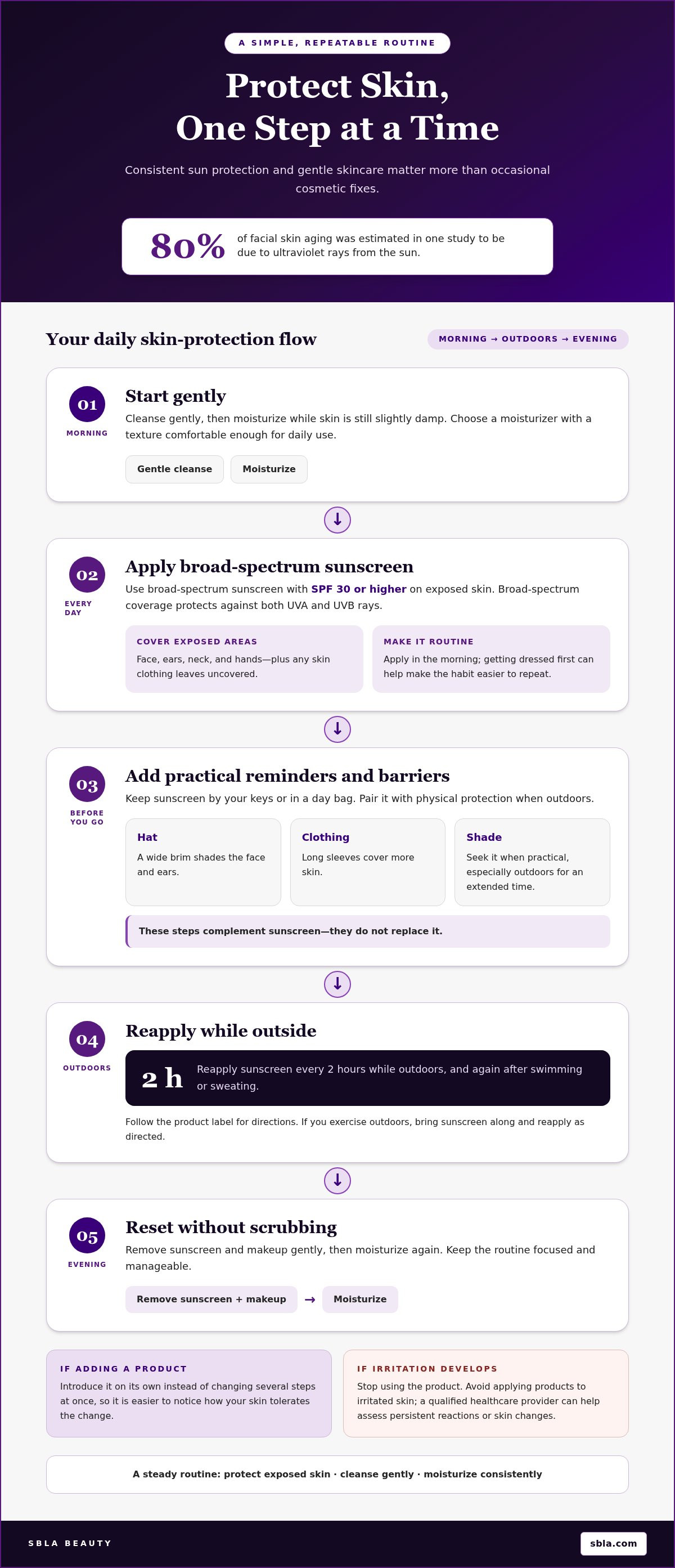
Make sunscreen a daily step, not a seasonal one. Adults are advised to use broad-spectrum sunscreen with SPF 30 or higher on exposed skin every day. Broad-spectrum coverage protects against both UVA and UVB rays. Apply it to areas clothing leaves uncovered, including the face, ears, neck, and hands. A morning routine makes this step easier to repeat consistently.
Plan ahead for time outdoors. According to the U.S. Food and Drug Administration, people should reapply sunscreen every 2 hours while outdoors. Reapply after swimming or sweating, and follow the product label for its directions. Keep sunscreen where you prepare to leave, such as beside your keys or in a day bag. That visible reminder can help prevent a missed application.
Pair sunscreen with physical barriers. A wide-brimmed hat shades your face and ears, while long sleeves cover more skin during outdoor activities. Seek shade when practical, especially if you’ll be outside for an extended time. For example, choose a shaded seat during a lunch break or walk on the sheltered side of a street. These steps complement sunscreen; they don’t replace it.
Build sun protection into familiar routines. Apply sunscreen after getting dressed, then cover exposed areas before leaving home. If you exercise outdoors, bring it along and reapply as directed on the label. Check the label before use, and choose a formula suited to your skin’s needs. If a product irritates your skin, stop using it and discuss alternatives with a healthcare provider. Daily sun protection is a repeatable habit, like regular exercise or caring for muscle health. Fruit and other nutritious foods support overall well-being, but they don’t replace topical sun protection. A steady routine supports longevity and a healthy outlook, helping you enjoy outdoor activities while protecting exposed skin.
3. Sun protection and skincare for aging skin
Sun exposure is a major factor in visible facial aging. One study estimated that ultraviolet rays from the sun account for 80% of facial skin aging. This helps explain why protecting skin consistently matters more than relying on occasional cosmetic fixes. Build sun protection into your morning routine, then use a gentle moisturizer to support skin comfort.
For a simple approach to aging skin, prioritize sun protection and gentle moisturizers. These are the skincare measures covered here; no specific active ingredient is essential for everyone. Apply moisturizer after cleansing, while your skin is still slightly damp, and choose a texture comfortable enough for daily use.
Keep your routine focused. In the morning, cleanse gently, moisturize, and apply sunscreen to exposed skin. In the evening, remove sunscreen and makeup without scrubbing, then moisturize again. If you add a new product, introduce it on its own instead of changing several steps at once. That makes it easier to notice whether your skin tolerates the change.
Products and treatments can carry risks. A skincare formula may cause irritation or sensitivity, while procedures can have side effects that depend on the method. Avoid applying products to irritated skin, and stop using them if discomfort develops. A qualified healthcare provider can help assess persistent reactions or skin changes.
Skincare is one part of a broader lifestyle. Physical activity, a balanced diet, and avoiding tobacco support overall health, while skincare addresses the skin directly. Adequate sleep and a manageable routine can make daily care easier to maintain. Choose habits with a clear purpose: protect exposed skin, cleanse gently, and moisturize consistently. A positive outlook can support the mental side of aging, but it doesn’t replace practical sun protection or attentive skincare.
4. How much sleep do adults need as they age?
Adults should aim for 7 to 9 hours of sleep every night, according to the National Institute on Aging. Treat this range as a useful target, then notice how your energy and alertness feel during the day. Sleep needs and patterns can vary with age, health, medicines, and daily routines. A 90-year-old may sleep only four hours nightly, and that can be normal.
Consistency can make bedtime easier to maintain. Choose a regular time to wind down, dim bright lights, and keep your bedroom quiet. If screens keep your mind active, turn them off at least 1 hour before bed. A calming routine could include reading, gentle stretching, or listening to quiet music.
Review daytime habits when sleep feels disrupted. Avoid naps after 2PM, and keep any nap under 30 minutes. If you wake often, note patterns such as late caffeine, discomfort, or a changed medicine schedule. A simple sleep diary can help you describe these patterns at a routine health visit.
Rest supports daily resilience, but one short night doesn’t define your overall sleep pattern. Focus on recurring trends, such as difficulty falling asleep, frequent waking, or daytime drowsiness. If these persist or affect your daily activities, discuss them during a healthcare visit. Health conditions and medicines can affect sleep, so share what you take and when.
Protect your wind-down period with a practical sequence: finish stimulating tasks, prepare for tomorrow, then move into a quiet activity. Keep the steps manageable enough to repeat. For a separate beauty-focused step in your self-care routine, explore the Limited Edition - DOUBLE THE PLUMP Lip Plump & Sculpt.
SBLA BEAUTY: Eye Lift Wand
The Eye Lift Wand offers a targeted addition to an eye-area skincare routine. Daily sun protection, nourishing habits, and restorative sleep remain the foundation of graceful aging. A focused skincare tool can complement these choices when you want to give the eye area dedicated attention. Keep expectations grounded: the wand is a skincare device, not a replacement for sunscreen or preventive care.
Choose it as part of a consistent routine if your priority is the eye area. For other facial concerns, SBLA BEAUTY also offers the Neck, Chin & Jawline Sculpting Wand, Neck, Chin & Jawline Sculpting Wand XL, and Liquid Facelift Wand. Explore the Eye Lift Wand and visit sbla.com to learn more.
Make Your Next Step Intentional
A thoughtful approach to how to age gracefully but slowly is less about pursuing every new trend and more about choosing care that fits your priorities. Let your routine evolve with you. Keep the habits that feel sustainable, and add targeted skincare tools only when they address an area you want to focus on.
For eye-area care, consider the Eye Lift Wand. The Neck, Chin & Jawline Sculpting Wand and Neck, Chin & Jawline Sculpting Wand XL focus on the lower face and neck. Explore each tool to see which best fits your personal skincare routine.
Explore SBLA BEAUTY’s skincare tools and choose a next step that feels considered and achievable. Consistency, patience, and care can help you move forward with confidence.
Frequently Asked Questions
What is the secret to aging gracefully?
There isn’t one secret. The most useful approach is choosing sustainable habits that fit your life. Start with one action you can repeat, such as taking a walk after lunch or setting a consistent bedtime. Attach it to an existing routine, then build on it when it feels manageable. This makes healthy choices practical rather than dependent on sudden, sweeping changes.
Does looking younger mean you are aging slower?
No. A youthful appearance doesn’t show how well the body is functioning. Biological age reflects functional health, including strength, cardiovascular fitness, lung function, bone density, and metabolic health. Sun exposure and skincare can influence skin appearance, but appearance alone can’t reveal all these markers. Consider energy, mobility, and health indicators alongside appearance rather than using a mirror to assess overall aging.
How to age beautifully?
Aging beautifully can mean expressing your personal style while caring for your health and appearance in ways that feel authentic. You might choose a haircut that suits your changing preferences, wear colors you enjoy, or keep skincare simple and comfortable. Good posture and clothing that fits well can also shape how you feel about your appearance. The goal is self-expression, not matching someone else’s standard.
What are the 7 pillars of aging?
There isn’t one universal, official set of seven pillars. A practical framework can include movement, balanced nutrition, preventive healthcare, sun protection, gentle skincare, restorative sleep, and meaningful connection or purpose. Treat these as areas to consider, not a rigid scorecard. For example, identify the area that feels easiest to strengthen first, then choose a repeatable action that fits your daily routine.
What does it mean to age gracefully?
Aging gracefully means adapting to change while continuing to care for your health, appearance, relationships, and interests. It doesn’t require concealing every sign of age or following a strict beauty ideal. For one person, that may mean adjusting an exercise routine after an injury; for another, it may mean trying a new hobby or changing skincare habits to suit their skin.
What habits support healthy aging and longevity?
Habits that support healthy aging include regular movement, varied meals, sufficient sleep, sun protection, preventive care, and activities that keep you socially and mentally engaged. Make these habits easier to maintain by connecting them: arrange a walk with a friend, prepare nourishing meals together, or add appointments to your calendar. Avoid smoking, and discuss persistent changes in energy, mobility, or sleep with a healthcare professional.

