
What to Do When Botox Doesn’t Work for Hooded Eyes
If you’re searching for what to do when botox doesn't work for hooded eyes, start by identifying what is creating the hooded appearance. Brow position, excess upper-eyelid skin, and eyelid muscle function are different factors, and they call for different next steps.
Another Botox injection may not be the answer. Botox may subtly lift the brow when a low brow contributes to hooding, but it can’t remove excess eyelid skin. In some cases, relaxing the forehead muscle can also allow the brow to descend further. Repeating treatment without reassessing the cause isn’t a reliable next move.
This guide explains why Botox may not have delivered the change you expected, what to discuss with a qualified clinician, and how to distinguish cosmetic concerns from possible eyelid ptosis. It also explains how medical assessment differs from topical eye care. The Eye Lift Wand is a cosmetic option for the eye area, not a treatment for medical ptosis or a substitute for clinical assessment.
Key Takeaways
- Hooded eyes describe an appearance, not a single cause. The source may involve brow position, eyelid skin, or eyelid muscle function.
- When Botox hasn’t helped, document what changed, when it began, and whether one or both sides are affected.
- Discuss the result with your injector and seek clinical assessment when needed before considering further treatment.
- Compare next steps by whether your priority is appearance, visual function, or both. Review potential benefits, limitations, and risks with a clinician.
- The Eye Lift Wand offers topical cosmetic eye-area care, but it doesn’t diagnose or treat medical eyelid ptosis.
Why Botox May Not Work for Hooded Eyes
A disappointing result can feel confusing, especially if you expected Botox to make your eyes look more open. The effect depends on what creates the hooded appearance. “Hooded eyes” describes how the upper eyelid looks; it isn’t a single diagnosis with one cause. The visual heaviness may relate to the brow, the skin above the eyelid, the eyelid itself, or a combination of factors.
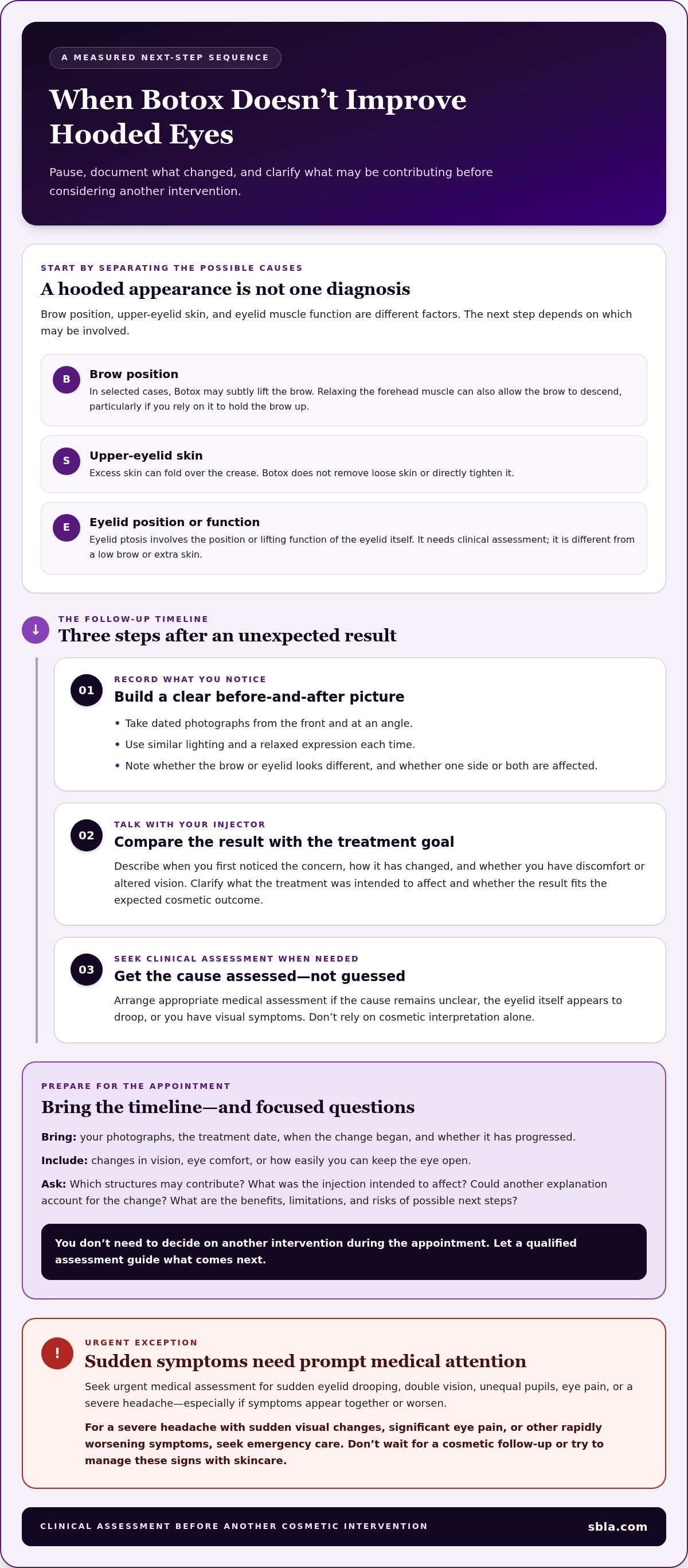
Brow position, eyelid skin, and eyelid muscle are different factors
A low or descending brow can add fullness above the eyelid and make the eye area appear heavier. In selected cases, Botox can subtly change brow position by relaxing muscles that pull it downward, allowing the forehead muscle to lift the brow. The result depends on anatomy and treatment placement, and Botox won’t remove loose skin.
Excess upper-eyelid skin can fold over the crease and create hooding even when brow position isn’t the main contributor. Botox doesn’t remove that skin or directly tighten it. Eyelid ptosis is different: it refers to a low-lying upper eyelid associated with the eyelid’s lifting function, rather than simply extra skin or a low brow. It needs clinical assessment to identify the cause.
Cosmetic brow heaviness concerns the position of the brow; medical eyelid ptosis concerns the position or function of the eyelid itself. This distinction matters because an appearance change and an eyelid-function concern may call for different evaluations and options.
Why the expected Botox effect may not appear
Botox temporarily changes muscle activity. Its uses, mechanism, and potential effects are summarized in Botulinum Toxin (Botox). For a cosmetic brow lift, the goal is to influence the balance between muscles that pull the brow down and those that raise it. If excess skin or eyelid muscle function is the primary issue, changing brow-muscle activity may not create the more open appearance you hoped for.
Placement matters, too. The forehead muscle helps raise the brow. If someone relies on it to hold the brow up, relaxing it may allow the brow to descend and make the hooding more noticeable. Individual anatomy also affects how muscles interact and how a cosmetic result appears. An unexpected outcome doesn’t, by itself, establish why it happened.
For anyone asking what to do when botox doesn't work for hooded eyes, the useful first step is to understand that the visible concern may not match the target of the injection. A clinician can assess whether brow position, eyelid skin, or eyelid function appears relevant and explain the limits of each approach. Don’t treat a disappointing result as proof that more Botox is needed. Clarify the underlying cause before considering another intervention.
What to Do After Botox Does Not Improve Hooded Eyes
A result that doesn’t match your expectations is a reason to pause and gather information, not to assume another injection is the answer. If you’re considering what to do when botox doesn't work for hooded eyes, take a measured approach: record what you notice, discuss it with your injector, and seek clinical assessment if the change or your symptoms warrant it.
- Document the change. Take dated photographs from the front and at an angle, using similar lighting and a relaxed expression each time. Note whether the brow or eyelid looks different from before treatment, and whether the change affects one side or both.
- Discuss the result with your injector. Describe when you first noticed the concern, how it has changed, and whether you have symptoms such as discomfort or altered vision. Clarify what the treatment was intended to affect and whether your result fits the expected cosmetic outcome.
- Arrange further assessment when needed. If the cause remains unclear, the eyelid itself appears to droop, or you have visual symptoms, seek an appropriate medical assessment rather than relying on cosmetic interpretation alone.
Prepare for a useful follow-up appointment
Bring your photographs and a concise record of the treatment date, when the change began, and whether it has progressed. Include any changes in vision, eye comfort, or how easily you can keep the eye open. These details help a clinician understand the timeline and distinguish a stable appearance concern from a new or changing symptom.
Focused questions can make the discussion more useful: Which structures may contribute to the appearance? What was the injection intended to affect? Could another explanation account for the change? What are the benefits, limitations, and risks of possible next steps? You don’t need to decide on another intervention during the appointment. A qualified assessment should guide the next intervention, not the disappointment of an unexpected result.
Recognize symptoms that need prompt medical attention
A longstanding cosmetic concern is different from a sudden change in eyelid position or vision. Seek urgent medical assessment for sudden eyelid drooping, double vision, unequal pupils, eye pain, or a severe headache, especially if symptoms appear together or worsen. Sudden changes can have causes that need prompt evaluation and shouldn’t be treated as a routine cosmetic issue.
If you experience a severe headache with sudden visual changes, significant eye pain, or other rapidly worsening symptoms, seek emergency care. Don’t wait for a cosmetic follow-up or try to manage these signs with skincare. A clinician can determine the appropriate evaluation based on your symptoms and history.
Once medical concerns have been assessed, cosmetic eye-area care may be considered for appearance-focused goals. Explore SBLA eye-area care as a cosmetic option, not as a substitute for assessing new drooping or changes in vision.
How Botox, Medical Assessment, and Topical Eye Care Differ
These options serve different purposes. Botox changes muscle activity and may influence brow position in selected cosmetic cases. A medical assessment investigates eyelid position and function, particularly when drooping affects vision or is new or persistent. Topical eye care is applied to the skin for cosmetic support. These approaches aren’t interchangeable, and a product used on the eyelid can’t establish why it looks low.
Appearance alone can’t reliably identify which option fits. Two people may describe “hooded eyes” while having different contributing factors. A low brow, folds of upper-eyelid skin, and a low-lying eyelid can look similar in a photograph, yet each raises different questions. The next step should follow an assessment of the concern, not a guess based only on the visible fold or a previous treatment result.
- Botox: A clinician-administered cosmetic treatment that can affect muscle activity and, in suitable cases, subtly influence brow position. It doesn’t remove excess eyelid skin or determine whether eyelid drooping has a medical cause.
- Clinical assessment: An evaluation of eyelid position, function, and any effect on vision. It helps clarify the concern and inform a discussion of appropriate options, without guaranteeing a particular treatment or outcome.
- Topical eye care: A cosmetic product applied to the eye area. It may be part of an appearance-focused routine, but it doesn’t diagnose or correct medical eyelid ptosis.
When the next step is a clinician’s evaluation
Arrange a qualified assessment if eyelid drooping persists, interferes with seeing, or comes with a new or worsening change. An eye-care professional can evaluate eyelid position and consider whether the concern affects visual function. This assessment helps distinguish an appearance goal from a functional issue, but it doesn’t predetermine which option, if any, will be appropriate. Share your treatment history and the changes you’ve noticed.
For readers weighing what to do when botox doesn't work for hooded eyes, this distinction keeps the decision grounded: cosmetic treatment may address a cosmetic target, while symptoms involving eyelid function call for clinical guidance. Don’t treat skincare as a substitute for evaluation when the eyelid itself appears to droop or vision is affected.
Where topical eye care can fit
Once medical concerns have been considered, topical care may suit someone whose goal is cosmetic attention to the eye area. The SBLA Eye Lift Wand is a topical cosmetic product, not a treatment for medical ptosis and not a way to identify why Botox didn’t produce the expected change. Its ingredients and product details are explored in the SBLA Eye Lift Wand clinical deep dive.
Keep the categories clear: a clinician assesses anatomy and function; Botox acts on muscle activity; topical products are used on the skin for cosmetic care. Choosing among them starts with the concern you want to address and whether it involves appearance, vision, or both. When function may be involved, clinical guidance comes first.
How to Evaluate Your Next Step Without Rushing
A clear priority makes the next decision easier. Is your main concern how the eye area looks, whether the eyelid affects your vision, or both? An appearance-focused goal and a functional concern may call for different assessments. Identifying what matters most helps keep a conversation with a clinician focused on the result you want and any symptoms that need attention.
Repeating the same treatment without revisiting the cause may leave the original concern unchanged. Before deciding, compare each proposed option with the anatomical factor it is intended to address. Professional aesthetic providers like Injections & Co emphasize evaluating overall facial balance and volume rather than repeating an ineffective injection. Ask about expected benefits, limitations, risks, and any recovery involved. You don’t need to commit to an intervention before understanding how it relates to your assessment.
Questions to bring to a qualified clinician
Use the appointment to clarify the concern, not just to choose a procedure. Ask what anatomical factor may explain the appearance, whether the eyelid’s position or function affects vision, and which options fit the findings. For each option, discuss its expected benefits, limitations, potential risks, and recovery. If the explanation or goal is unclear, ask for it in plain language before deciding.
You can also state your priority directly: “I’m mainly concerned about appearance,” “I’m having trouble seeing,” or “I’m concerned about both.” That distinction gives the clinician useful context and helps shape a discussion around your goals rather than a generic promise of a lift.
Set realistic expectations for cosmetic improvement
Different approaches address different tissues and concerns. A treatment that influences muscle activity won’t remove excess skin, and topical cosmetic care isn’t designed to correct medical eyelid ptosis. No option should be treated as a guaranteed way to achieve a particular degree of lift or a specific appearance. Agree on what improvement would mean for you and how it will be assessed.
For appearance tracking, take photographs under consistent lighting, from the same angle, with a relaxed expression. Compare them over time alongside your clinician’s guidance, rather than relying on memory or changing camera conditions. This gives you a more useful record for follow-up without turning each small variation into a reason to rush into another treatment.
Use this checklist to sort the next step:
- Urgent symptoms: New or sudden eyelid drooping, double vision, unequal pupils, eye pain, or severe headache calls for urgent medical assessment.
- Persistent concern: Ongoing drooping or uncertainty about eyelid function warrants discussion with a qualified clinician.
- Cosmetic goal: If the concern is appearance alone, clarify which feature you want to address and what a realistic outcome may involve.
Once clinical concerns are addressed, cosmetic care can complement an appearance-focused routine. Explore the Eye Lift Wand for cosmetic eye-area care, while keeping expectations distinct from medical assessment or treatment.
The SBLA Eye Lift Wand: A Cosmetic Option for Eye-Area Care
If an eyelid itself appears to droop, or the change affects vision, clinical assessment comes first. The SBLA BEAUTY Eye Lift Wand is topical cosmetic care for the eye area, not a way to diagnose or treat medical eyelid ptosis. It also doesn’t determine why Botox failed to change the appearance. A cosmetic routine may support an appearance-focused goal, but it can’t replace guidance about eyelid function.
For readers considering what to do when botox doesn't work for hooded eyes, the Eye Lift Wand may be relevant if the goal is cosmetic eye-area care and medical concerns have been addressed. Keep its purpose clear: it’s a topical product, not an injectable treatment or a correction for the muscle function involved in ptosis.
What the Eye Lift Wand is designed to offer
The formula contains patent-pending SBLA66Peptide™, Niacinamide, Vitamin C (Ascorbyl Glucoside), Caffeine, Hyaluronic Acid, and Acetyl Glucosamine. Its airless design and stainless-silver antimicrobial roller balls are product features. These details describe the formulation and applicator, not a medical mechanism for changing eyelid muscle function or resolving the cause of an unexpected Botox result.
SBLA BEAUTY describes the Eye Lift Wand as offering an instant lift, with a measurable effect after each pump. This is cosmetic product information, not a guaranteed individual result or a promise to correct hooding caused by functional ptosis. Personal results can differ, and the product should be considered within the limits of topical cosmetic care.
Use the product according to its stated directions
Follow the product guidance carefully, especially around the delicate eye area. Use the Eye Lift Wand once daily in the morning. Do not sleep with product on eyelids. Avoid getting the treatment into the eye; if this occurs flush the eye with lukewarm water. Avoid using other eye creams or serums with this product for ten minutes.
- Use once daily in the morning.
- Avoid getting the treatment into the eye; if this occurs flush the eye with lukewarm water.
- Do not sleep with product on eyelids.
- Avoid using other eye creams or serums with this product for ten minutes.
These directions define how to use the product; they don’t change its cosmetic role. If you’re exploring topical care for appearance after considering any medical concerns, you can explore the Eye Lift Wand and review its product details and usage guidance before deciding whether it fits your routine.
Choose Your Next Step with Clarity
A result that feels disappointing can create pressure to act quickly. Give yourself permission to pause. The most useful next move answers a specific question: what may be driving the appearance, what matters most to you, and what kind of change is realistic? A brief note about what you hope to change can keep your priorities clear as you weigh your options.
If you’re still considering what to do when botox doesn't work for hooded eyes, anchor your decision in qualified guidance when eyelid position or vision is involved. For appearance-focused goals, consider what you want your eye-area routine to support and assess products according to their cosmetic purpose and directions. One choice doesn’t have to address every concern.
The Eye Lift Wand may fit a cosmetic eye-area routine. Explore the SBLA Eye Lift Wand and review its product details and use guidance as you decide whether it suits your goals.
Move forward at a pace that feels considered, not reactive. A thoughtful next step can help you feel more confident in your choice.
Frequently Asked Questions
Is Botox supposed to lift hooded eyes?
Botox may create a subtle brow lift in selected cases, particularly when brow position contributes to the heavy appearance. Hooded eyes can also reflect upper-eyelid skin or eyelid function, so the same injection approach won’t suit everyone. Botox doesn’t remove excess skin or diagnose ptosis. Before treatment, discuss your anatomy, the intended change, and what a realistic result might look like with a qualified clinician.
Can Botox make hooded eyes look worse?
In some circumstances, the brow or eye area may appear heavier after Botox, depending on individual anatomy and how the treatment affects muscle activity. That possibility doesn’t establish the cause of your change, so don’t try to diagnose it from appearance alone. Discuss a concerning result with the clinician who performed the treatment. Sudden drooping or changes in vision call for prompt medical assessment.
How long should I wait before deciding Botox did not work for my hooded eyes?
There isn’t one universal timeline for judging the result; onset and follow-up expectations depend on the treatment and your circumstances. Follow the aftercare instructions you were given, and discuss the change with your injector if it’s unexpected or you’re unsure how to assess it. If symptoms worsen or your vision is affected, seek medical advice promptly. When Botox hasn’t helped, begin with guidance specific to your treatment.
What happens if Botox does not work because I have eyelid ptosis?
Eyelid ptosis involves the position or function of the eyelid itself, which differs from a low brow or excess skin. Botox may not address the underlying concern. An appropriately qualified eye-care professional can assess eyelid position and function, including whether the issue affects your vision. They can explain which options may be appropriate based on the findings, without assuming a particular treatment is necessary.
Can an eye lift wand fix hooded eyes after Botox?
A topical eye product is cosmetic care, not a diagnosis or treatment for medical eyelid ptosis. SBLA BEAUTY describes its Eye Lift Wand as offering an instant lift, but an individual result isn’t guaranteed. It shouldn’t be used to address functional eyelid drooping or replace an assessment. If drooping persists, interferes with daily activities, or comes with a change in vision, consult an appropriate clinician before relying on cosmetic care.
When should I seek urgent care for a drooping eyelid after Botox?
Seek prompt medical attention for sudden eyelid drooping accompanied by double vision, unequal pupils, eye pain, a severe headache, or other acute visual symptoms. These signs need medical evaluation, not a cosmetic workaround. If symptoms are severe or rapidly worsening, seek emergency care. Don’t apply an eye-area product to manage sudden drooping or vision changes; describe when symptoms began and any other changes to the medical professional assessing you.
Can I use eye cream after applying the SBLA Eye Lift Wand?
Avoid using other eye creams or serums with this product for ten minutes. Use the wand once daily in the morning, and do not sleep with product on eyelids. Avoid getting the treatment into the eye; if this occurs flush the eye with lukewarm water. Follow these directions for eye-area use, and wait the specified interval before applying other eye products.

