
Fixing an Aging Double Chin: A Realistic 2026 Guide
What if the first step to a more defined jawline isn’t trying harder to lose weight, but understanding what may be changing beneath the skin? If you’re wondering how to fix a double chin from aging, the right approach depends on what’s contributing to the appearance. Changes in skin elasticity, fat distribution, genetics, and facial structure can all affect the area, and they may call for different expectations.
Exercises, creams, and at-home tools are often presented as though they do the same thing. They don’t. This guide explains possible age-related contributors and compares lifestyle measures, cosmetic treatments, and at-home skincare by their purpose and limitations. You’ll also find a practical way to choose a proportionate next step. A targeted option, such as a chin and jawline sculpting wand, can fit into a consistent, non-invasive routine, but it shouldn’t be expected to permanently reduce fat or change facial structure.
Key Takeaways
- An aging-related double-chin appearance can have several contributors, and it isn’t a diagnosis.
- Skin laxity, submental fat, posture, and facial structure can affect the same visible contour in different ways.
- Skincare, lifestyle measures, and clinician-administered procedures have different purposes and limits.
- A simple routine-building sequence can help you choose a proportionate next step and assess comfort without expecting skincare to change underlying structure.
- To decide how to fix a double chin from aging, set a realistic appearance goal and match your approach to your preferences.
Why a Double Chin Can Become More Noticeable With Age
Changes beneath the chin can be frustrating, especially when the contour looks different even though your habits haven’t changed. The appearance isn’t a measure of effort or self-care. If you’re considering how to fix a double chin from aging, start with this distinction: visible fullness beneath the chin describes an appearance, not its cause.
Age can coincide with changes in skin elasticity, fat distribution, and the support that shapes the lower face and upper neck. These factors may affect definition in different ways, and they can overlap. Genetics, weight changes, and individual anatomy also influence the area. No single explanation applies to everyone, and a contour alone can’t confirm what’s contributing to it.
What people mean by a double chin
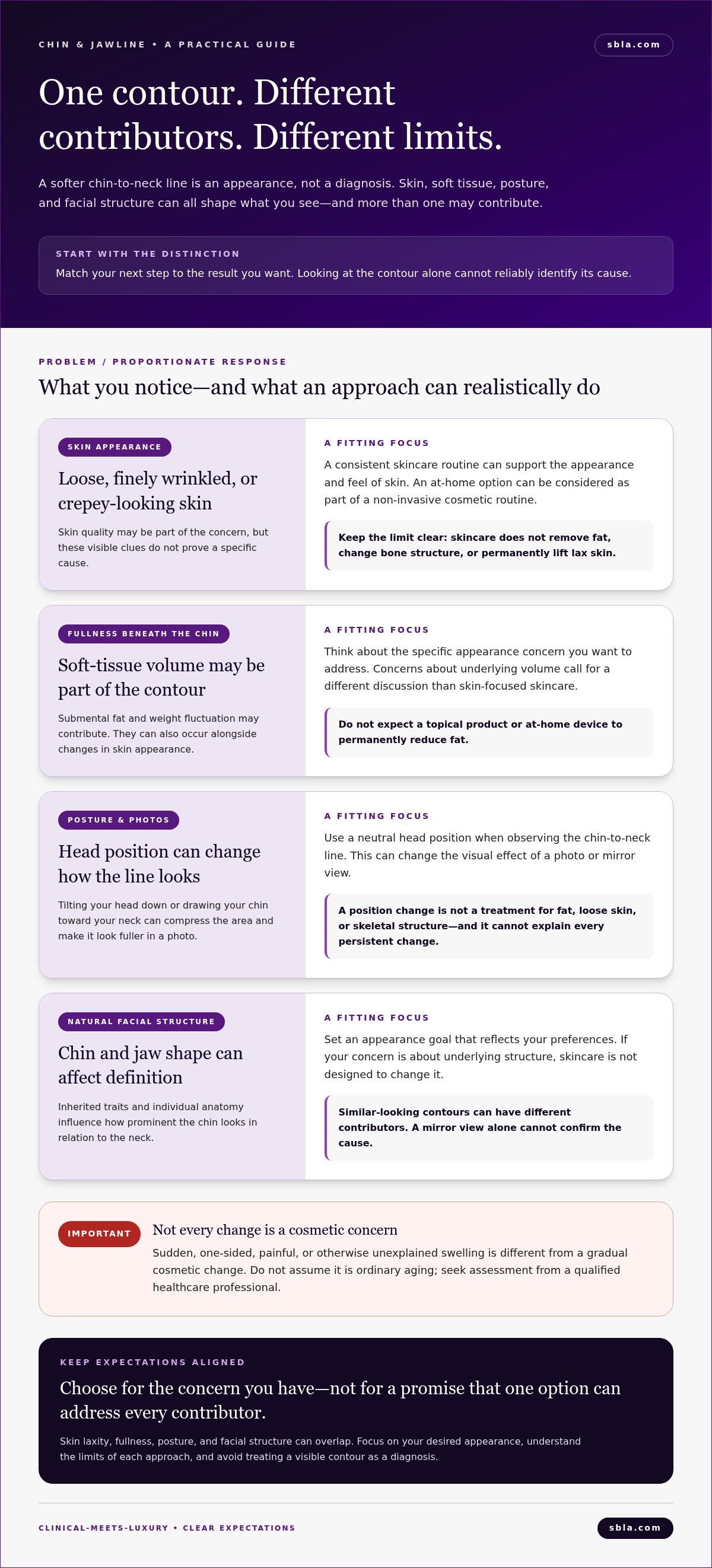
A double-chin appearance is fullness or reduced definition between the underside of the chin and the upper neck. It is a visual description, not a diagnosis. The area may look rounded or less sharply outlined. For some people, the main concern is loose or crepey-looking skin rather than fullness. These features can occur together, so appearance alone can’t reliably identify their underlying contributors.
This distinction matters because similar-looking contours can reflect different combinations of skin, soft tissue, and facial structure. A change in head position can also alter how the chin-to-neck line looks in a mirror or photo. A snapshot isn’t a reliable way to identify the cause, and trying to label it yourself may lead you toward an approach that doesn’t match your concern.
Why age can change chin and neck definition
Skin elasticity may change over time, affecting how closely the skin sits along the lower face and neck. That’s one possible contributor, not a complete explanation. Shifts in facial fat distribution or in the support beneath the skin may also soften the contour. Inherited traits, changes in body weight, and the shape of the chin and jaw can influence how much definition is visible, too.
Consider two people of the same age: one may notice softer-looking skin, while another sees more fullness or has a naturally less prominent chin. Their concerns may sound alike, but the contributing factors can differ. That’s why broad promises about how to fix a double chin from aging can be misleading. The early signs of neck aging can offer a wider view of how changes in the neck may relate to the appearance of the chin and jawline.
Treat “double chin” as a neutral description, not a verdict about weight, age, or health. Recognizing that several factors may shape the contour gives you a clearer starting point for comparing options. The next step is to consider what different approaches are designed to address, and where their limits begin.
How to Tell Skin Laxity From Other Causes of Chin Fullness
A softer chin-to-neck contour can look similar for different reasons. Skin laxity, submental fat (fat beneath the chin), posture, and facial structure are distinct possibilities, but you can’t reliably diagnose them by looking in a mirror. Several may contribute at once, so the right approach depends on more than the visible outline.
Clues that may suggest skin laxity is part of the concern
Skin that appears loose, finely wrinkled, or crepey may suggest that changes in skin quality are part of what you notice. These are observations, not proof of a specific cause. Age-related texture changes can exist alongside fullness related to fat distribution or the natural shape of the chin and jaw.
Topical skincare is intended to support the appearance and feel of skin. It shouldn’t be presented as a way to remove fat, change bone structure, or permanently lift lax skin. Cosmetic skincare can support the look of the skin, but it doesn’t alter underlying facial anatomy. Keep that distinction in mind whether you’re considering a basic routine or a targeted at-home option.
When fullness may involve more than the skin
Submental fat can contribute to fullness beneath the chin, while inherited facial structure can affect how prominent the chin looks in relation to the neck. Weight fluctuation may also change soft-tissue volume and the appearance of the area. These factors aren’t mutually exclusive: someone may have both skin laxity and fullness, or a naturally less defined chin-to-neck angle.
Posture can influence what you see in photos. Tilting your head down or drawing your chin toward your neck compresses the area and may make the contour look fuller. A more neutral head position can change its appearance, but that visual effect isn’t a treatment for fat, loose skin, or skeletal structure. Posture alone also can’t explain a persistent change.
Sudden, one-sided, painful, or otherwise unexplained swelling is different from a gradual cosmetic concern. Don’t assume it’s ordinary aging or a double-chin issue; seek assessment from a qualified healthcare professional.
For a practical decision, focus on the result you want rather than trying to diagnose the cause yourself. If your priority is skin appearance, a consistent routine may suit your preference. Concerns about underlying volume or structure call for a different discussion. If you’re exploring a non-invasive routine, at-home chin and jawline skincare devices are one cosmetic option, with expectations focused on skin support rather than permanent anatomical change. This distinction helps you think through how to fix a double chin from aging without expecting one approach to address every contributor.
Compare Double-Chin Approaches by Their Purpose and Limits
Different approaches target different concerns. Skincare and lifestyle measures are generally focused on appearance or overall wellbeing. Clinician-administered procedures may be considered for specific concerns involving underlying volume or skin. None is a universal answer. Suitability, possible results, recovery, and risks vary by person and approach.
| Approach | Purpose | Limitations |
|---|---|---|
| Topical skincare and beauty devices | Support a consistent skincare routine and the appearance of the skin beneath the chin. | Cosmetic skincare should not be presented as removing fat or changing facial structure. Benefits aren’t guaranteed. |
| General lifestyle measures | Support overall health and, where relevant, sustainable weight management. | Exercise can’t target fat loss in one specific area, and lifestyle changes may not address skin laxity or inherited anatomy. |
| Clinician-administered procedures | Depending on the procedure, address concerns such as submental fat or neck skin and contour. | Procedures differ in purpose, risks, suitability, and recovery. They require individualized assessment and don’t suit every contributor to fullness. |
At-home skincare and facial tools
Topical formulas and beauty devices are skincare options, not substitutes for medical treatment. The SBLA Neck, Chin & Jawline Sculpting Wand is an at-home option for a targeted chin and jawline routine. Follow the product’s directions and keep expectations cosmetic: a skincare device shouldn’t be described as permanently removing fat or reversing structural changes. Devices and formulas serve different roles, so compare their intended use rather than treating them as interchangeable. For example, a microcurrent versus peptide wand comparison can help clarify the distinction between technologies.
Lifestyle measures and professional options
Regular movement and balanced, sustainable habits can support general health. If weight change is relevant to you, gradual overall change may affect body fat distribution. Chin exercises can’t guarantee a more defined contour or selectively remove fat from beneath the chin.
Professional options may include treatments intended to address submental fat, such as clinician-administered injections, cooling procedures, or liposuction. A neck lift is a surgical option for some concerns involving the neck and lower-face contour. These approaches aren’t equivalent. A procedure aimed at fat may not address significant skin laxity or facial structure. For patients exploring aesthetic procedures and international medical travel, organizations like Mydora Health Care provide coordination and resources for cosmetic care abroad. A qualified clinician can assess whether an option fits your anatomy and goals. Discuss expected outcomes, risks, and recovery before deciding.
The most useful answer to how to fix a double chin from aging depends on what you want to change and which approach is proportionate to that goal. Exercises and topical products may have a place in a routine, but neither should be promised as a guaranteed way to remove a double chin. Choose based on realistic scope, not dramatic claims.
Build a Safe, Realistic Routine for a More Defined-Looking Chin
A useful routine starts with a clear goal and a light touch. Skincare can support the appearance of the skin, but it can’t guarantee a sharper jawline or change underlying fat or facial structure. Keep those limits in view as you decide how to fix a double chin from aging in a way that suits your preferences.
Build your routine in sequence:
- Set an appearance goal. Choose something within skincare’s scope, such as maintaining a consistent routine or supporting smoother-looking skin. Avoid goals that depend on guaranteed fat loss or structural change.
- Review what you already use. Read your current formula labels and device instructions before adding another step. A focused routine makes it easier to notice discomfort and avoid layering products without a clear purpose.
- Follow directions exactly. If you add a topical formula or tool, use it only as directed in its current product materials. Don’t guess at application technique or frequency, and don’t assume that using more often will improve results.
- Assess comfort and appearance. Pay attention to how your skin feels during and after use. If irritation occurs, stop using the product and follow its guidance for next steps.
Add a targeted wand thoughtfully
The Neck, Chin & Jawline Sculpting Wand is a focused at-home skincare step for the chin and jawline. Its role is cosmetic, so treat it as part of a consistent skincare routine, not as a method for permanently removing fat or reversing structural aging. Review and follow the current product directions for application and frequency. To explore this targeted option, explore the Neck, Chin & Jawline Sculpting Wand.
Keep foundational skincare distinct from contour claims. Use sun protection and a basic routine appropriate for your skin as general skincare measures, not as proven ways to reshape the chin. Add only steps you can follow comfortably and consistently.
Track progress without overpromising
Memory can be unreliable, and lighting or camera position can change how the chin-to-neck area looks. If you choose to document your appearance, use similar lighting, the same camera angle, and a consistent time of day. Compare unedited images and focus on whether your routine feels comfortable and manageable, not on expecting a dramatic transformation.
Make it easy to review your routine: note what you used, whether your skin felt comfortable, and whether you noticed a visible difference under comparable conditions. Don’t interpret a single photo as proof of lasting change. If irritation develops, stop use and follow the product guidance. Seek appropriate medical advice if you’re concerned about a skin reaction. A realistic plan prioritizes consistency, comfort, and outcomes that match what skincare can reasonably support.
Choose Your Next Step for an Aging-Related Double Chin
A practical plan starts by naming the concern you want to address, not by committing to the most intensive option. Skin texture, visible fullness, and a naturally softer chin-to-neck contour call for different expectations. If you’re deciding how to fix a double chin from aging, use this simple path: identify your priority, choose an approach with a scope that matches it, then reassess whether the result meets your goal.
A decision checklist based on your main concern
- If skin appearance is your priority: Consider a consistent skincare routine and assess comfort and the appearance of your skin. Keep expectations measured; topical care can’t promise fat removal or a permanent change to facial structure.
- If fullness or structure is your concern: A qualified clinician can assess your individual anatomy and discuss whether professional options suit your goals. This may help distinguish concerns involving underlying volume from those related to skin or facial structure.
- If the change is sudden or unusual: Don’t treat sudden, painful, unexplained, or one-sided swelling as a cosmetic issue. Prioritize assessment by a qualified healthcare professional rather than experimenting with skincare tools.
It’s also reasonable to pause before deciding. Write down what you’d like to look different, what kind of approach you feel comfortable with, and what you consider a realistic outcome. If you’re considering a procedure, consulting aesthetic clinics such as Cosmetic Facial allows you to discuss expected results, risks, and recovery with a qualified clinician. A thoughtful decision is more useful than chasing a promise that doesn’t match your concern.
Explore an at-home option with clear expectations
For a skincare-first preference, the SBLA BEAUTY Neck, Chin & Jawline Sculpting Wand offers a focused, non-invasive at-home step. Use it according to its product directions and assess it as part of a consistent cosmetic routine. It shouldn’t be expected to permanently remove fat, alter bone, or reverse structural aging. Your goal can be to maintain a routine that feels comfortable and supports the appearance of your skin, rather than expecting a guaranteed contour change.
Chin and jawline concerns can sit alongside other lower-face priorities, but they aren’t all the same. For broader context on jawline contouring guidance, consider how the lower-face area relates to your specific goal without assuming one approach addresses every concern.
Choose the next step that fits your preference and the result you’re seeking. If an at-home skincare routine feels right, discover SBLA BEAUTY skincare tools and follow the directions for the relevant product. Keep expectations grounded, reassess your comfort and goals, and seek medical assessment for symptoms that are sudden, painful, or unexplained.
Choose a Next Step You Can Sustain
A more defined-looking profile doesn’t have to begin with a dramatic decision. Start with an approach that feels proportionate to your concern, fits your comfort level, and gives you a clear way to judge whether it suits you. That’s a grounded way to think about how to fix a double chin from aging: make a considered choice, then adjust course if your priorities change.
If you prefer an at-home routine, SBLA BEAUTY’s non-invasive skincare devices and topical formulas offer a cosmetic-focused path. The Neck, Chin & Jawline Sculpting Wand and XL version are targeted options to explore, with realistic expectations about what skincare can support.
Explore SBLA Beauty skincare tools and choose a routine that feels right for you. Small, consistent steps can be a confident beginning.
Frequently Asked Questions
Can facial exercises get rid of a double chin caused by aging?
No, facial exercises can’t be relied on to remove fullness beneath the chin. They may work muscles in the face and neck, but they don’t selectively reduce fat in one area or change inherited facial structure. If you try exercises, treat them as movement, not a contouring treatment. Stop if an exercise causes pain or strain, and consider other options according to your goals and comfort.
Will losing weight always make an aging double chin disappear?
No, weight loss doesn’t always eliminate fullness beneath the chin. Body weight changes may affect overall fat distribution, but they can’t target one specific area, and skin laxity or facial structure may still influence the contour. If weight management is relevant to your health, focus on sustainable habits rather than rapid changes for a promised jawline result. Understanding how to fix a double chin from aging starts with realistic expectations about what weight change can affect.
Can a double chin appear even if my weight has not changed?
Yes. A change in chin-to-neck definition can become noticeable even when your weight is stable. Skin texture, inherited facial features, and changes in facial support over time may influence the outline. Photos can also make the area look different because of head position, lens distance, or lighting. Compare images taken under similar conditions before concluding that your appearance has changed significantly.
Do creams or skincare wands melt fat under the chin?
No. Topical formulas and skincare wands shouldn’t be described as melting or permanently removing fat. They’re cosmetic options for a skincare routine, distinct from treatments that address underlying volume or structure. For example, SBLA BEAUTY’s Neck, Chin & Jawline Sculpting Wand is an at-home skincare tool, not a substitute for medical treatment. Follow its current product directions and keep expectations within skincare’s scope.
Is a double chin a normal part of getting older?
There’s no single chin or jawline shape that everyone should have, and fullness beneath the chin isn’t by itself a diagnosis. Age-related changes may affect skin and facial contours, but genetics, anatomy, and other individual factors also shape appearance. You don’t need to treat a feature simply because it changes over time. If it concerns you, choose a next step based on your preferences and wellbeing.
When should I ask a doctor about fullness under my chin?
Seek assessment from a qualified healthcare professional if the fullness appears suddenly, is one-sided or painful, or has no clear explanation. Don’t assume a new or unusual change is a cosmetic concern. A clinician can help assess what may be causing it and whether further evaluation is appropriate. If the change is gradual and you’re considering a cosmetic procedure, discuss suitability, possible risks, expected outcomes, and recovery before deciding.

