
How to Feel Confident in My Skin at 60 Through Style and Self-Care
Your skin can change with age, but confidence doesn’t have to depend on changing it back. A practical answer to how to feel confident in my skin at 60 is to adapt your skincare to your skin’s needs while choosing clothes and self-care habits that help you feel comfortable and like yourself.
If changes in your skin affect how you feel about your appearance, that reaction is understandable. A gentle, consistent routine can support skin as its needs change, while personal style and kinder self-talk can help you focus on what you value about yourself now.
This guide explores how skin changes with age and shares practical ways to build confidence through clothing, mindful self-care, affirmations, and simple skincare. The goal is to make your routine feel supportive, not to treat aging as something you need to hide.
Key Takeaways
- Choose clothing that feels comfortable, fits well, and reflects your personality rather than following every trend.
- Build self-care around small, restorative habits and protect your skin from strong sun exposure.
- Notice negative self-talk, name the feeling behind it, and practise replacing harsh judgments with affirmations grounded in your strengths.
- Keep skincare gentle and consistent, adjusting cleansing, moisturizing, and sun protection to your skin’s changing needs.
- Explore focused skincare tools, such as SBLA BEAUTY’s Eye Lift Wand, when you want to add an eye-area product to your routine.
1. Choose clothing that expresses personality
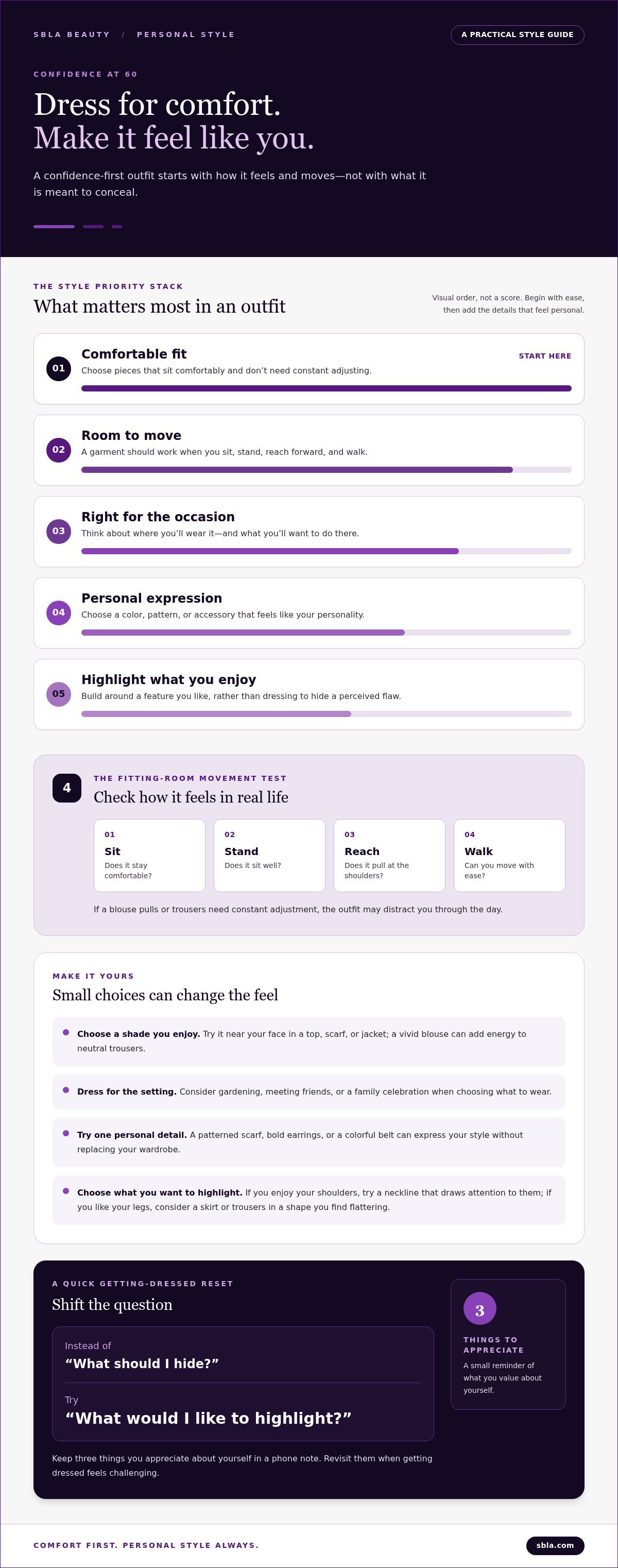
Start with an outfit that feels like you, rather than a costume designed to conceal your age. If ease matters, try soft trousers, a structured jacket, and shoes that feel stable. If creativity matters, add a patterned scarf or a distinctive color. Clothing communicates personal priorities before you speak. The question “how to feel confident in my skin at 60” can begin with a simple choice: wear something that reflects your values and feels comfortable.
Use a practical fitting-room test before deciding what belongs in your wardrobe. Sit, stand, reach forward, and walk in each garment. A blouse that pulls at the shoulders or trousers that need constant adjustment can distract you throughout the day. Think about where you’ll wear the outfit, whether gardening, meeting friends, or attending a family celebration. Choose pieces that let you move comfortably in that setting.
Color is another way to express your personality. Choose a shade you enjoy, then try it near your face in a top, scarf, or jacket. A vivid blouse can add energy to neutral trousers, while a favorite muted shade can create a softer look. Notice how you feel when you see it in a familiar mirror. Feeling at ease matters more than following a trend that doesn’t feel like you.
Build outfits around what you like about yourself, rather than perceived flaws. If you enjoy your shoulders, choose a neckline that highlights them. If you like your legs, try a skirt or trousers in a shape you find flattering. This shifts the question from “What should I hide?” to “What would I like to highlight?” Keep three things you appreciate about yourself in a phone note, and revisit them when getting dressed feels challenging.
Let your values guide practical style choices. If versatility matters, choose pieces that work in different settings, such as a jacket suited to lunch and an appointment. If self-expression matters, try one distinctive accessory, like bold earrings or a colorful belt. You don’t need to replace your wardrobe. Make one adjustment and notice whether it feels like you.
Movement can also shift attention toward your body’s abilities. Walking, yoga, and strength training are options; choose an activity that feels enjoyable. Physical activity releases endorphins, described as feel-good hormones, and can help you sleep better. Strength training may help you notice capability in everyday tasks, such as carrying groceries or rising from a chair. For anyone considering how to feel confident in my skin at 60, recognizing what your body can do can complement the way you choose to dress.
When learning how to feel confident in my skin at 60, a useful next step is to notice what already feels authentic. Focus on personal positives as a step toward confident style over 60, rather than using clothes to judge yourself. Pay attention to color as you develop a personal style, choosing what feels expressive to you. Clothing also communicates something about the wearer without words, so let those choices reflect your priorities. Keep paying attention to fit; garments that sit comfortably can help you feel at ease as you move through the day, supported by your choices from SBLA BEAUTY.
2. Mindful body appreciation and self-care
Try a brief body-appreciation practice: name one thing your body helped you do today, such as carrying groceries or enjoying a walk. This shifts attention from appearance alone to function and lived experience. Menopause and age-related changes in skin, shape, or weight can affect self-esteem, especially when they differ from what feels familiar. Acknowledging that response without judging it can help you see your body more fully.
Confidence can grow from small, repeatable choices. Take a comfortable walk, prepare a nourishing meal, or set aside quiet time with a book. Choose one activity that leaves you feeling restored, then notice its effect on your mood. Exercise can support well-being, but focusing only on weight or appearance can narrow the meaning of self-care. Ask yourself whether a habit helps you feel healthy and capable, rather than pressured to change your body.
Be selective about skincare products and anti-aging claims. Read the label, identify each product’s purpose, and introduce new products one at a time so you can observe your skin’s response. Treat claims that a product can erase every sign of aging with caution. Your routine should support comfort and skin health, not create anxiety about ordinary changes. The National Institute on Aging advises checking your skin each month for changes that may be signs of cancer.
Protect your hands as part of everyday self-care. The National Institute on Aging advises avoiding sun exposure during the summer from 10 a.m. to 4 p.m., when the sun’s rays are strongest. When outdoors, cover your hands with gloves or clothing where practical, and include them when applying sunscreen. Regular hand care can also mean moisturizing after washing and keeping nails clean and comfortable.
A smile can help you feel at ease with your appearance. Build dental care into an existing routine, such as brushing before bed, and notice whether discomfort or concerns about your teeth affect how readily you smile. A relaxed expression can feel more authentic than holding a fixed pose. If smiling feels uncomfortable, include that concern in your personal care plan instead of criticizing yourself.
Cosmetic treatments involve trade-offs: potential benefits include a change in a specific feature, while risks can include unwanted effects and recovery demands. Costs depend on the treatment, the area addressed, and the care involved, so consider the full commitment rather than an advertised result alone. For a nonprocedural, lip-focused option, explore Limited Edition - DOUBLE THE PLUMP Lip Plump & Sculpt as one element of appearance-focused self-care.
3. Affirmations and challenging negative self-talk
A harsh thought can sound factual simply because it feels familiar. Notice the exact words, such as “My face looks tired,” and separate the observation from the judgment. You might notice under-eye shadows in the mirror; “I look terrible” is a conclusion, not a neutral description. Try a more balanced statement: “My face shows experience, and I can care for it kindly.” You don’t have to pretend every thought feels positive.
Try the Feel-Pause-Act practice when self-criticism appears. Name the emotion without dismissing it, take one or two breaths, then choose a response that reflects your values. If a photograph triggers embarrassment, for example, pause before deleting it or criticizing your appearance. You could save it because it captures a moment with someone you love. That small choice interrupts an automatic reaction and gives you space to respond deliberately.
Going makeup-free can be a personal exercise in self-acceptance, not a rule about how you should look. Choose a familiar setting, such as a quiet morning at home, and notice your thoughts without grading your face. If you prefer makeup, wearing it can also be self-expression rather than concealment. The important question is whether the choice feels like yours. Use a mirror to see your whole expression, not just search for flaws.
Gratitude can make affirmations feel more believable when they’re tied to real experiences. Write down one quality you value, then pair it with an example: “I’m generous because I called my friend when she needed support.” Try this journal prompt: “What did I feel today that I almost ignored?” Naming an overlooked feeling can reveal what matters to you, whether that’s rest, connection, or recognition. These observations give self-talk a personal foundation.
Build self-trust by keeping small promises to yourself. If you decide to take a break before answering a demanding message, follow through and notice how that boundary feels. If you plan to wear a favorite lipstick to lunch, choose it because you enjoy the color, not to meet someone else’s standard. Each action shows that you can listen to your preferences. Self-trust grows through choices that reflect your priorities, not through perfect confidence.
Make affirmations specific enough to use in a difficult moment. “I can treat myself with respect today” may feel more believable than “I love everything about my appearance.” Keep a short note on your phone with phrases that fit your experience, such as “My worth isn’t measured by a photograph” or “I can notice a change without judging myself.” Read one before getting dressed or meeting friends. With practice, a compassionate response can become easier to reach.
4. Gentle skincare, retinol, moisturizer, and sunscreen
Skin can become drier or more sensitive with age, so review your routine if comfort changes. If a cleanser leaves your skin feeling tight or stinging, switch to a gentler option and observe how your skin responds. A simple routine is easier to maintain: cleanse gently, moisturize, and apply sunscreen during the day. Add products gradually rather than changing every step at once.
Choose products based on how your skin feels, not just how it looks. For example, dry-feeling skin may benefit from a richer cream, while a lighter lotion may feel more comfortable if your skin gets oily. Fragrance or active ingredients can irritate some people. Introduce one new product at a time, follow the label, and stop using it if irritation develops.
Retinol and hyaluronic acid are ingredients you may consider for concerns such as fine lines and skin elasticity. They serve different roles, so don’t assume one ingredient will address every concern. Start by identifying your main priority, such as fine lines or dryness. A dermatologist can recommend personalized skincare treatments and help you choose among products.
For age spots, wrinkles, and uneven skin tone, keep sun protection consistent and choose products around your specific concern. Retinol and hyaluronic acid may be considered for fine lines and elasticity, while a dermatologist can help tailor product choices. The National Institute on Aging advises using sunscreen with an SPF of 15 or higher to help protect skin.
Look for sunscreen labeled broad spectrum, which protects against UVA and UVB rays. Apply it 15 to 30 minutes before going outside, and the National Institute on Aging advises reapplying at least every two hours. Reapply more often when swimming, sweating, or rubbing skin with a towel. If medication may increase sun sensitivity, the National Institute on Aging advises discussing it with a doctor or pharmacist.
Pay attention to skin changes that are new, persistent, or evolving. The National Institute on Aging says a new growth, a sore that doesn’t heal, or a bleeding mole may signal skin cancer. Talk with a doctor or visit a dermatologist about these changes. Also seek medical attention for melanoma warning signs, including asymmetry, irregular borders, color changes, a diameter greater than a pencil eraser, or evolving features.
Consistency matters more than a crowded shelf. Keep morning and evening steps easy to remember, and adjust them as your skin’s needs change. If a product irritates your face, for example, simplify your routine and note what you used. If your skin is very dry and itchy, the National Institute on Aging advises talking with a doctor. Comfort, protection, and informed product choices are a sound foundation for skin care.
5. Daily cleansing, moisturizing, and sunscreen
A dependable routine can be simple: cleanse, moisturize, and apply sunscreen during the day. In the evening, cleanse away makeup, sunscreen, and daily buildup, then moisturize. Keeping the steps in the same order makes them easier to remember. Place your cleanser beside the sink and moisturizer near your toothbrush, so everyday moments prompt consistent care.
Choose a gentle cleanser that leaves your skin comfortable after washing. The National Institute on Aging advises using mild soap and warm, not hot, water when bathing or showering to help manage dry, itchy skin. For example, wash your face with warm water and your fingertips instead of scrubbing with a rough cloth. Pat dry gently, especially if your skin feels tight or sensitive.
Moisturizer helps manage dryness by supporting the skin’s surface and reducing water loss. The National Institute on Aging advises using moisturizers, including lotions, creams, or ointments, every day to manage dry, itchy skin. Choose a texture that feels comfortable: a lotion may feel lighter, while a cream or ointment may feel richer. Apply it after washing, while your skin still feels slightly damp.
Make moisturizing easy by connecting it to routines you already have. For instance, apply it after your morning wash and again before bed. The author recommends using moisturizer twice a day. If your hands feel dry after washing dishes, keep moisturizer nearby and apply it then. Adjust the product or timing if your skin feels uncomfortable, rather than adding several new products at once.
Apply sunscreen as the final step of your daytime skincare routine, before makeup if you wear it. Broad-spectrum sunscreen protects against UVA and UVB rays. Keep it beside your moisturizer or near the door to make it easier to remember before outdoor errands. Apply it to exposed areas, including your face, neck, and the backs of your hands. Consistent use makes sun protection part of everyday care, not just a special-occasion step.
If your skin becomes persistently dry or itchy, simplify your routine and note which products you use. The National Institute on Aging advises talking with a doctor when skin is very dry and itchy. A brief record can help you describe when the discomfort began and whether it followed use of a cleanser or moisturizer. Avoid vigorous scrubbing while your skin is irritated, and cleanse gently instead.
Daily care can also include a deliberate lip-care choice. If you want to add a focused lip product to your routine, explore Limited Edition - DOUBLE THE PLUMP Lip Plump & Sculpt. Keep the rest of your regimen steady, so each product has a clear place and purpose.
A basic skincare routine includes cleansing, moisturizing, and daily sunscreen. For older adults, bathing care can include mild soap and moisturizer, drying between skin folds, and checking for rashes.
SBLA BEAUTY: Eye Lift Wand
SBLA BEAUTY’s Eye Lift Wand is a targeted option for people who want to add an eye-area tool to their skincare routine. It may suit you if you already cleanse gently, moisturize, and use sun protection, and want focused care around the eyes. Consider it an addition to everyday skincare, not a replacement for those foundational steps or a promise of a particular result.
Confidence at 60 can include caring for your skin in ways that feel personal and considered. Choose products and tools according to the areas you want to focus on, while keeping your routine comfortable and manageable. Explore the Eye Lift Wand and other skincare tools from SBLA BEAUTY, then visit SBLA BEAUTY online to learn more.
Make confidence a choice you keep making
A thoughtful answer to how to feel confident in my skin at 60 starts with treating confidence as personal, not as a standard set by someone else. Let your next step reflect what matters to you: a routine that feels comfortable, a detail that expresses your style, or a focused skincare tool that fits your interests.
SBLA BEAUTY offers targeted skincare tools, including the Eye Lift Wand, Neck, Chin & Jawline Sculpting Wand, and Neck, Chin & Jawline Sculpting Wand XL. Explore the options at your own pace and choose the one that fits the care you want to give yourself.
Explore SBLA BEAUTY’s skincare tools and consider which one fits your routine. Your confidence doesn’t need to look like anyone else’s. Let it grow from choices that feel genuinely yours.
Frequently Asked Questions
How does skin change as you age?
Skin can become drier and itchier with age, and its appearance and comfort may change. These changes vary from person to person, so compare your skin with its usual baseline rather than someone else’s. For example, note whether a patch is new, changing, or simply feels dry after bathing. If dryness and itching persist, the National Institute on Aging advises talking with a doctor.
How does skin change after 60, and what skincare routine can help?
After 60, a useful routine is one you can repeat without discomfort: gentle cleansing, daily moisturizer, and daytime sun protection. If a product suddenly stings, avoid adding more new products while you work out what changed. Keep a note of product names and symptoms, such as whether discomfort followed a cleanser or moisturizer. For persistent very dry, itchy skin, the National Institute on Aging advises talking with a doctor.
What mental health strategies help build self-acceptance and confidence in later life?
Self-acceptance can grow through supportive relationships and choices that reduce unhelpful comparison. Tell someone you trust about a specific concern, such as avoiding photographs, and explain whether you want them to listen or offer practical support. On social media, mute accounts that leave you judging your appearance. Use that time for something connected to your values, such as calling a friend or returning to a creative hobby.

